

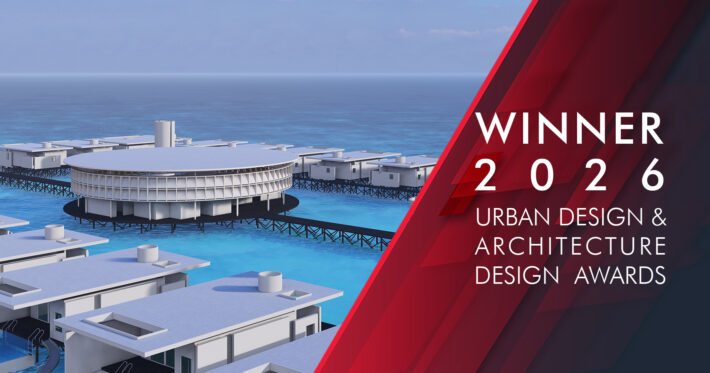
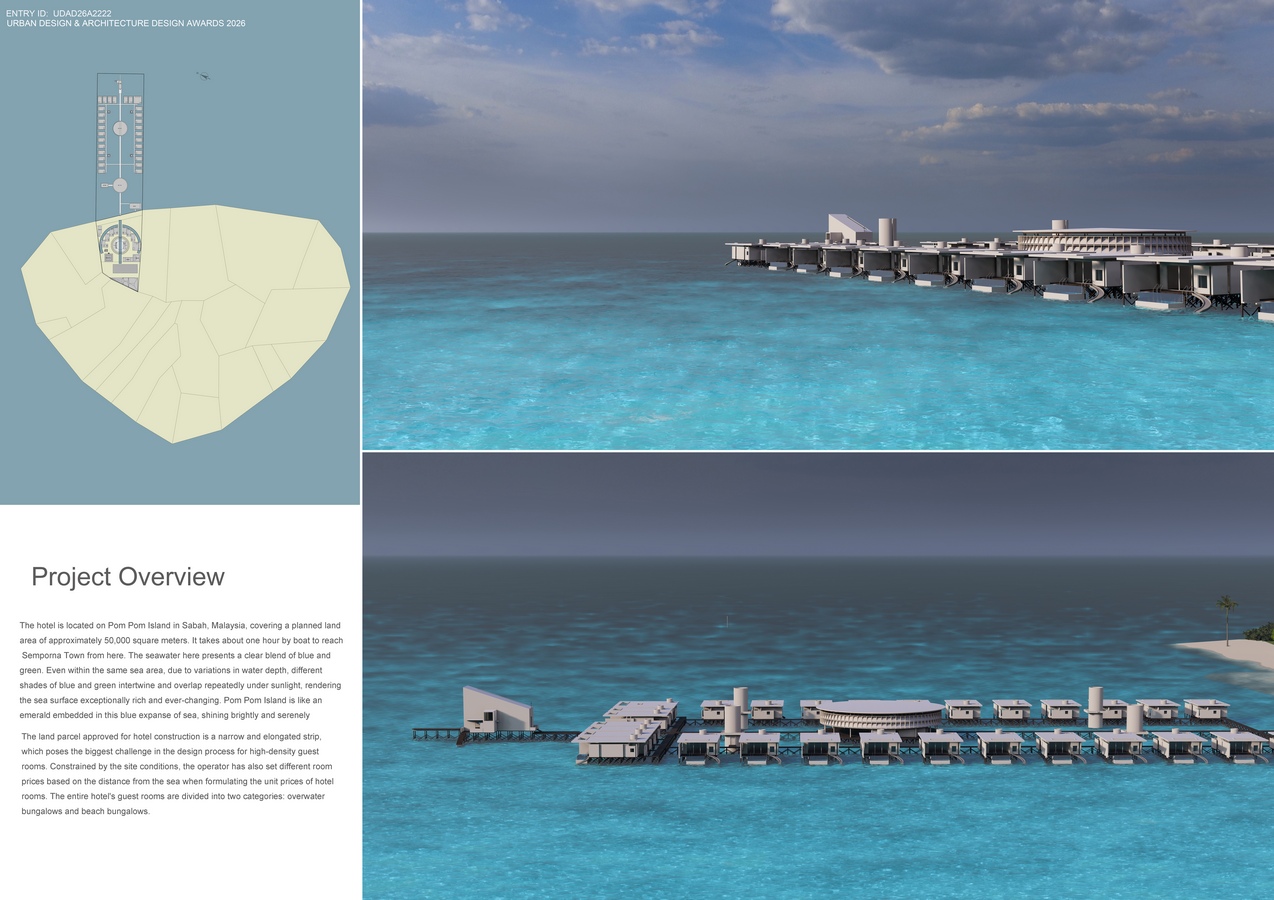
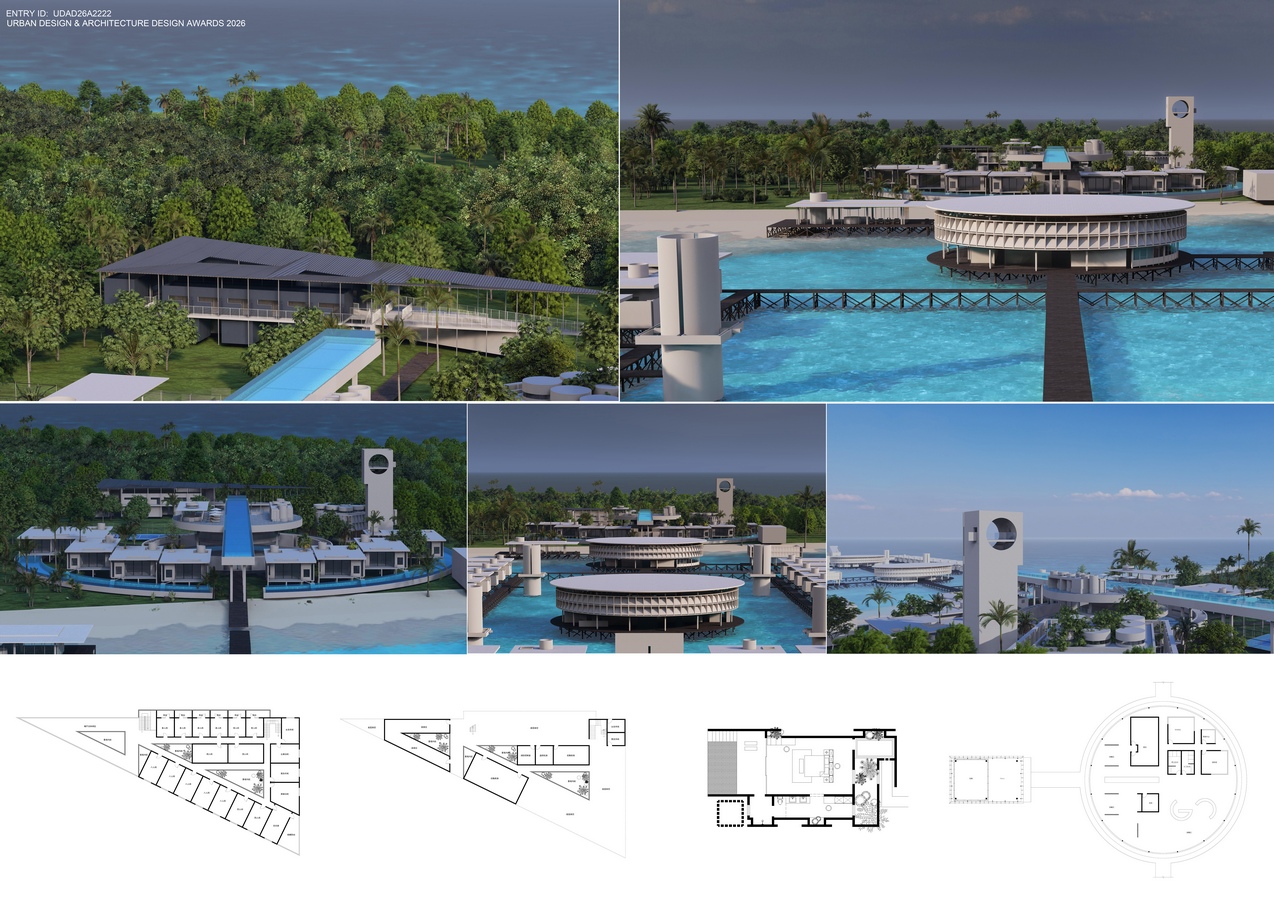
The hotel is located on Pom Pom Island, Sabah, Malaysia, covering a planned land area of approximately 50,000 square meters. It takes about one hour by boat to reach Semporna Town from the island. The land parcel approved for hotel construction is a narrow and elongated strip, which poses the biggest challenge in the design process for high-density guest rooms. Constrained by the site conditions, the operator has set different room prices based on the distance from the sea when formulating room unit prices. The hotel’s guest rooms are divided into two categories: overwater bungalows and beach bungalows.
Urban Design & Architecture Design Awards 2027: Entries Open!
Take your work to the next level. Register Now…

Gold 🏆 Winner
Urban Design & Architecture Design Awards 2026
Semporna Kaia Resort
Mixed-Use Architecture (Concept)
Firm
Shanghai Daozhong Architectural Design Co., Ltd
Architect/Designer
ZHI CHENG
Design Team
BAOQI XU GANG WANG JUNFENG HU
Location
Sabah Pompom Island, Malaysia
Country
China
Photographer/Copyright
©Shanghai Daozhong Architectural Design Co., Ltd
Homogeneous Experience
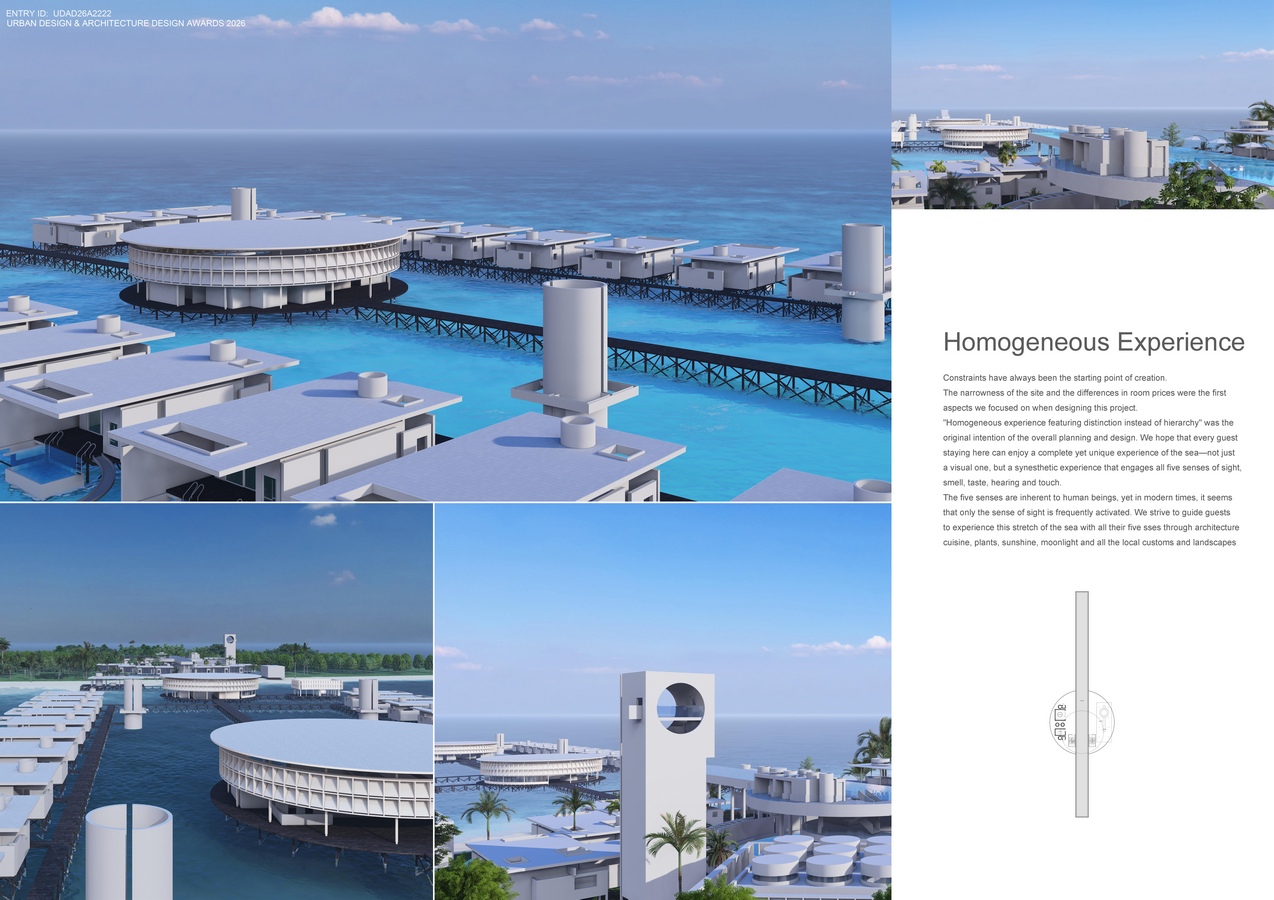
“Homogeneous experience featuring distinction instead of hierarchy” is the original intention of the overall planning and design. We hope that every guest staying here can enjoy a complete yet unique experience of the sea—not just a visual one, but a synesthetic experience that engages all five senses of sight, smell, taste, hearing and touch.
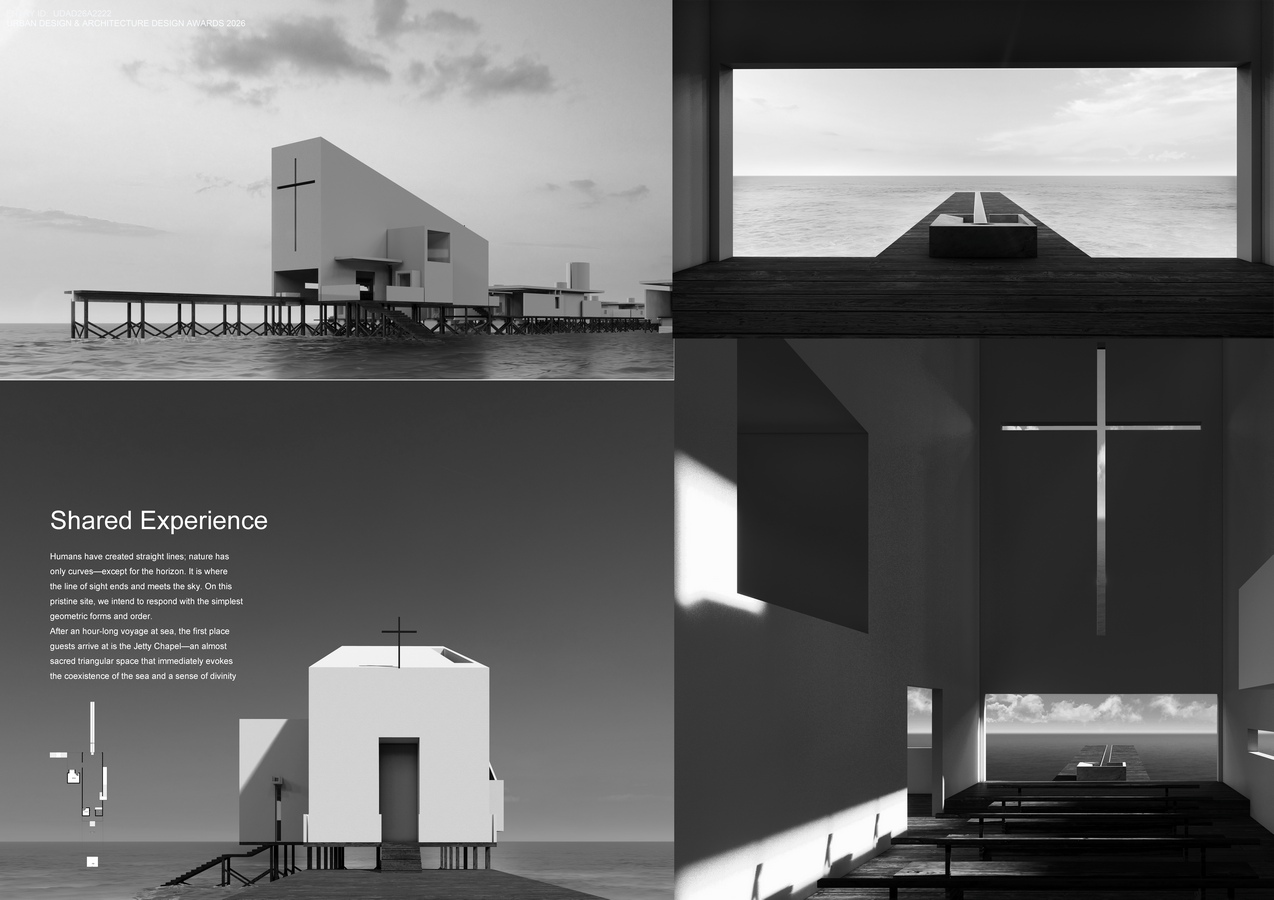
Shared Experience
Public facilities including the reception desk, dining outlets, spa, fitness center, and diving center are all located closest to the open sea. This layout ensures that guests staying in beach bungalows can fully immerse themselves in the open sea experience for more than half of their stay. In addition, certain recreational amenities—such as the bar, basketball court, turtle sanctuary, children’s center, and observation tower—are situated within the circular plaza on the beach, allowing guests in overwater bungalows to indulge in the pleasures of the shore whenever they wish.
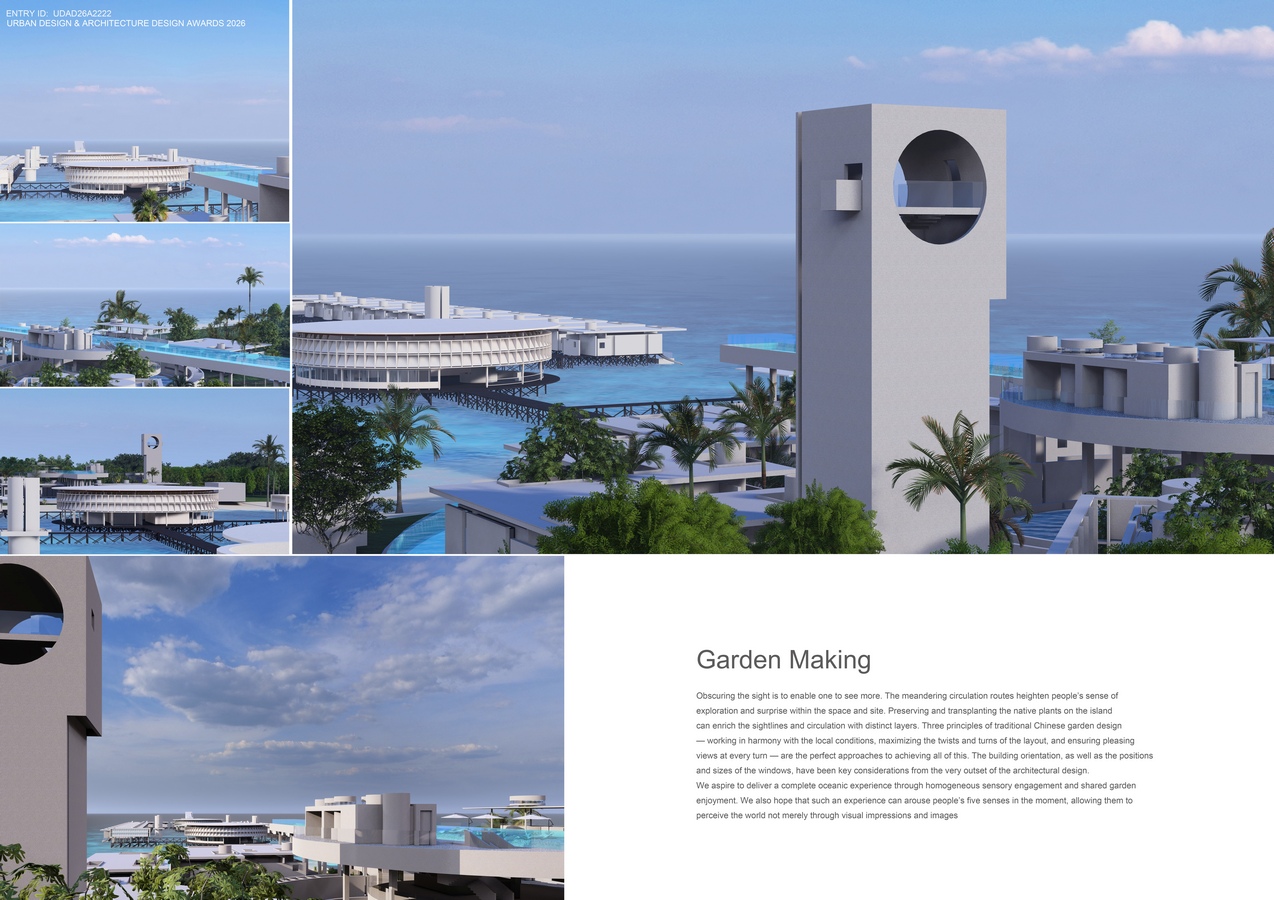
Garden Design
Obscuring the line of sight is to reveal more vistas. The meandering circulation routes enhance people’s exploration of the space and site, bringing unexpected delights. Preserving and transplanting native island plants enriches the layers of both sightlines and circulation paths.
Architectural Form
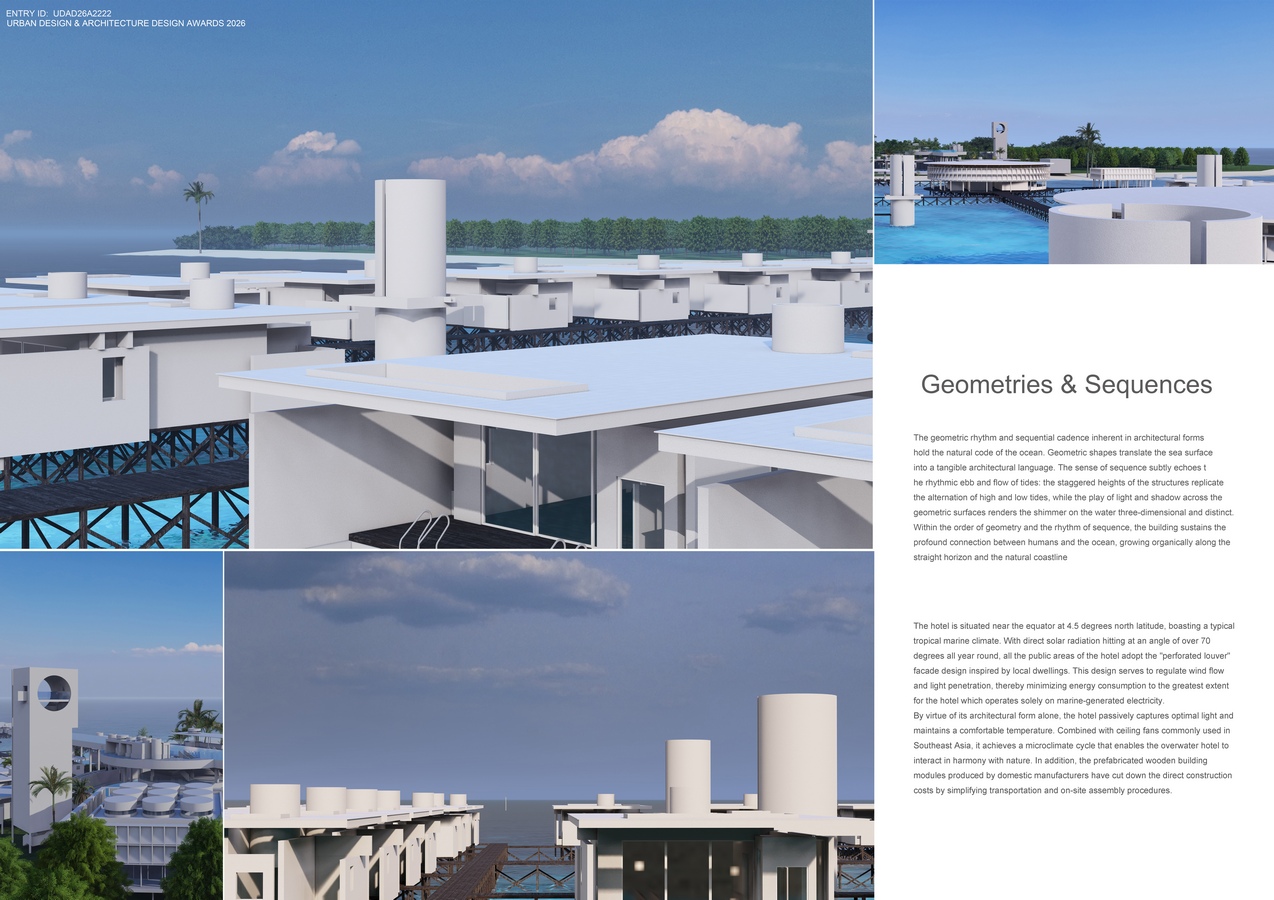
The hotel is situated near the equator at 4.5 degrees north latitude, boasting a typical tropical marine climate. With direct solar radiation hitting at an angle of over 70 degrees all year round, all public areas of the hotel adopt the “perforated shutter” facade design inspired by local dwellings. This design serves to regulate wind flow and light penetration, thereby minimizing energy consumption to the greatest extent for the hotel which operates solely on marine-generated electricity. By virtue of its architectural form alone, the hotel passively captures optimal light and maintains a comfortable temperature.
In addition, the prefabricated wooden building modules produced by domestic manufacturers have reduced direct construction costs by simplifying transportation and on-site assembly procedures.
We aspire to deliver a complete sea experience through the integration of homogeneous experience and shared garden design philosophy. We also hope that such an experience can encourage people to engage all five senses in the moment, rather than perceiving the world merely through visual images and photographs.