


The City of Mercer Island is a 6.4 square mile island, a verdant pacific northwest biome, surrounded by Lake Washington, that is home to over 25,000 people. From public works to community services, and from law enforcement to parks and recreation, city government maintains a dedicated staff entrusted with serving the public and–over the long haul–making sure that things the government touches are left in a better state for future generations.
Urban Design & Architecture Design Awards 2027: Entries Open!
Take your work to the next level. Register Now…

Gold 🏆 Winner
Urban Design & Architecture Design Awards 2026
Mercer Island Public Works
Public Building (Concept
Firm
Northwest Studio
Architect/Designer
Aaron Young
Design Team
Aaron Young, David Cutler, Louis Peiser, Gilberto Villalobos, Brian Nguy
Location
Mercer Island, Washington, USA
Country
United States
Photographer/Copyright
©Luxigon_LA
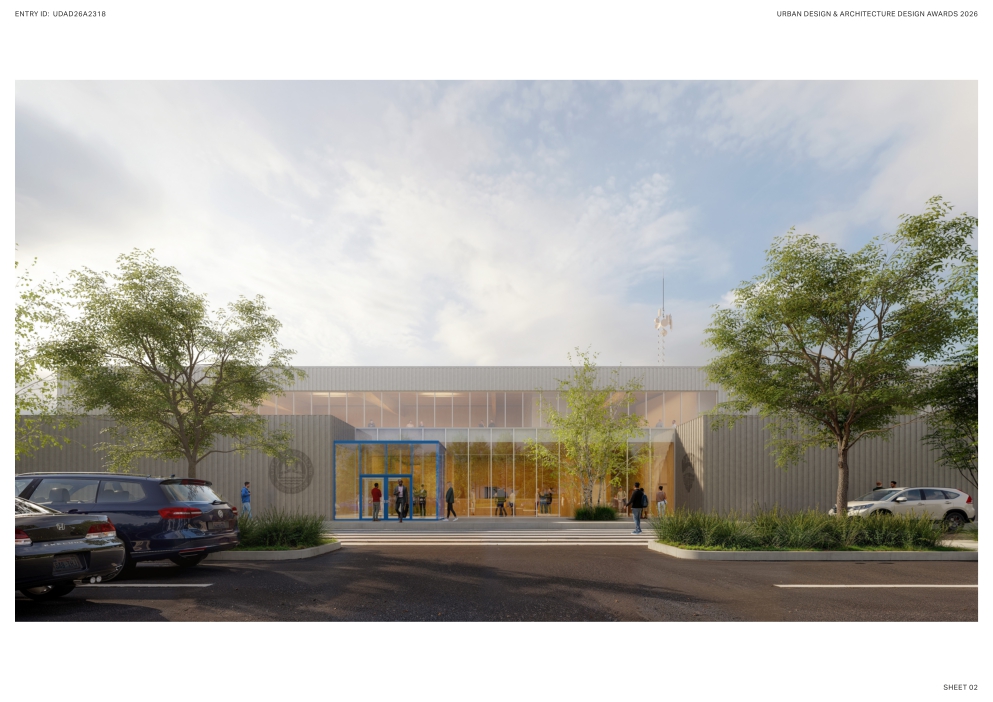
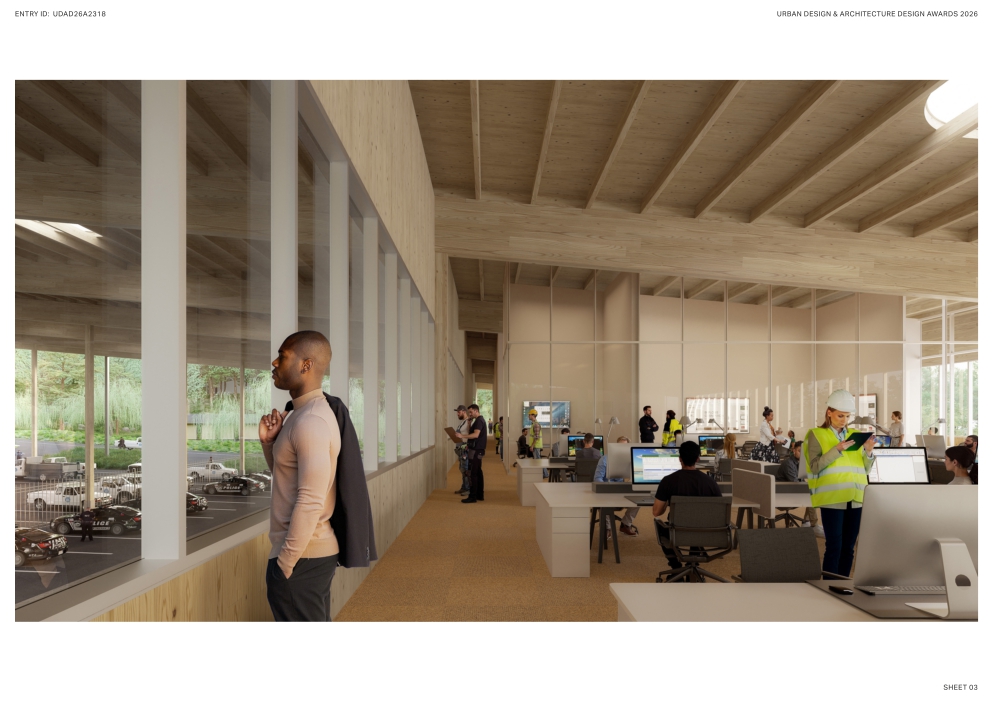
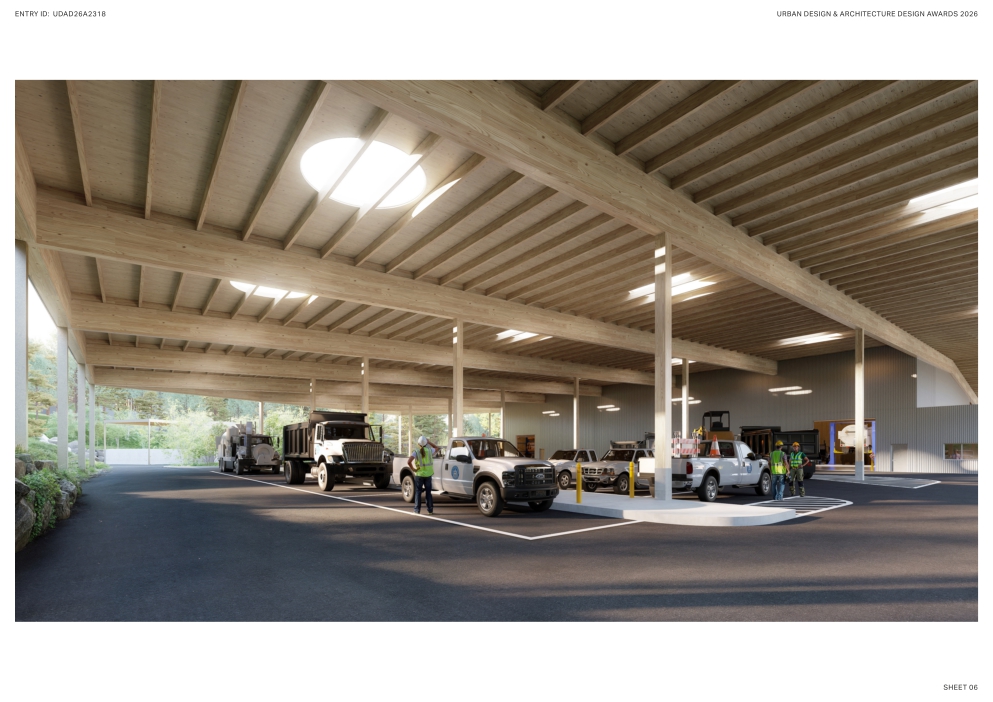
But at this moment, city staff find themselves striving to maintain services in facilities that no longer support their work. The discovery of hazardous materials permanently closed Mercer Island’s city hall in 2024, forcing most staff to work from home or in ad-hoc community rooms; the police department was cast into temporary portable trailers, and rely on their automobiles as a primary workspace and shelter from inclement pacific northwest weather. Nearby public works facilities are obsolete; constructed 45 years ago, these buildings and service yards provide inadequate workspaces—housing only 50% of the workforce—and inadequate operations areas that leave vehicles, heavy equipment, materials, and service areas are exposed to the weather and subject to deterioration.
The Mercer Island Public Works project is designed to realize new, contemporary buildings and service yards for city employees while protecting and enhancing the native habitat on the city’s existing twelve-acre site.
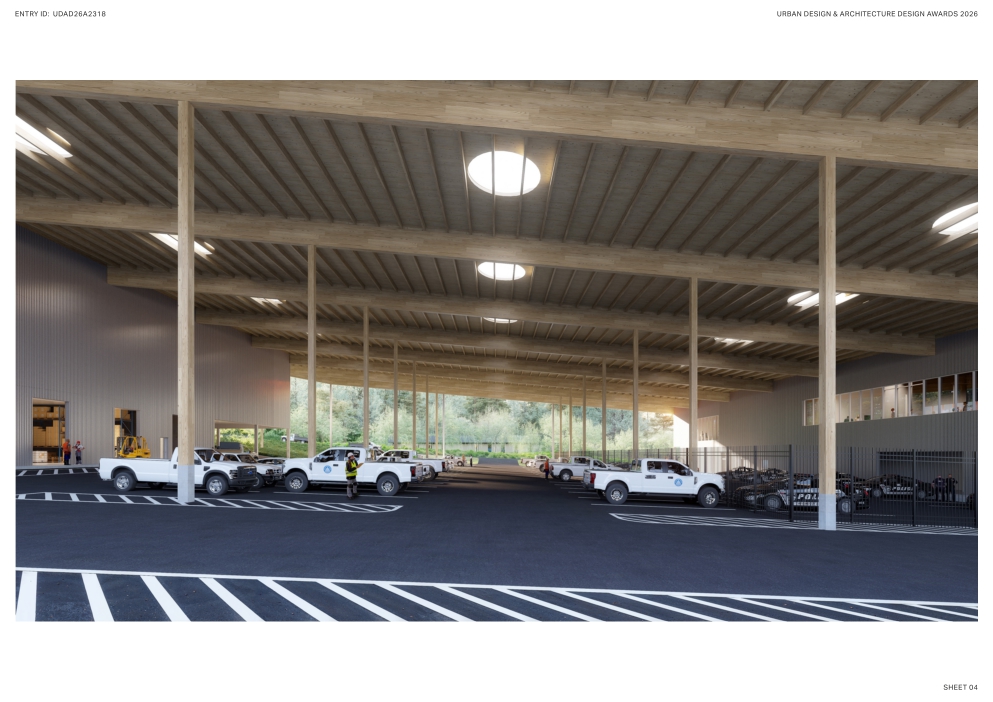
The project is designed around three unifying principles; consolidate facilities, cover everything, and turn climatic challenges—the region’s near-constant precipitation—into working opportunities.
Consolidate new buildings to increase working relationships and operational efficiency while also consolidating site landscapes to increase the quantity and quality of the exiting native habitat.
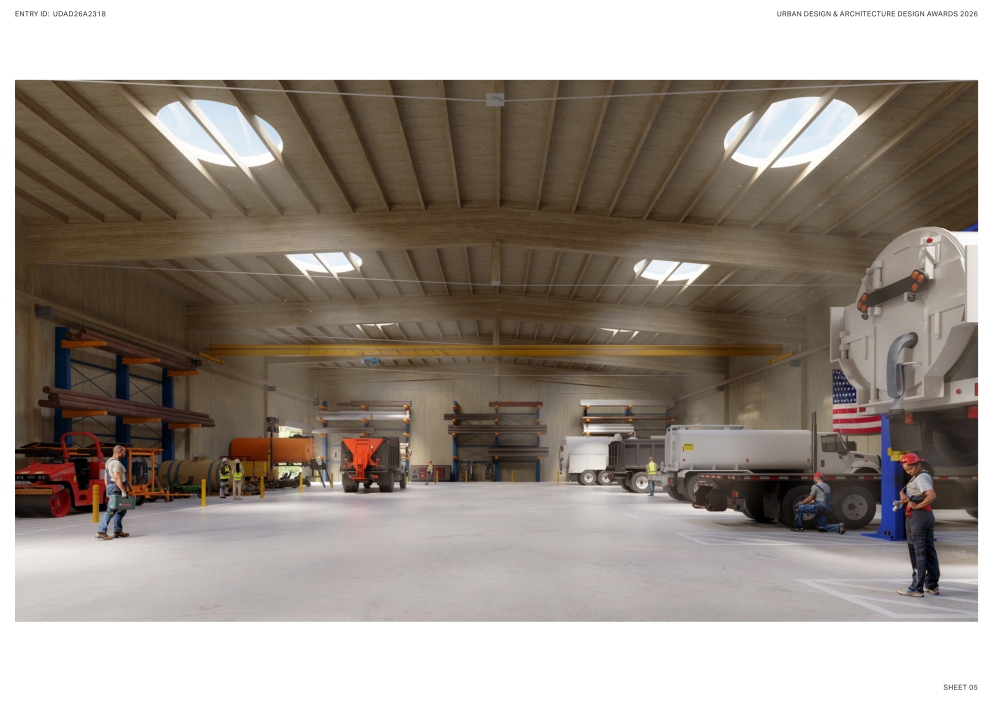
Cover vehicles, materials, and heavy equipment; cover outdoor service and storage areas; and cover the spaces in-between to enable employees to work indoors and outdoors, to move between vehicles and warehouses, and to prepare for service in the community without hindrance by rain or snow.
Convert the region’s weather into an operational asset, using the 120,000 square foot roof structure to harvest rainwater, store that rainwater in cisterns, and use it for public works vehicle wheel wash and cleanup and non-potable building uses saving the City of Mercer Island 550,000 gallons of wat4r annually.
New municipal service structures and enhanced native habitat exist in balance on a renewed and heavily forested site, with new buildings and outdoor workspaces that are linked through a single mass timber weathering cover that both shelters and elevates this working environment.