

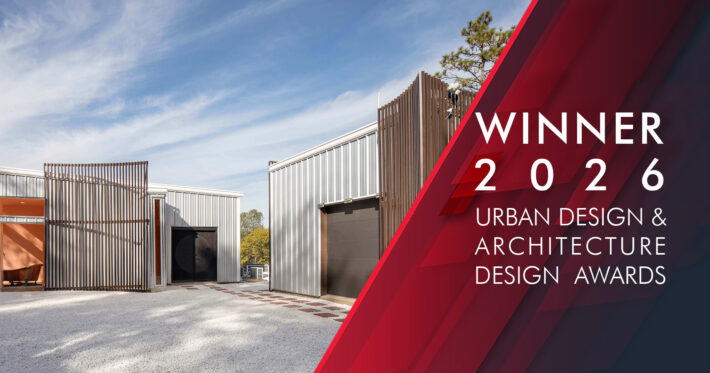
Zero Energy Ready under the Living Building Challenge: The Box Factory project anticipated and exemplified the intent of LEED v5’s emerging resilience framework 5 years ahead of the measures, by integrating energy, equity, health, and climate adaptation into one tightly coordinated prototype. It functions as a zero‑energy, zero‑carbon climate resilience hub in a wildfire‑prone region, using its building systems, site strategy, and program to deliver year‑round resilience benefits rather than treating resilience as a separate layer
Urban Design & Architecture Design Awards 2027: Entries Open!
Take your work to the next level. Register Now…

Gold 🏆 Winner
Urban Design & Architecture Design Awards 2026
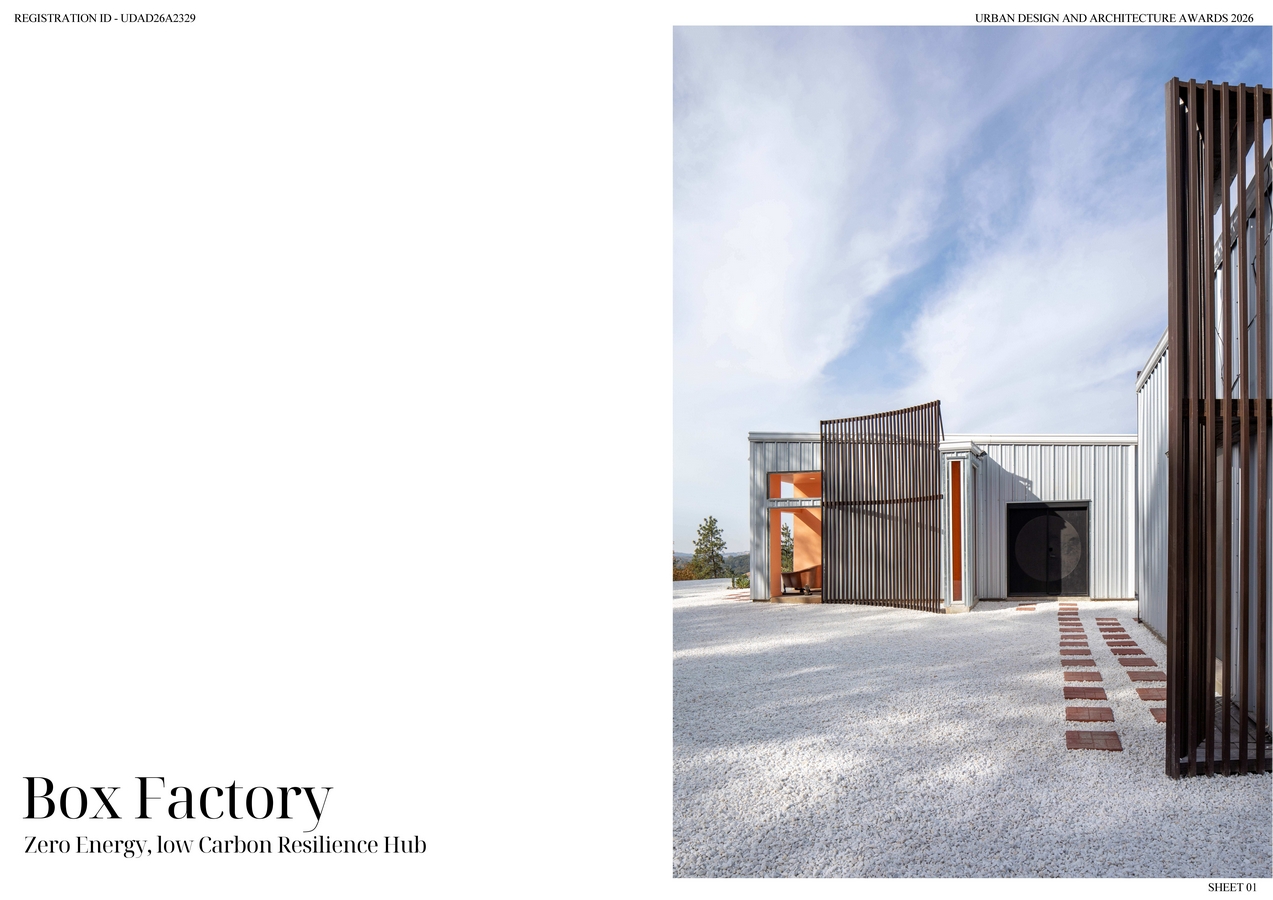
Box Factory
Architecture & Design (Built)
Firm
HB+A Architects
Architect/Designer
Hafsa Burt
Design Team
HB+A Architects
Location
California
Country
United States
Photographer/Copyright
©Doug Birnbaum
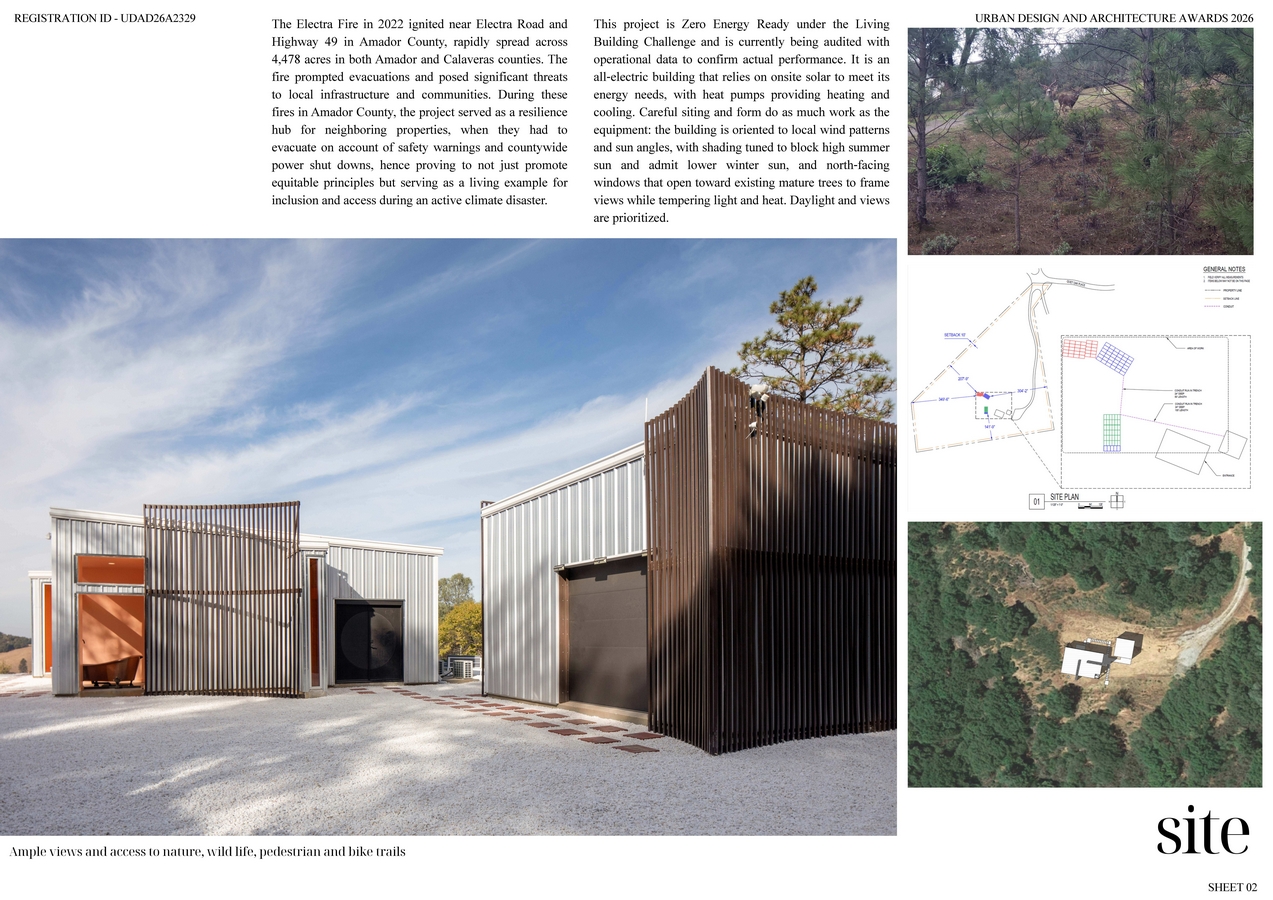
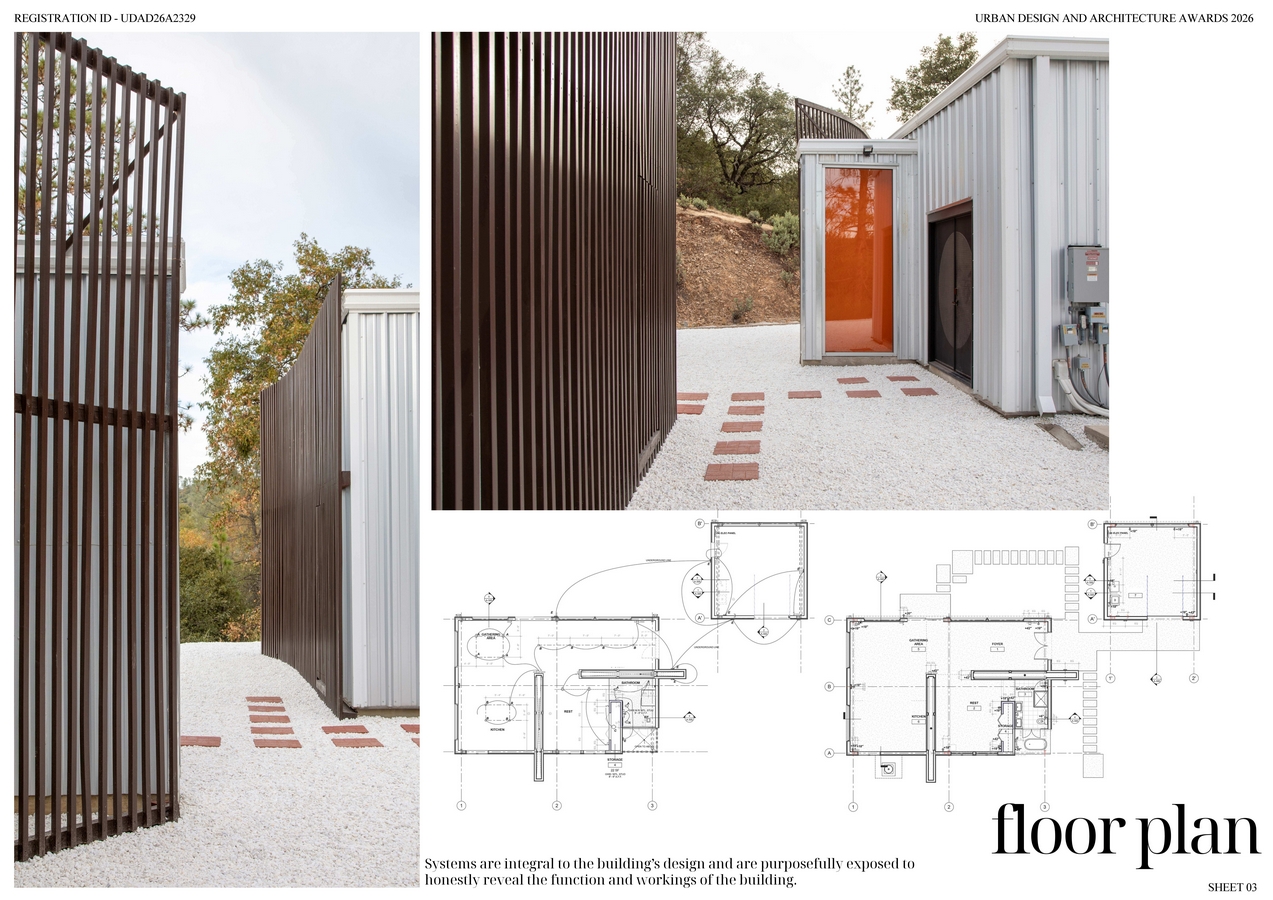
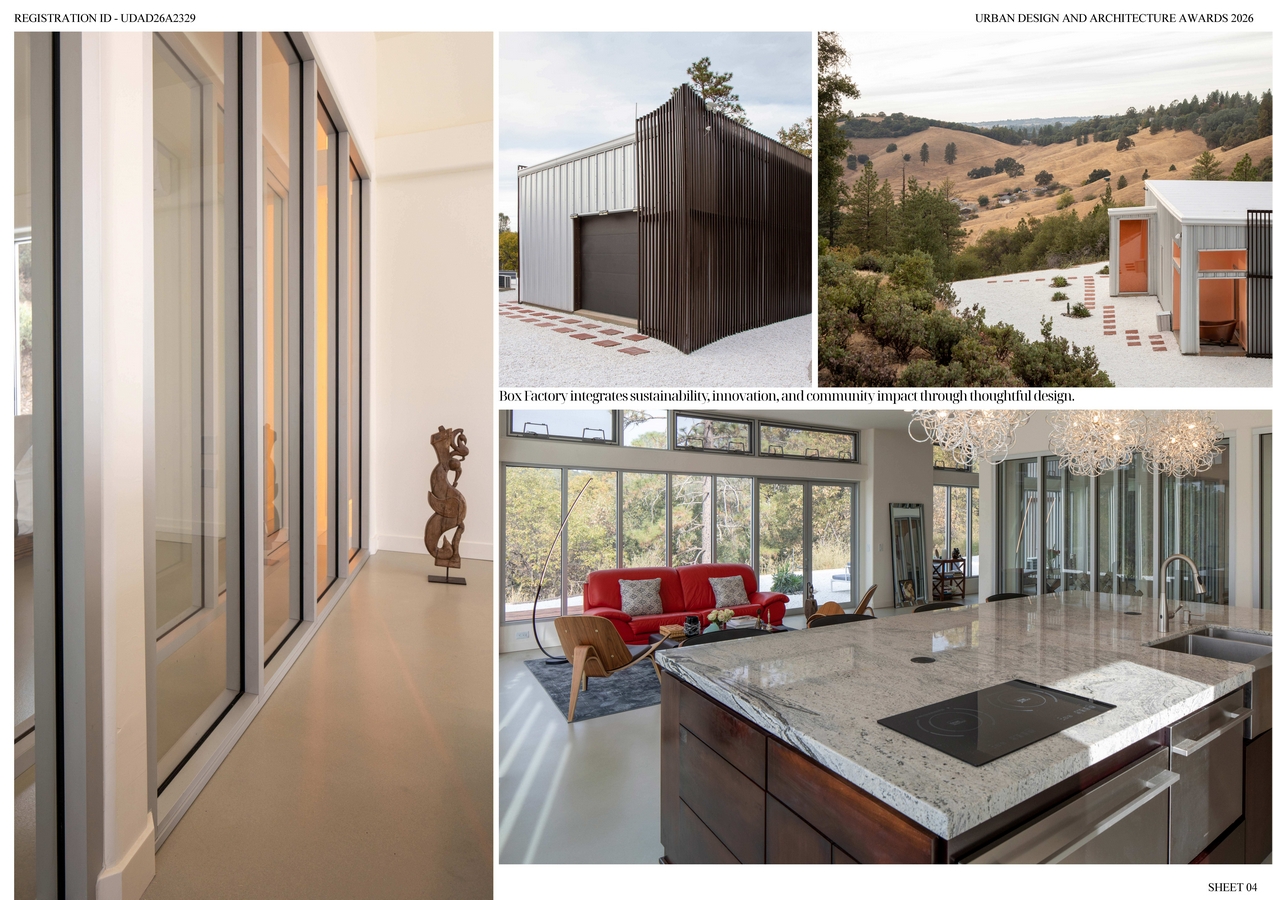
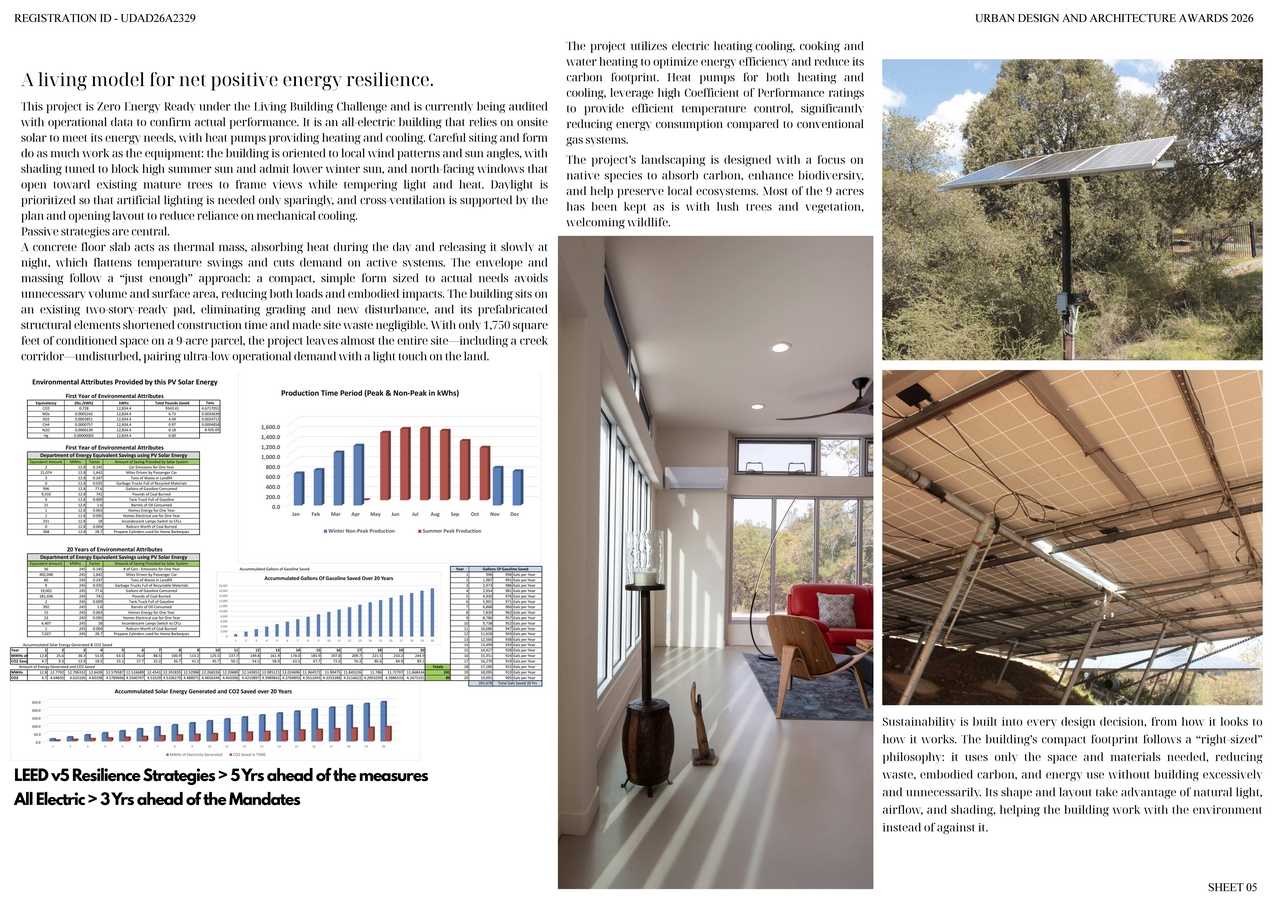
All Electric > 3 Yrs ahead of the Mandates: On the energy and climate side, the project is all‑electric, 3 years ahead of local mandates and is powered by onsite PV, designed as a “living model” of net‑positive operational energy resilience. Heat pumps provide space conditioning and water heating, and an induction kitchen eliminates combustion, cutting carbon and maintaining
healthy indoor air even during smoke events.
Passive strategies are central: The compact, “right‑sized” massing, high‑performance envelope, and thermal mass floor slab significantly reduce loads, while orientation, shading, operable windows, and ceiling fans prioritize passive comfort. Detailed PV performance modeling translates generation into avoided CO2, NOx, SO2, and other pollutants over 1 and 20‑year horizons, aligning with an ambitious push toward quantifiable climate and grid benefits.
LEED v5 Resilience Strategies > 5 Yrs ahead of the measures: Resilience is framed explicitly through climate‑risk response. Located in a wildfire‑prone area of California, affected by the 2022 Electra Fire, the building is designed to remain habitable during power shutoffs and smoke events, providing clean air, safe temperatures, water, and cooking for displaced neighbors.
Non‑combustible finishes, drought‑tolerant landscaping, and preserved vegetation reduce ignition risk while supporting ecosystem services and biodiversity. The project’s 9‑acre site is largely left undisturbed, with native species and habitat preserved, reflecting resilience emphasis on nature‑based solutions and climate‑adaptive landscapes.
Material and embodied‑carbon strategies have followed deeper life‑cycle and circularity requirements. The team retained an existing slab to avoid demolition impacts and designed the building to fit that footprint, directly cutting embodied emissions. Prefabricated structural components minimize waste, noise, and site disturbance while enabling potential disassembly and reuse, consistent with circular‑economy language now embedded in most conversations around resilience. A whole‑building life‑cycle assessment was completed years ahead of mandate, guiding low‑carbon material selection and construction methods.
Addressing Climate Adaptation: Health, equity, and community resilience are treated as core performance metrics rather than soft benefits. The project is explicitly framed as a resilience hub for vulnerable populations during wildfire smoke, heatwaves, and outages, providing filtered, zero‑combustion air; biophilic, daylit spaces; and flexible programming for social connection.
MERV 13 filtration, low‑VOC finishes, and nature‑connected interiors align tightly with AIA Design Excellence and LEED’s human‑health and resilience objectives. Taken together, Box Factory operates as an integrated, built‑at‑scale prototype that sits several years ahead of many of projects and mandates looking at resilience in the face of a climate calamity, illustrating how future forward design strategies can reward projects that unify climate mitigation, adaptation, and community protection in a single, coherent design.
The Electra Fire in 2022: The project proved itself during the 2022 Electra Fire, serving as a resilience hub for neighboring properties during major power shut offs and evacuations. As planned, Box Factory continued to operate, serving as a safe haven for a vulnerable community.