

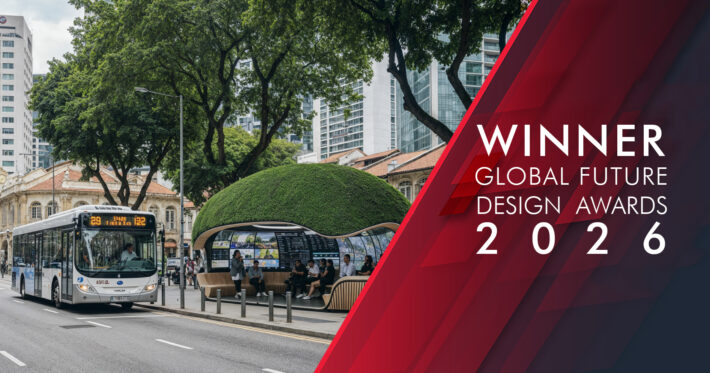
In a time when cities face growing climate pressures, the smallest gestures in design can hold the greatest power. Bush Stop, a SPARK-led research initiative, reimagines the humble bus shelter as a piece of living infrastructure — not just a place to wait, but a space that cools, cleans, and connects.
Global Future Design Awards 2027 — Entries Now Open!
Take your creativity to the global stage and showcase your innovative ideas to the world. Celebrate exceptional design, gain international recognition, and become part of a new generation shaping the future of design.
Submit Your Work Today & Take Your Design Journey to the Next Level!

Gold 🏆 Winner
Global Future Design Awards 2026
Bush Stop
Transportation Architecture Concept
Firm
SPARK Architects
Architect/Designer
Stephen Pimbley
Design Team
Javier Campoy, Luca Maccarinelli, Jing Han
Location
Singapore
Country
Singapore
Photographer/Copyright
©SPARK Architects
Website/Social Media Handles
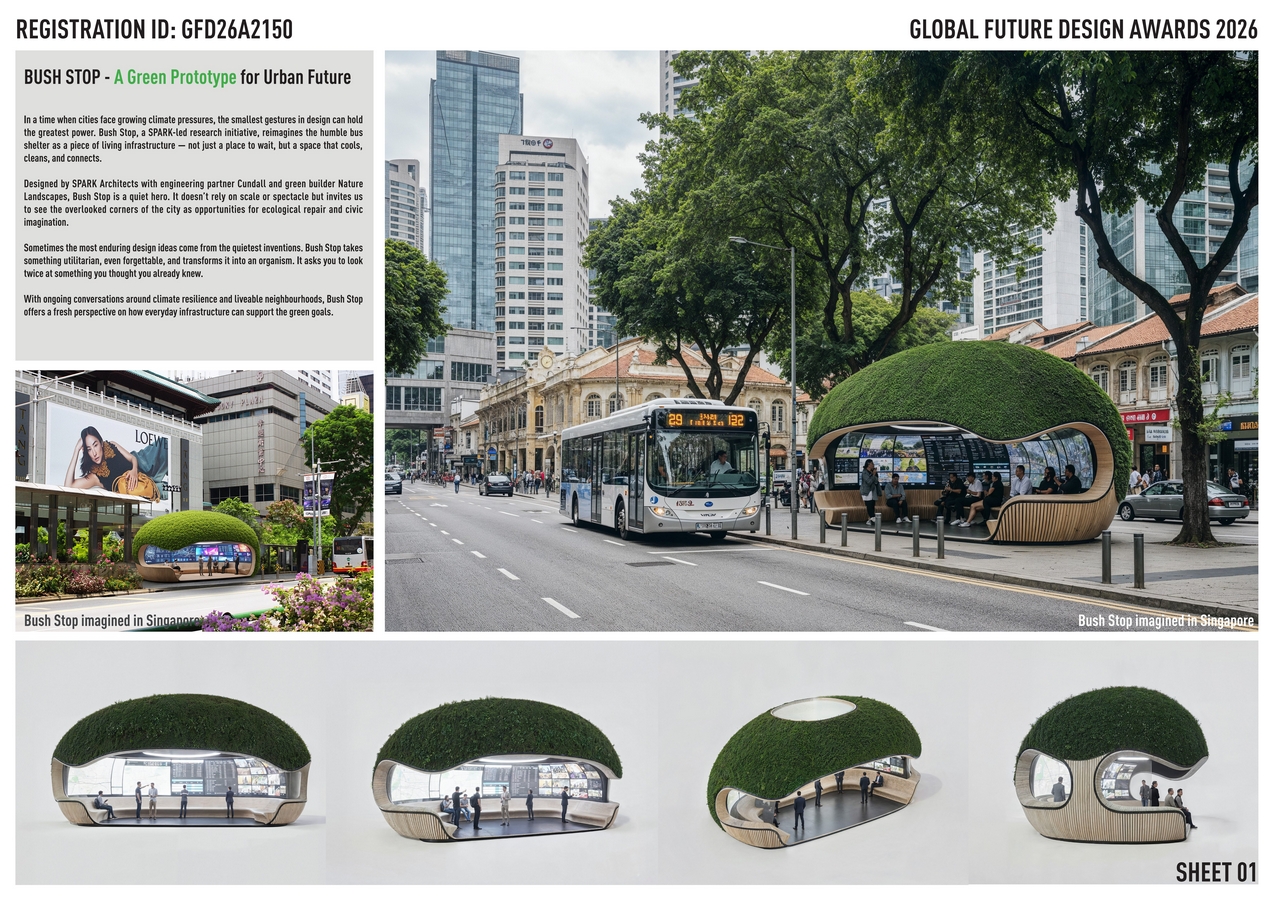
Designed by SPARK Architects with engineering partner Cundall and green builder Nature Landscapes, Bush Stop is a quiet hero. It doesn’t rely on scale or spectacle but invites us to see the overlooked corners of the city as opportunities for ecological repair and civic imagination.
Sometimes the most enduring design ideas come from the quietest inventions. Bush Stop takes something utilitarian, even forgettable, and transforms it into an organism. It asks you to look twice at something you thought you already knew.
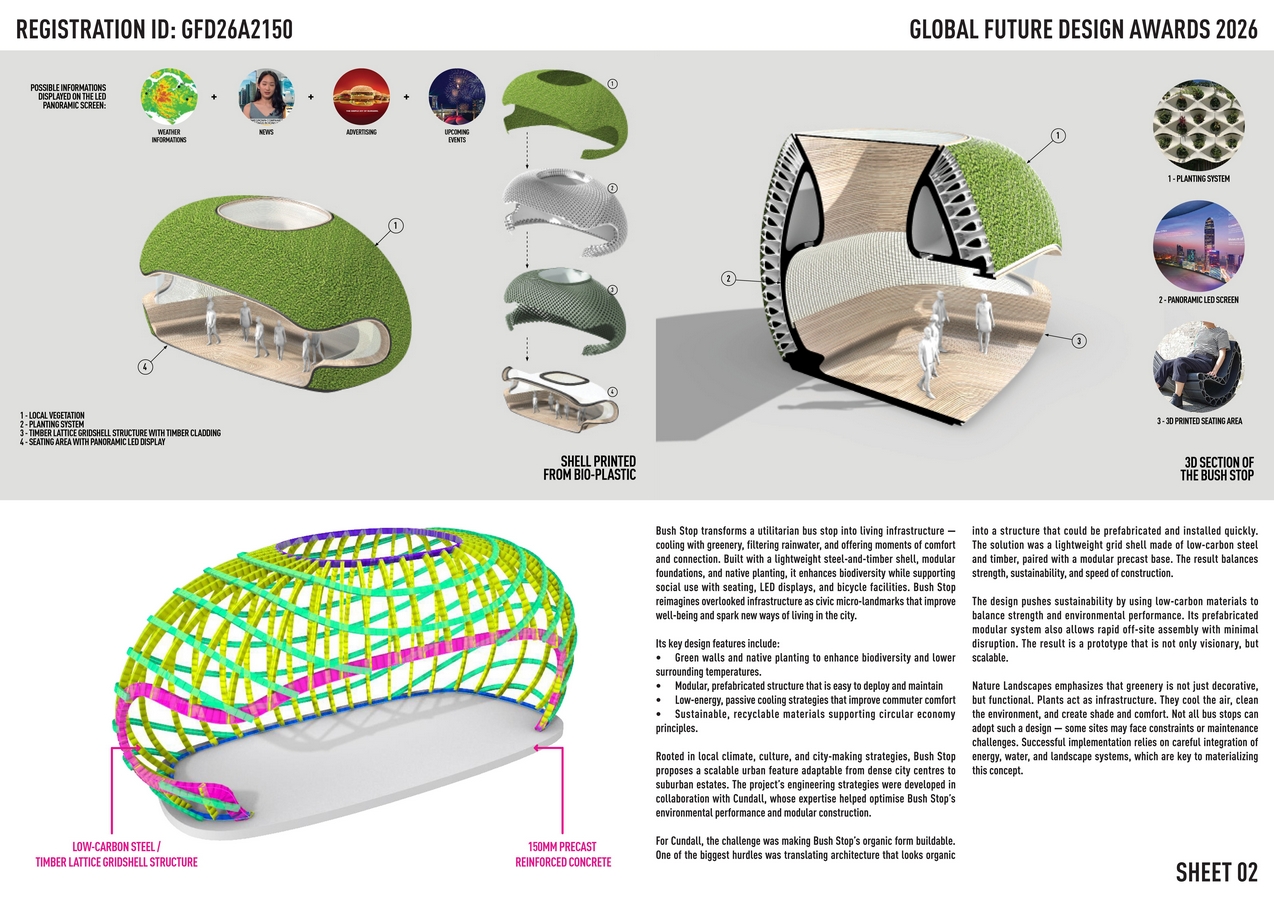
Bush Stop transforms a utilitarian bus stop into living infrastructure — cooling with greenery, filtering rainwater, and offering moments of comfort and connection. Built with a lightweight steel-and-timber shell, modular foundations, and native planting, it enhances biodiversity while supporting social use with seating, LED displays, and bicycle facilities. Bush Stop reimagines overlooked infrastructure as civic micro-landmarks that improve well-being and spark new ways of living in the city.
Its key design features include:
- Green walls and native planting to enhance biodiversity and lower surrounding temperatures.
- Modular, prefabricated structure that is easy to deploy and maintain
- Low-energy, passive cooling strategies that improve commuter comfort
- Sustainable, recyclable materials supporting circular economy principles.
With ongoing conversations around climate resilience and liveable neighbourhoods, Bush Stop offers a fresh perspective on how everyday infrastructure can support the green goals.
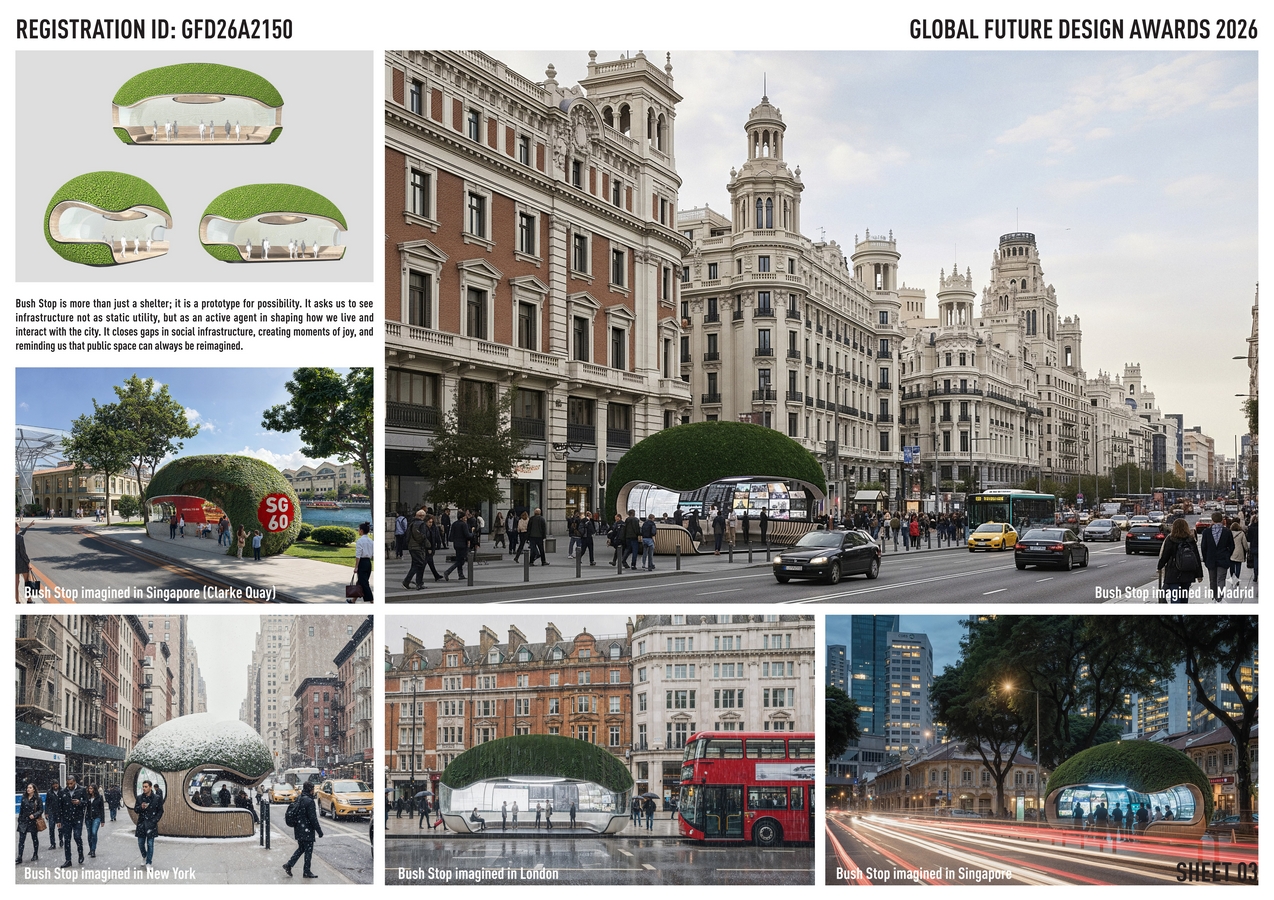
Rooted in local climate, culture, and city-making strategies, Bush Stop proposes a scalable urban feature adaptable from dense city centres to suburban estates. The project’s engineering strategies were developed in collaboration with Cundall, whose expertise helped optimise Bush Stop’s environmental performance and modular construction.
For Cundall, the challenge was making Bush Stop’s organic form buildable. One of the biggest hurdles was translating architecture that looks organic into a structure that could be prefabricated and installed quickly. The solution was a lightweight grid shell made of low-carbon steel and timber, paired with a modular precast base. The result balances strength, sustainability, and speed of construction.
The design pushes sustainability by using low-carbon materials to balance strength and environmental performance. Its prefabricated modular system also allows rapid off-site assembly with minimal disruption. The result is a prototype that is not only visionary, but scalable.
Nature Landscapes emphasizes that greenery is not just decorative, but functional. Plants act as infrastructure. They cool the air, clean the environment, and create shade and comfort. Not all bus stops can adopt such a design — some sites may face constraints or maintenance challenges. Successful implementation relies on careful integration of energy, water, and landscape systems, which are key to materializing this concept.
Bush Stop is more than just a shelter; it is a prototype for possibility. It asks us to see infrastructure not as static utility, but as an active agent in shaping how we live and interact with the city. It closes gaps in social infrastructure, creating moments of joy, and reminding us that public space can always be reimagined.
Follow us on