

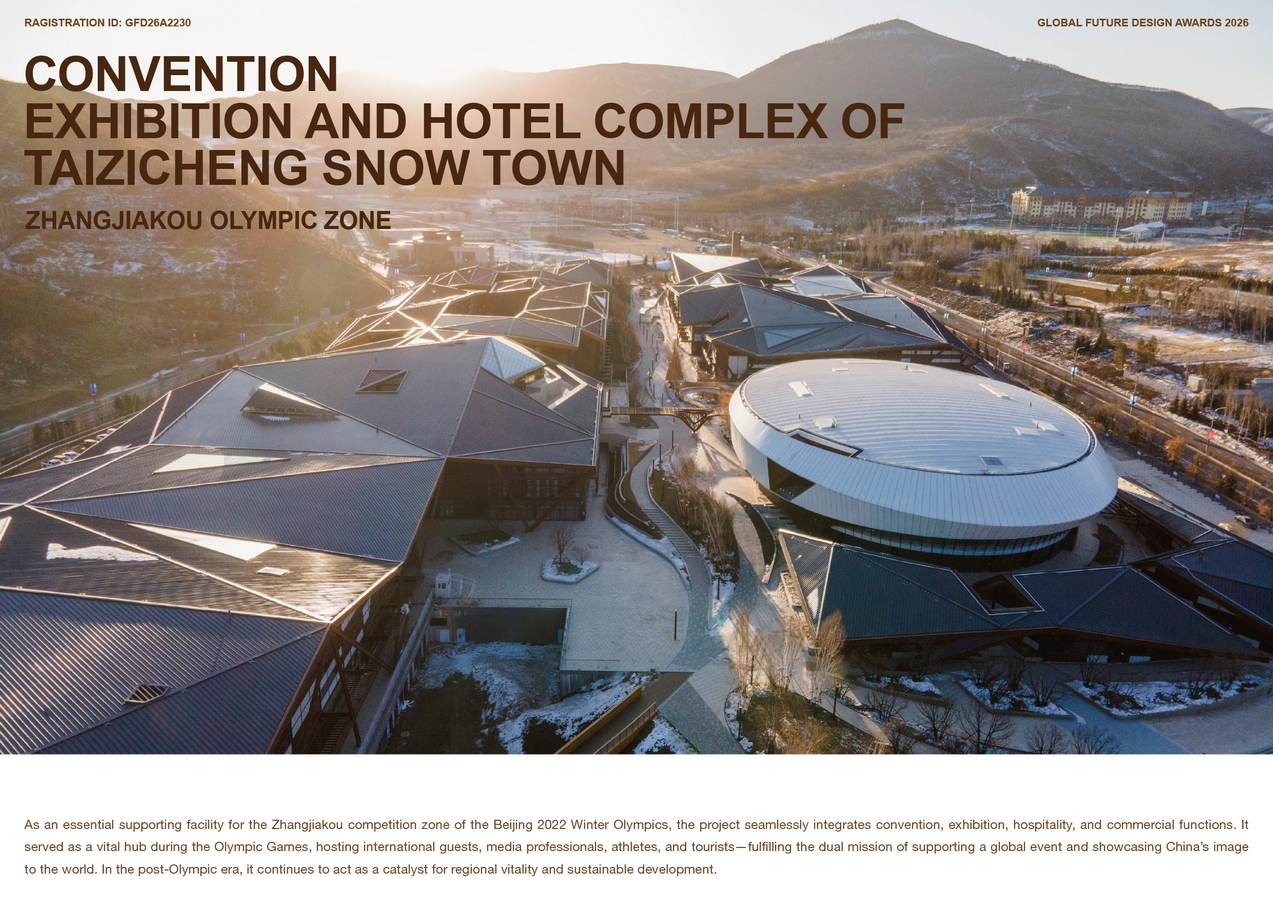
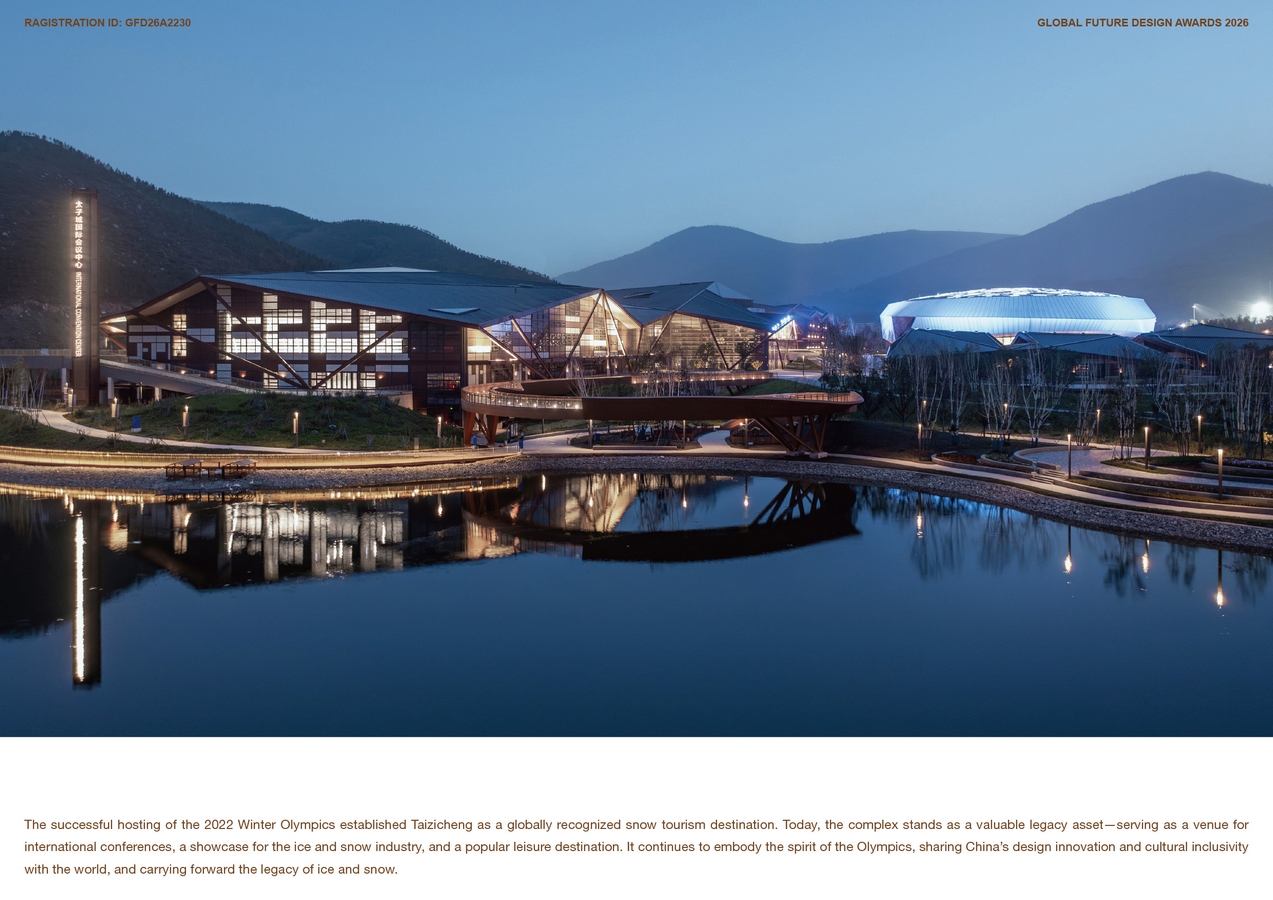
As an essential supporting facility for the Zhangjiakou competition zone of the Beijing 2022 Winter Olympics, the project seamlessly integrates convention, exhibition, hospitality, and commercial functions. It served as a vital hub during the Olympic Games, hosting international guests, media professionals, athletes, and tourists—fulfilling the dual mission of supporting a global event and showcasing China’s image to the world. In the post-Olympic era, it continues to act as a catalyst for regional vitality and sustainable development.
Global Future Design Awards 2027 — Entries Now Open!
Take your creativity to the global stage and showcase your innovative ideas to the world. Celebrate exceptional design, gain international recognition, and become part of a new generation shaping the future of design.
Submit Your Work Today & Take Your Design Journey to the Next Level!

Gold 🏆 Winner
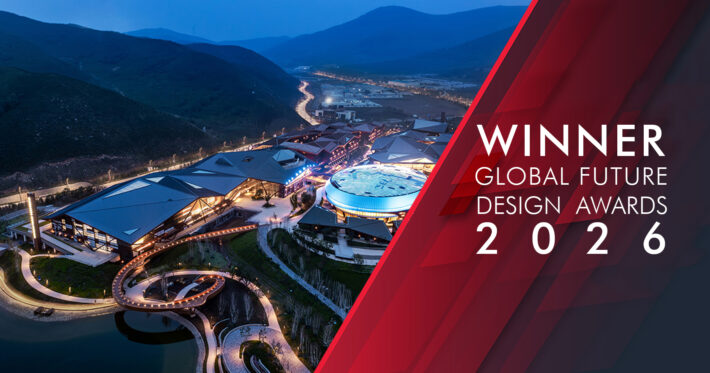
Global Future Design Awards 2026
Convention, Exhibition and Hotel Complex of Taizicheng Snow Town, Zhangjiakou Olympic Zone
Cultural Architecture Built
Firm
The Architectural Design and Research Institute of HIT Co., Ltd.
Architect/Designer
Mei Hongyuan, Wang Fei, Zhang Daiyan, Hu Xiaoting, Pi Weixing, Qu Bing, Wu Tao, Ji Qiang, Wang Lei, Huang Mian
Design Team
Chief designers: Mei Hongyuan, Wang Fei, Zhang Daiyan, Hu Xiaoting, Pi Weixing, Qu Bing, Wu Tao, Ji Qiang, Wang Lei, Huang Mian; Design team: Zhou Tingting, Yin Hongnan, Fei Teng, Hou Changyin, Li Shuqi, Pan Wente, Shi Xiaolei, Chen Yuting, Liu Wenqian, Xie Aiwen
Location
Zhangjiakou City, Hebei Province, China
Country
China
Photographer/Copyright
©Wei Shuxiang, Light Field Architectural Photography
Website/Social Media handles
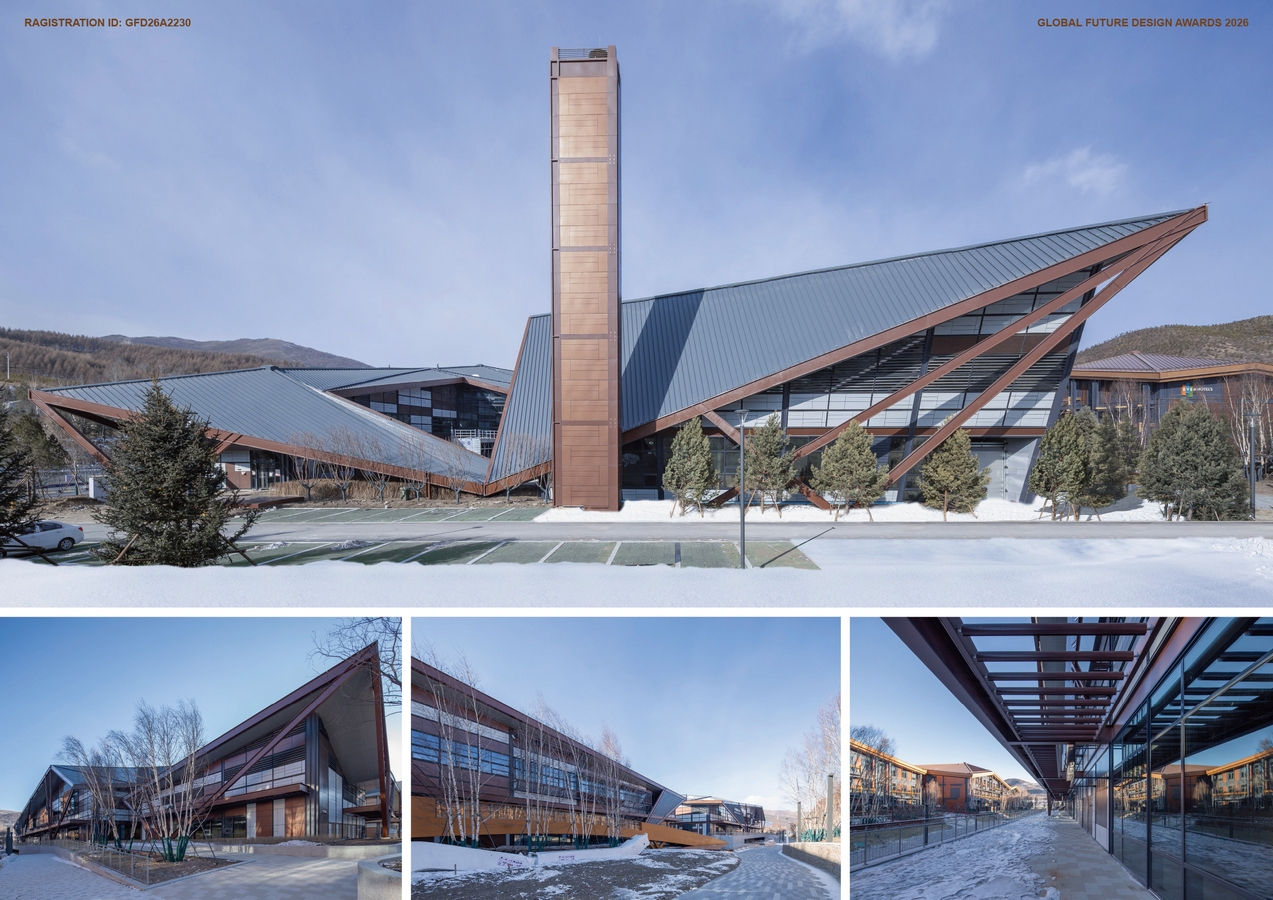
Integration with Nature — Mountain Forms and Water Imagery, Growing Organically from the Terrain
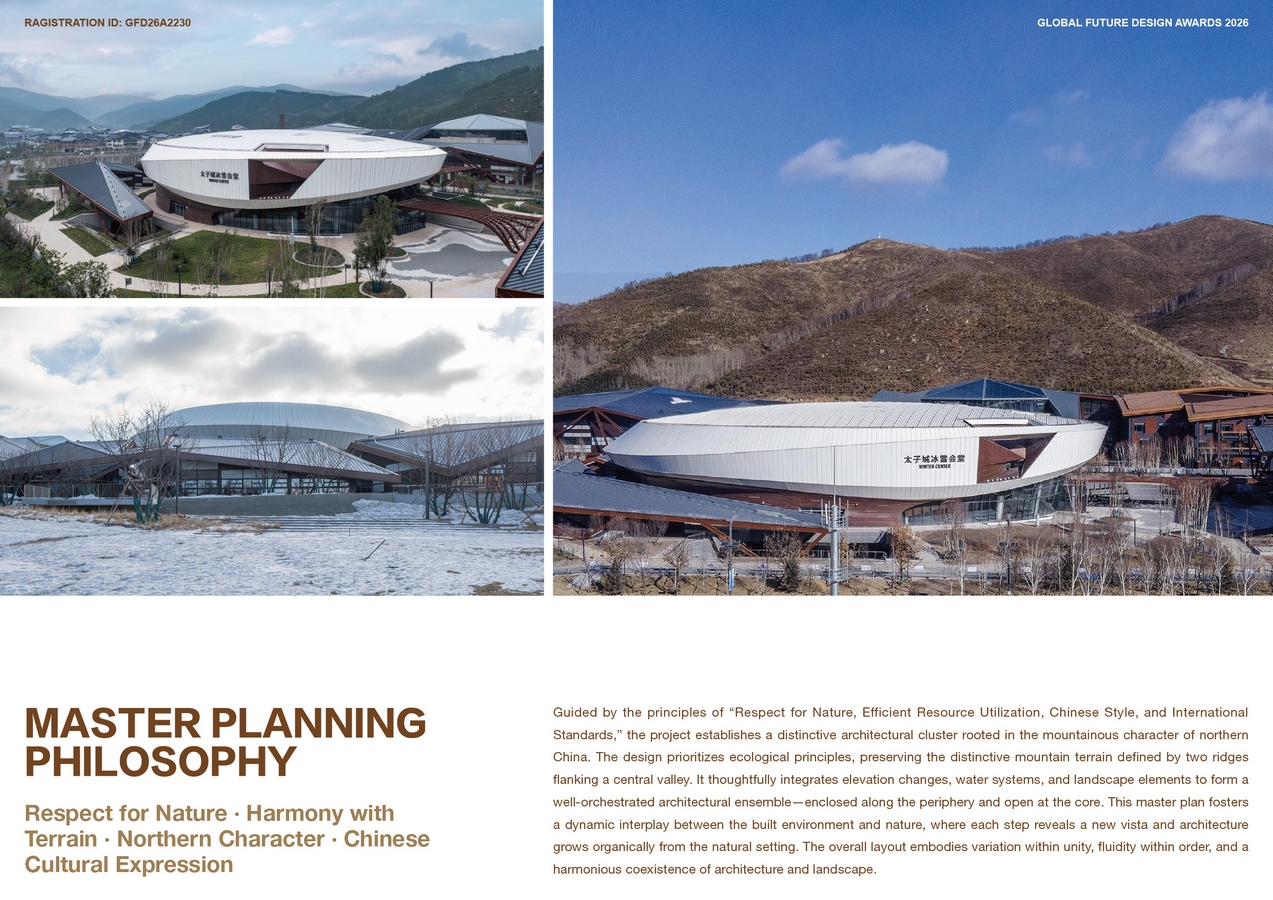
The design fully respects the area’s unique topography, defined by a valley flanked by two mountain ranges. Responding to the terrain, it thoughtfully integrates elevation changes, water systems, and landscape elements to create an environment where architecture and nature are deeply interwoven. The buildings emerge as an organic extension of the mountain ranges, expressing variation within unity, fluidity within order, and a dynamic interplay between undulating roofscapes and the surrounding landscape.
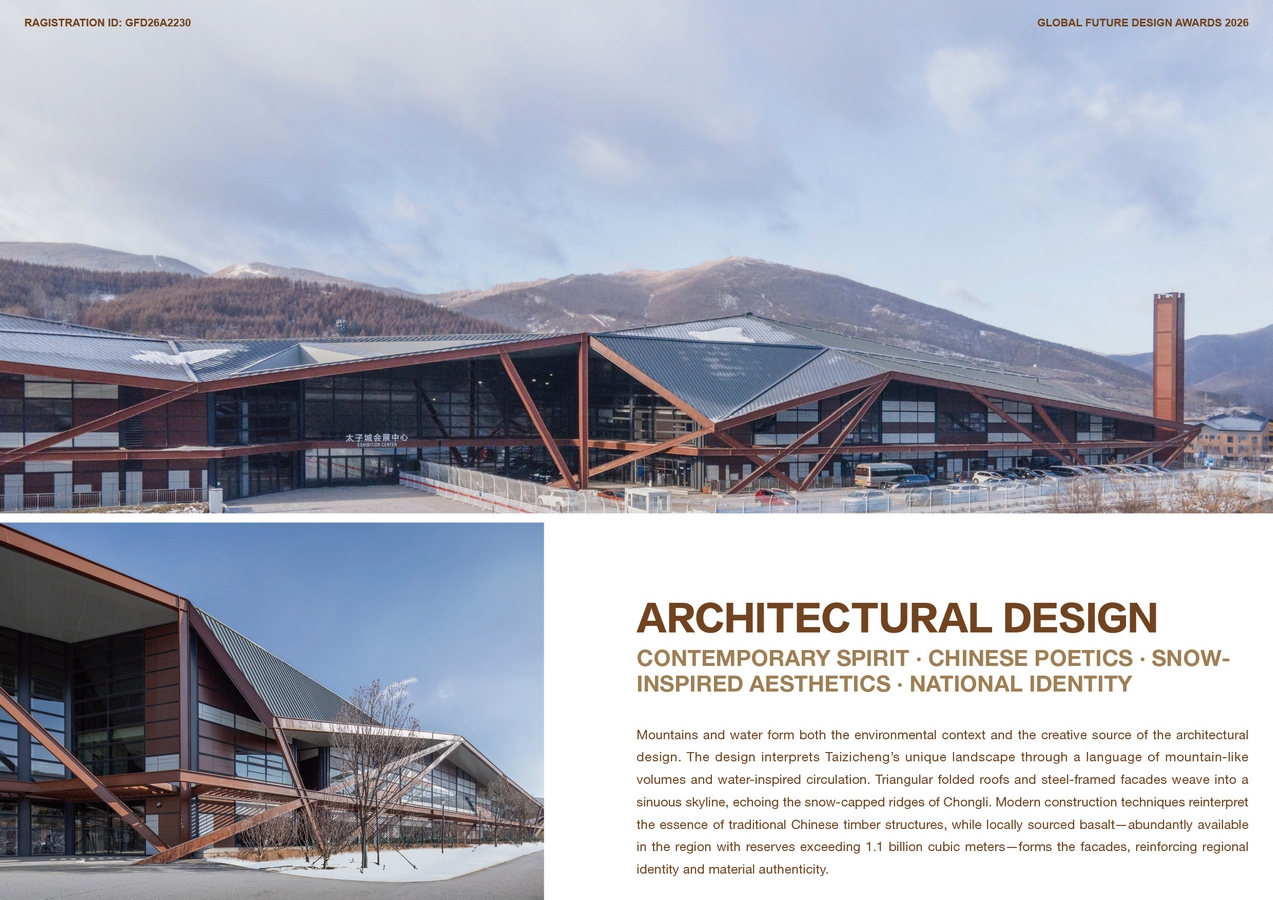
The triangular folded roof system helps reduce snow load in winter, and, together with the facade’s robust structural steel frames, shapes a rhythmic and undulating architectural cluster. This architectural language draws on the wisdom of traditional Chinese timber-frame construction, while echoing the surrounding snow-covered mountain landscape.
Spatial Diversity — All-Day Operations and Dynamic Winter Vitality
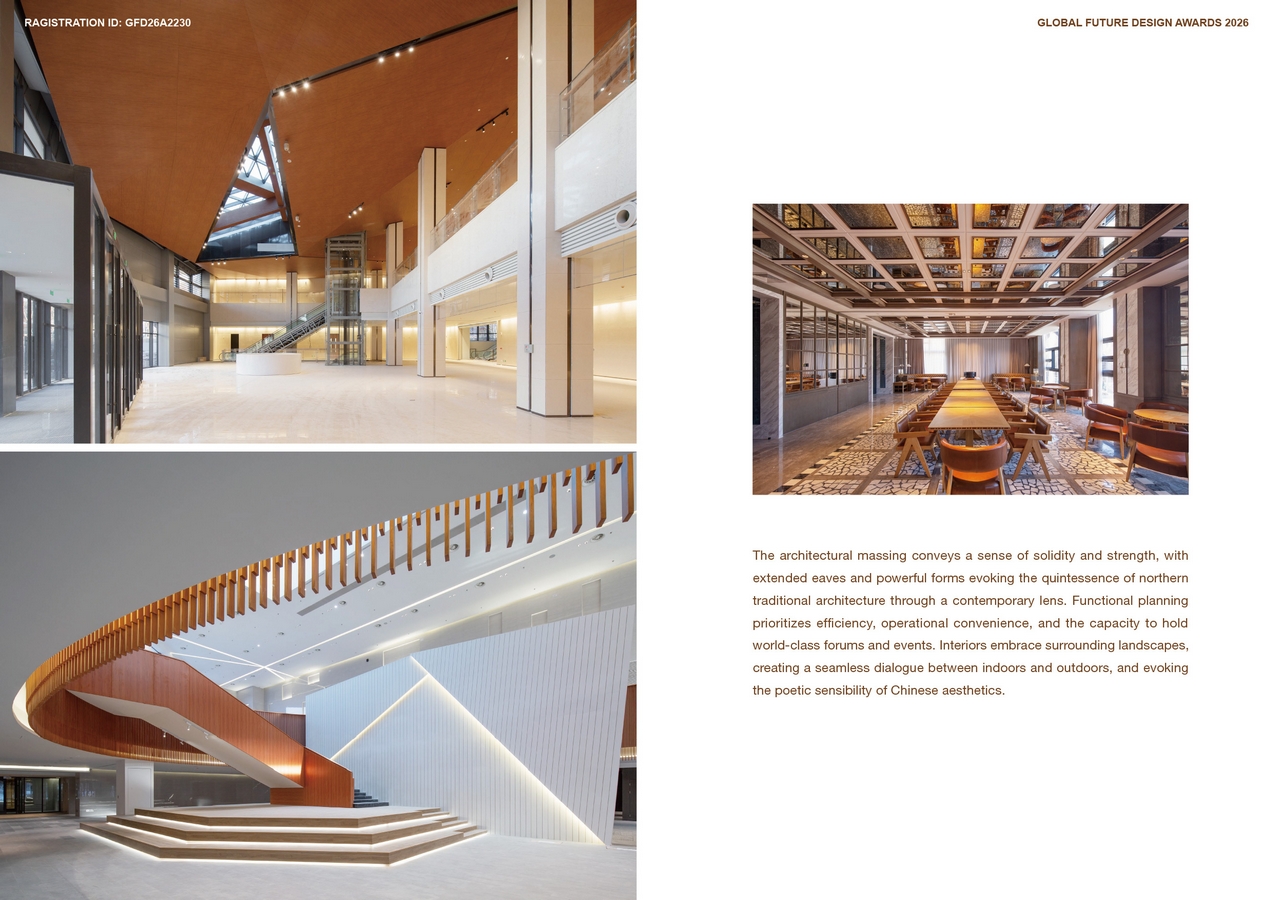
Within the context of the Winter Olympics, the design addressed diverse needs—technical, cultural, and operational—while articulating a contemporary interpretation of Chinese aesthetics in a northern mountain setting. The complex integrates conference, exhibition, hospitality, retail, and dining programs into an all-day, year-round operational framework. Circulation corridors and sunlit streets connect dispersed functional clusters, forming a continuous spatial network that enhances connectivity, flexibility, and post-event adaptability. This spatial strategy establishes a new benchmark for ice-snow themed architectural clusters, supporting sustainable post-Olympic operation and long-term regional vitality.
Technological Innovation — Low-Carbon Performance and Intelligent Operations As a Three-Star Green Building benchmark in cold regions, the project integrates advanced building systems to achieve low-carbon performance and high efficiency in clean energy utilization. It resolved the technical challenges of large-span, complex architectural forms integrated with mountainous terrain. By combining TOD (Transit-Oriented Development) strategies with intelligent mobility systems, it establishes a new paradigm for transportation organization in large-scale cultural and tourism developments in cold climates. As a result, the project not only meets the high standards of the Winter Olympics, but also sets a benchmark for iterative innovation in sustainable construction and smart building technologies.
Follow us on