
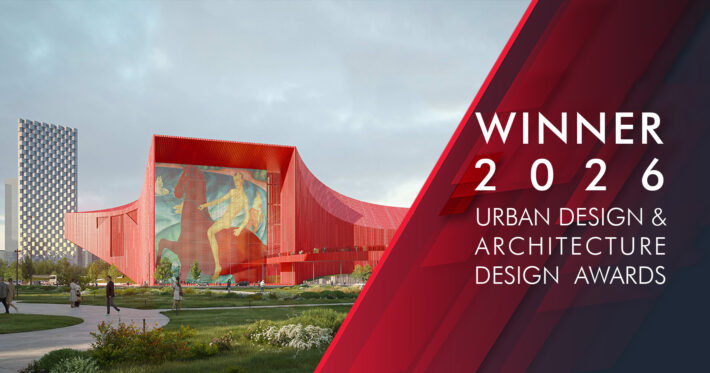
The UNK concept won the competition for the creation of a Depository and Exhibition Center in «New Moscow». “The objective of this project was to create not just a building, but a new cultural symbol of «New Moscow» — an architectural object capable of forming new connections, meanings and the history of the place. When working on the project, we took into account UNK’s experience in implementing complex and unique objects, including for government customers. Among them: the Rosatom Pavilion «ATOM», the National Spasce Center of Roscosmos, the Luzhniki Water Sports Palace and the Ice Palace in the Mnevnikovskaya Floodplain,” said Yuliy Borisov, head of UNK.
Urban Design & Architecture Design Awards 2027: Entries Open!
Take your work to the next level. Register Now…

Gold 🏆 Winner
Urban Design & Architecture Design Awards 2026
Depository and Exhibition Center
Cultural Architecture (Concept)
Firm
UNK
Architect/Designer
Yuliy Borisov
Design Team
Head of the author team, Yuliy Borisov; Chief architect of the project Dmitriy Ikonnikov, lead architect Veronika Medvedeva, head of the group of architects Alexey Yakushev, visualizer Adel Khakimullin
Location
Moscow. Russia
Country
Russia
Photographer/Copyright
©UNK/ visualizer Adel Khakimullin
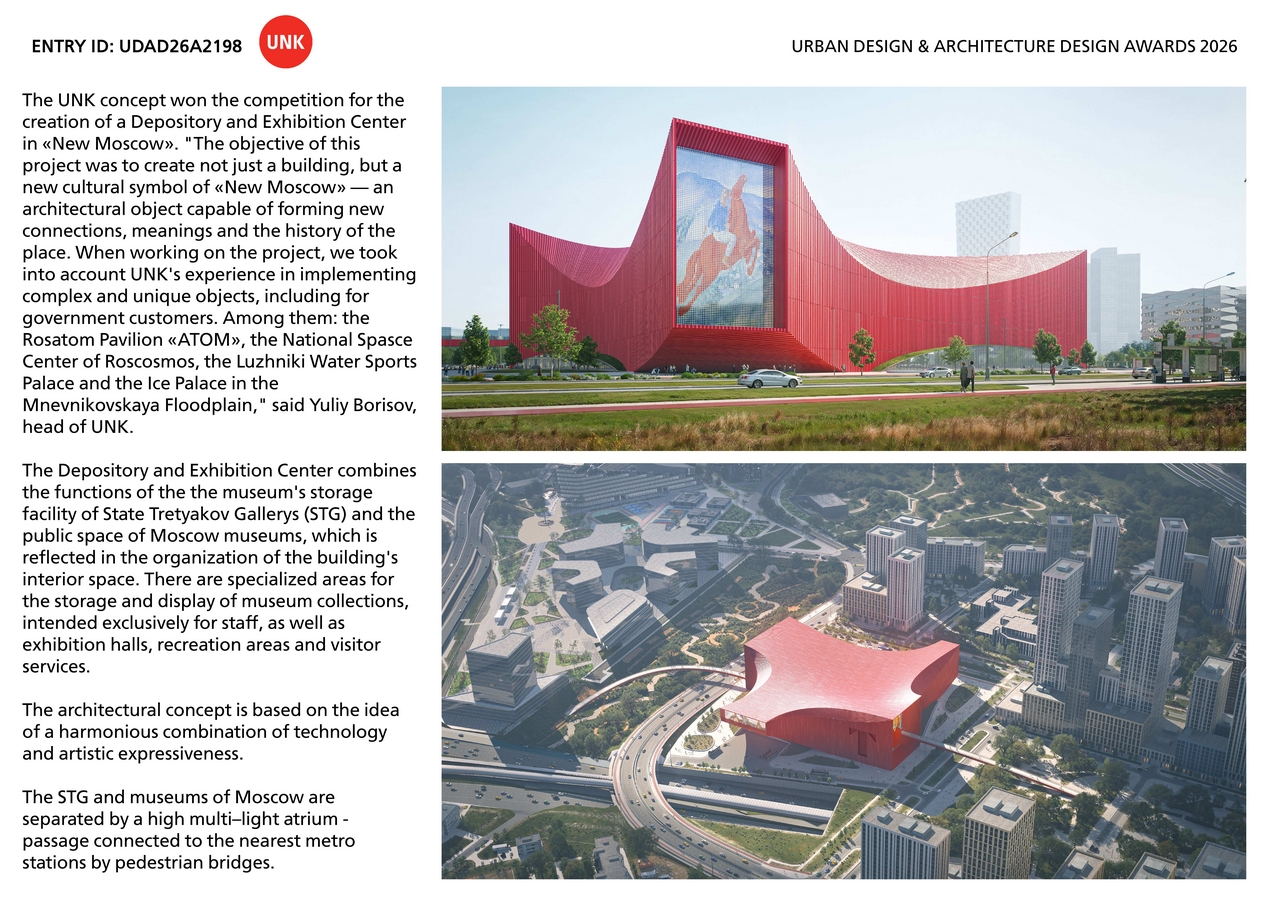
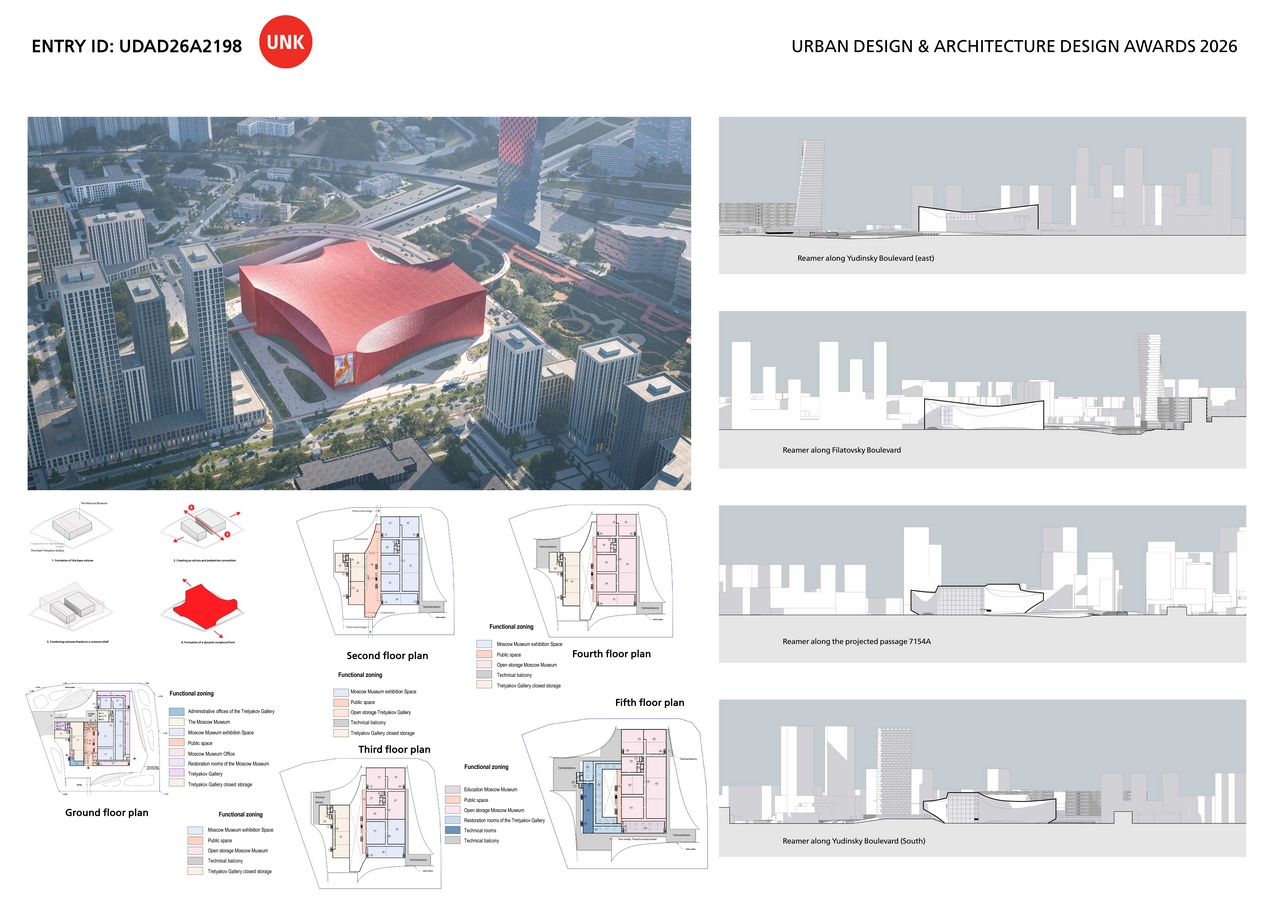
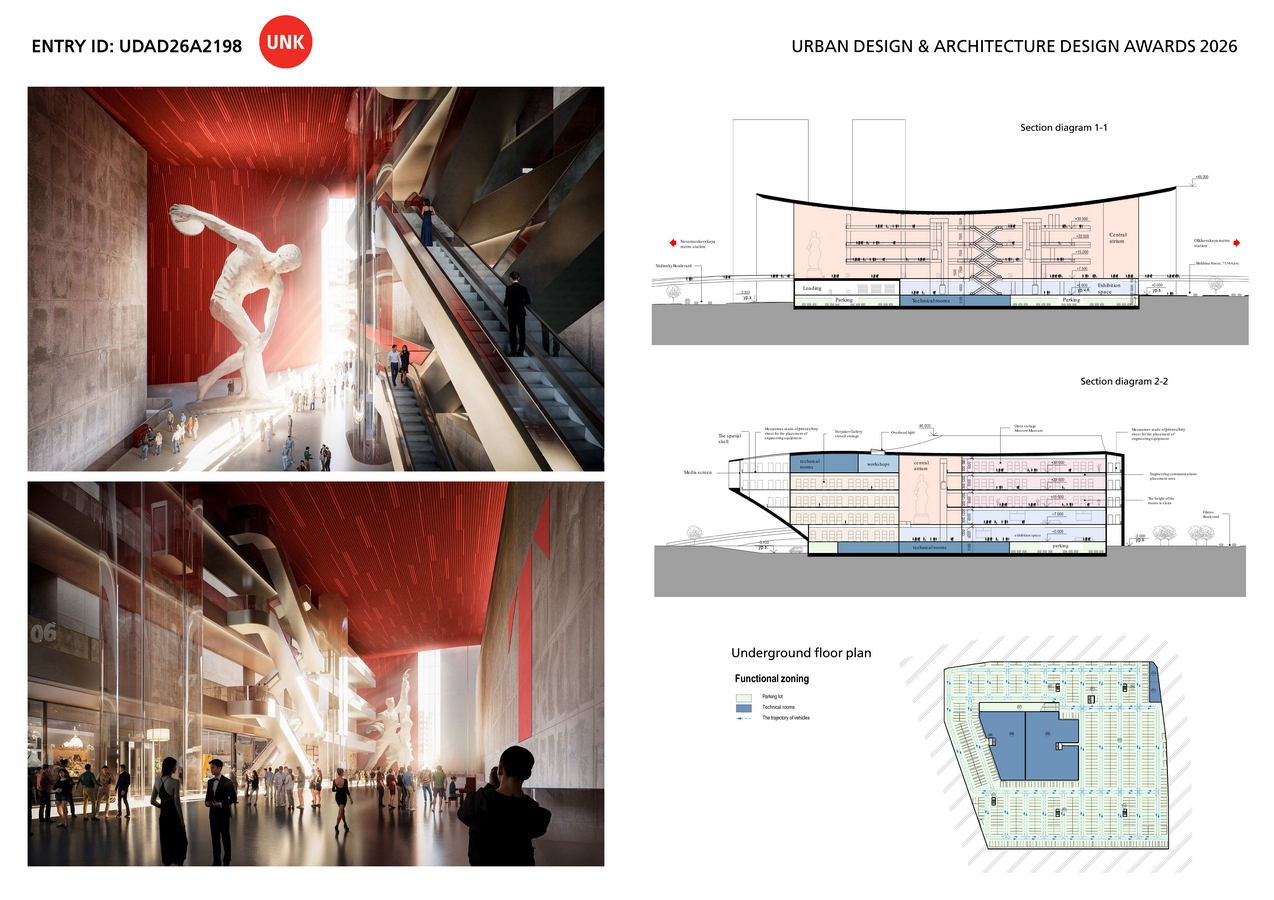
The Depository and Exhibition Center combines the functions of the the museum’s storage facility of State Tretyakov Gallerys (STG) and the public space of Moscow museums, which is reflected in the organization of the building’s interior space. There are specialized areas for the storage and display of museum collections, intended exclusively for staff, as well as exhibition halls, recreation areas and visitor services.
The architectural concept is based on the idea of a harmonious combination of technology and artistic expressiveness.
The STG and museums of Moscow are separated by a high multi–light atrium – passage connected to the nearest metro stations by pedestrian bridges.
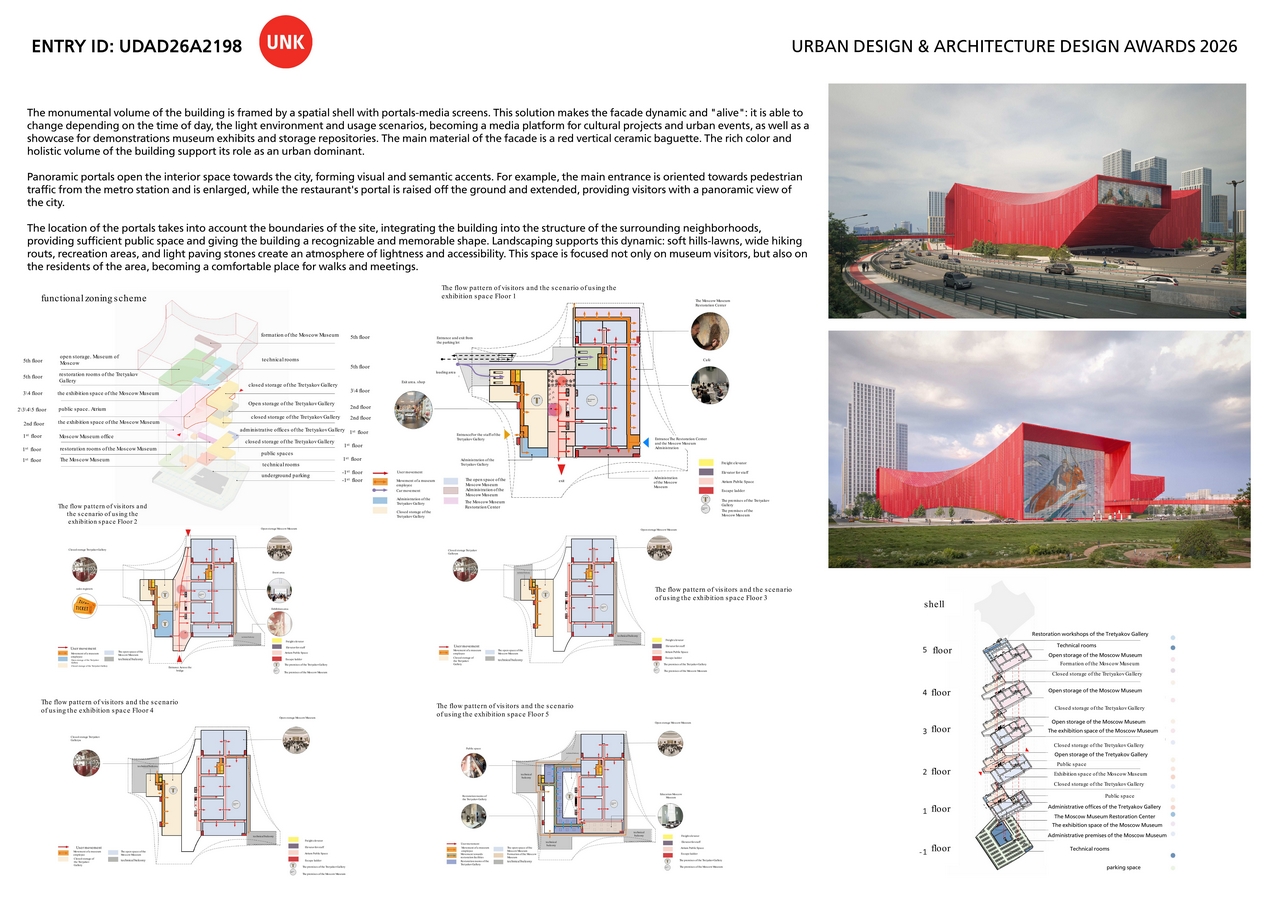
The monumental volume of the building is framed by a spatial shell with portals-media screens. This solution makes the facade dynamic and “alive”: it is able to change depending on the time of day, the light environment and usage scenarios, becoming a media platform for cultural projects and urban events, as well as a showcase for demonstrations museum exhibits and storage repositories. The main material of the facade is a red vertical ceramic baguette. The rich color and holistic volume of the building support its role as an urban dominant.
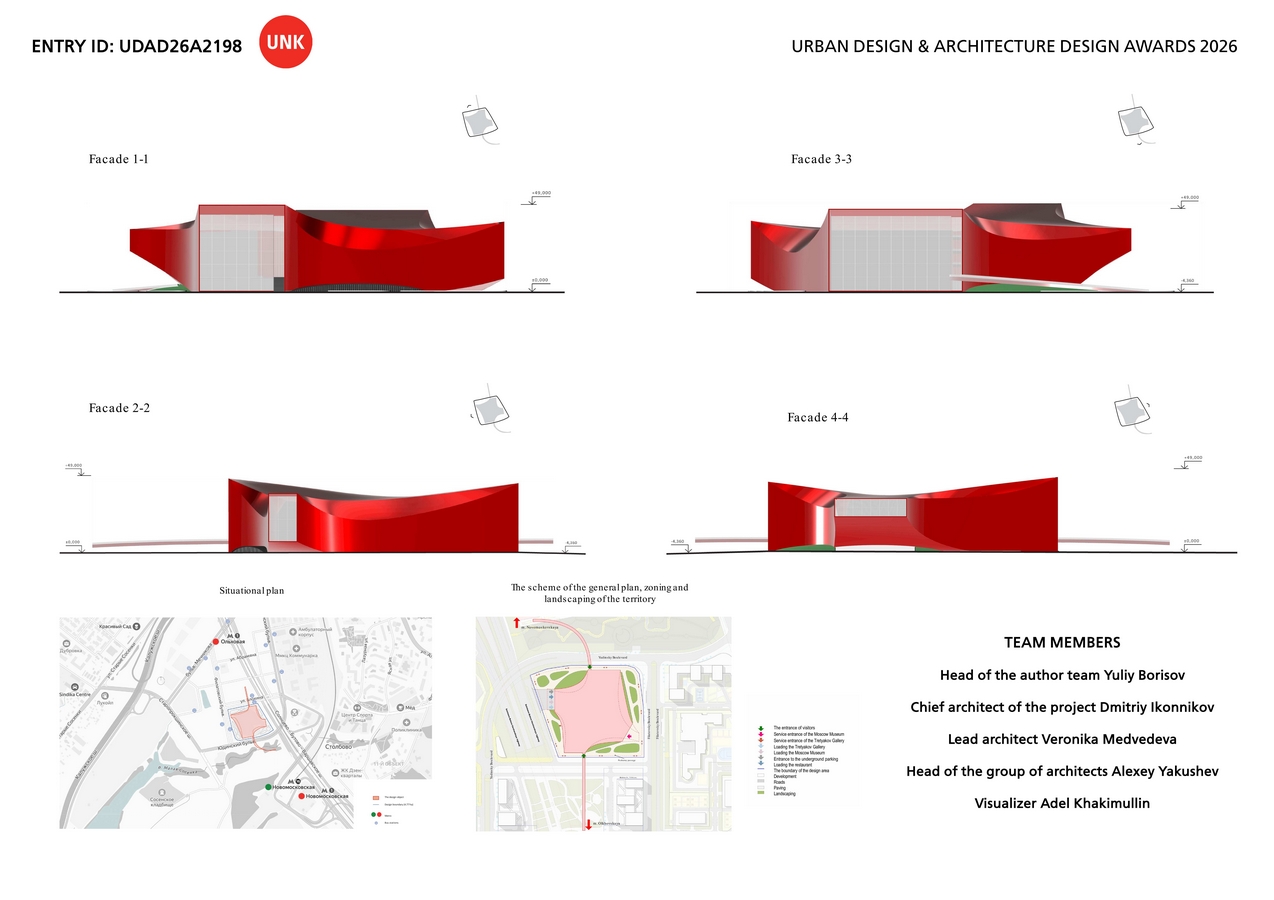
Panoramic portals open the interior space towards the city, forming visual and semantic accents. For example, the main entrance is oriented towards pedestrian traffic from the metro station and is enlarged, while the restaurant’s portal is raised off the ground and extended, providing visitors with a panoramic view of the city.
The location of the portals takes into account the boundaries of the site, integrating the building into the structure of the surrounding neighborhoods, providing sufficient public space and giving the building a recognizable and memorable shape. Landscaping supports this dynamic: soft hills-lawns, wide hiking routs, recreation areas, and light paving stones create an atmosphere of lightness and accessibility. This space is focused not only on museum visitors, but also on the residents of the area, becoming a comfortable place for walks and meetings.