

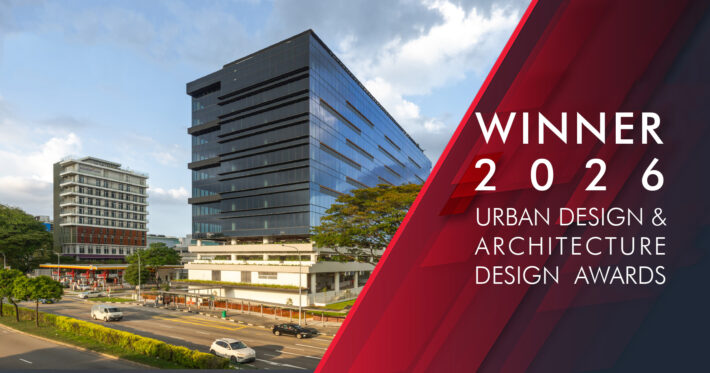
Located in Singapore’s fast-evolving Paya Lebar district, Paya Lebar Green (PLG) is a forward-looking redevelopment that exemplifies the principles of adaptive reuse and sustainable urban regeneration. Jointly developed by Certis and Lendlease, the project transforms the former Certis Centre into a vibrant mixed-use gateway while retaining critical operational infrastructure. Comprising the retrofit of an existing block (PLG North) and the construction of a new Grade-A office building (PLG South), Paya Lebar Green seeks to rejuvenate the precinct by introducing a future-ready model for green, resilient and community-oriented development.
Urban Design & Architecture Design Awards 2027: Entries Open!
Take your work to the next level. Register Now…

Gold 🏆 Winner
Urban Design & Architecture Design Awards 2026
Paya Lebar Green
Office Building (Built)
Firm
DP Architects Pte Ltd
Architect/Designer
DP Architects Pte Ltd
Design Team
DP Architects Pte Ltd
Location
Singapore
Country
Singapore
Photographer/Copyright
©DP Architects Pte Ltd
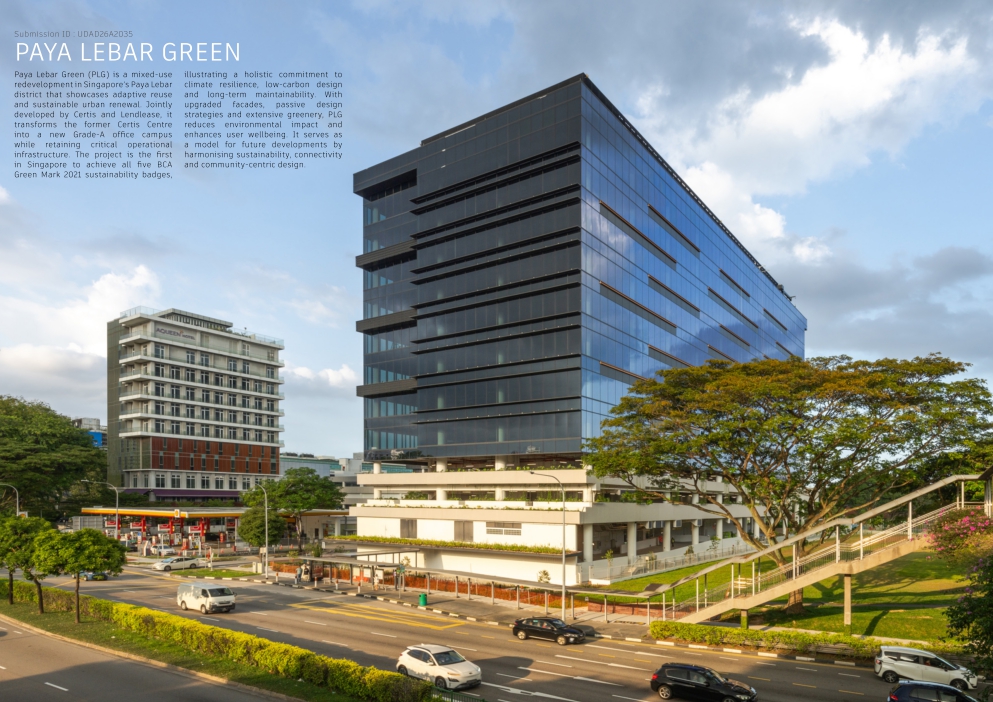
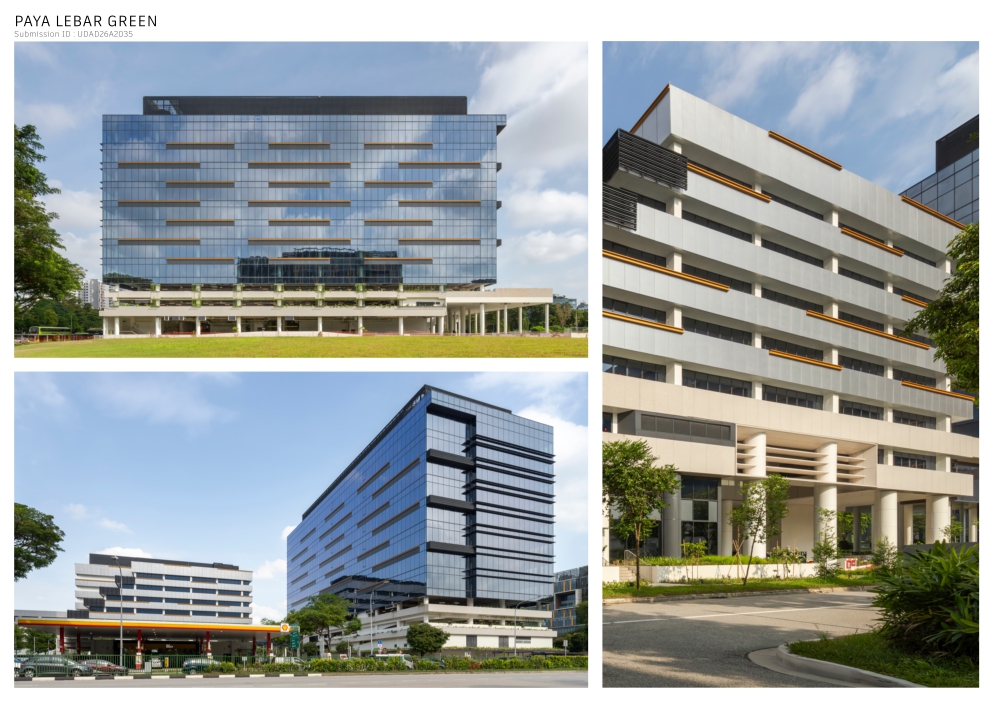
One of the defining achievements of PLG is its Green Mark Platinum, Super Low Energy certification under BCA’s Green Mark 2021 scheme. As the first office project in both new and existing categories to earn all five sustainability badges, Health & Wellbeing, Whole Life Carbon, Resilience, Intelligence and Maintainability, this achievement signals the project’s holistic, long-term approach to sustainability. The decision to refurbish the existing structure reflects a deliberate commitment to reducing embodied carbon and minimising construction waste. This adaptive reuse strategy encourages the optimisation of existing assets as a more sustainable alternative to rebuilding from scratch.
The design concept is articulated around five core themes: Circuit, Carbon, Capacity, Climate and Community. Each of which reflects a key ambition of the project.
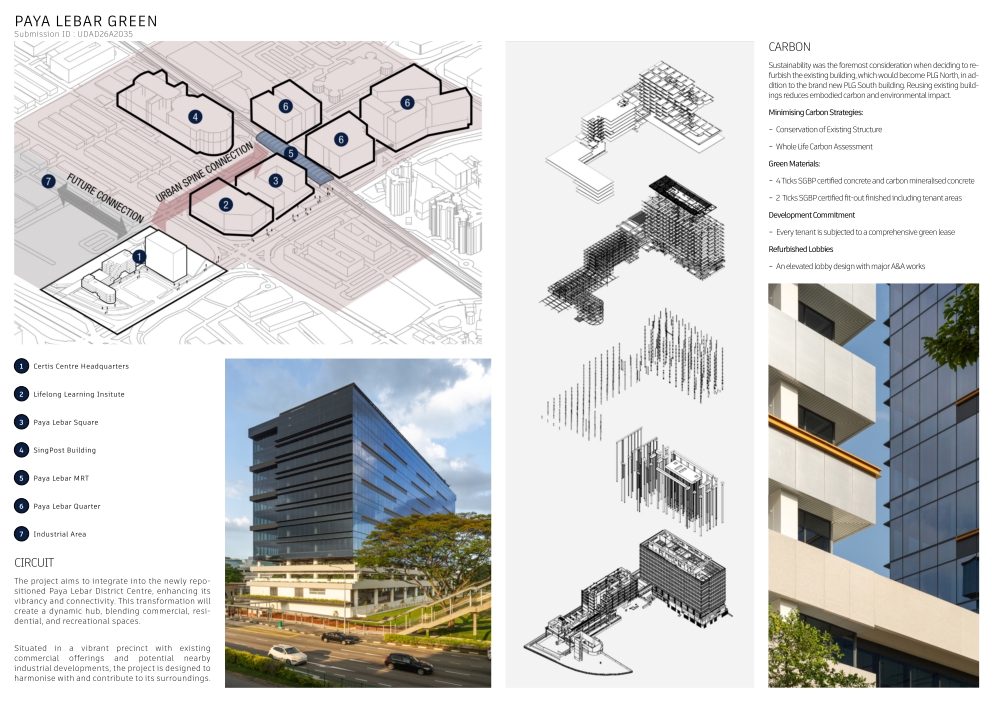
Circuit speaks to PLG’s aim of seamlessly integrating into the Paya Lebar District Centre, strengthening connections across commercial, residential and recreational programmes. By activating the ground plane and improving pedestrian linkages, the development blurs the lines between spaces, contributing to the overall vibrancy of the district, reinforcing its role as a dynamic urban node.
Carbon refers to the critical sustainability decision to refurbish the existing building, becoming PLG North. Through extensive retrofitting, including upgraded glazing and facade improvements, the building achieves an Envelope Thermal Transfer Value (ETTV) of 21 W/m², significantly reducing heat gain and improving overall energy performance.
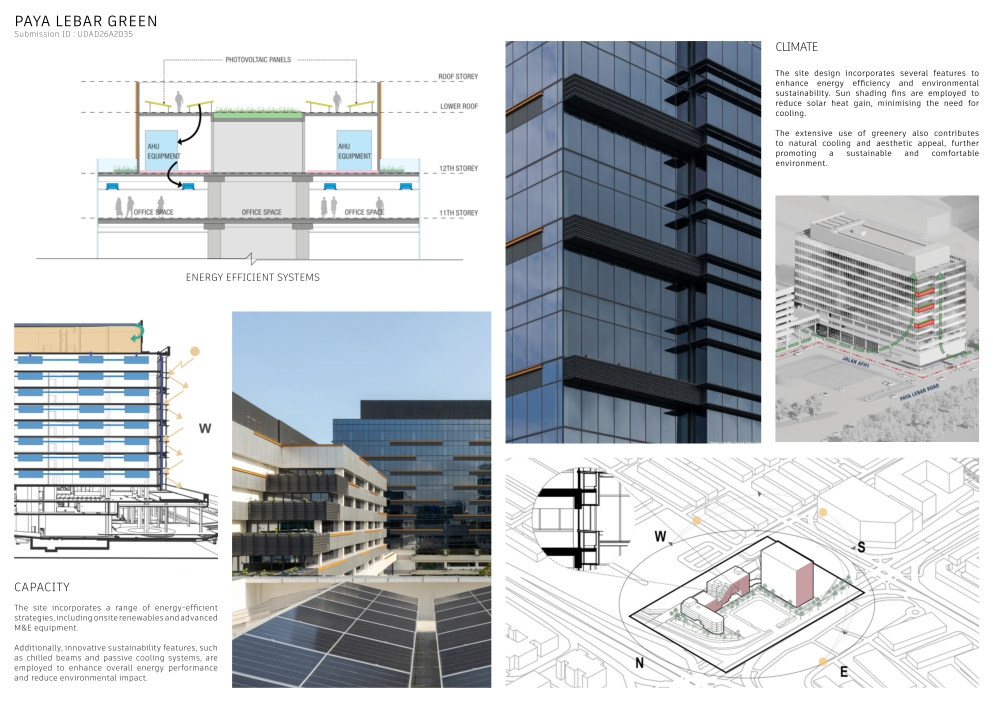
Capacity reflects the development’s suite of energy-efficient strategies, such as the use of chilled beams, passive cooling techniques, onsite renewable energy and intelligent M&E systems. Together, these elements reduce operational energy consumption while ensuring a comfortable internal environment.
Climate is addressed through the thoughtful integration of shading fins and extensive greenery, which reduce solar heat gain and contribute to natural cooling and biodiversity. These climate-responsive features enhance the site’s resilience, further emphasising efficiency and sustainability.
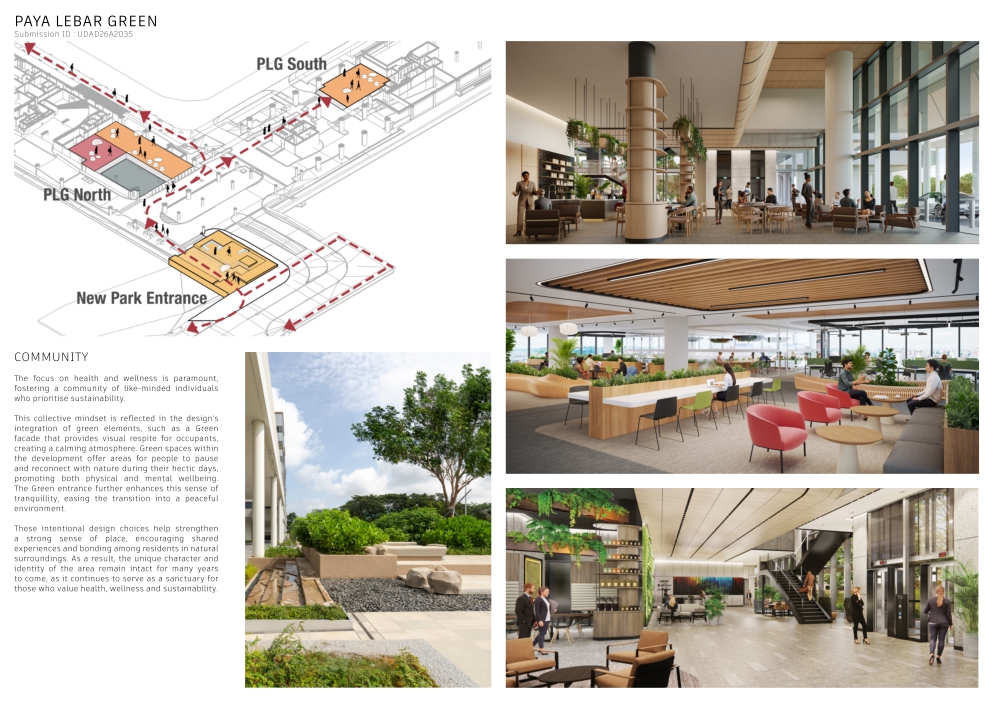
Finally, Community places occupant wellbeing at the heart of the design. A lush green façade, landscaped terraces and a tranquil green entrance create spaces for relaxation and respite, promoting mental and physical wellbeing. By providing areas for people to pause and reconnect with nature, PLG fosters a sense of place and shared identity for those who live and work in the district. The project ultimately serves as a living model of sustainable, inclusive development—one that honours its existing context while charting a resilient path forward for Singapore’s future built environment.