

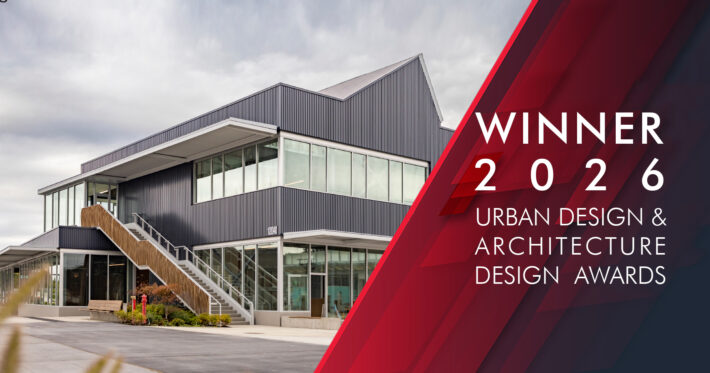
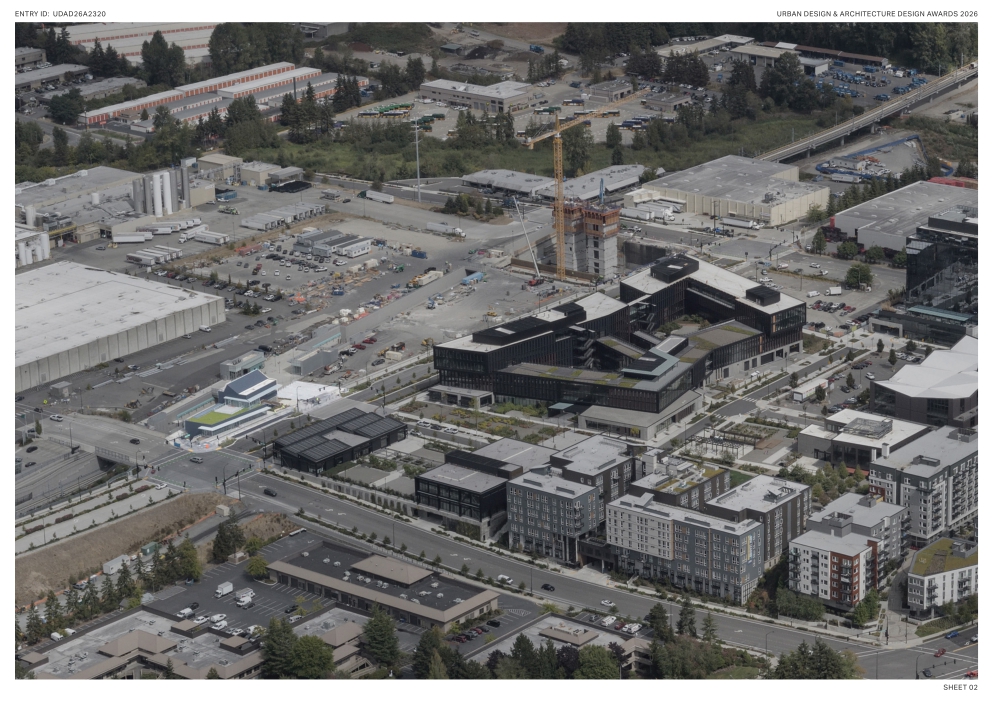
Like many contemporary projects, the Spring District Transit Hub’s site is a remnant. A small, irregular, “leftover” parcel that, over the course of 15 years since the Spring District began its first phases of construction, had accrued the responsibility to deliver on dozens of programmatic commitments as part of the original master plan and subsequent agreements, but that had yet to be realized.
Urban Design & Architecture Design Awards 2027: Entries Open!
Take your work to the next level. Register Now…

Gold 🏆 Winner
Urban Design & Architecture Design Awards 2026
Spring District Transit Hub
Transportation Architecture (Built)
Firm
Northwest Studio
Architect/Designer
David Cutler
Design Team
David Cutler, Aaron Young, Brian Nguy
Location
Bellevue, Washington
Country
United States
Photographer/Copyright
©Fouchee
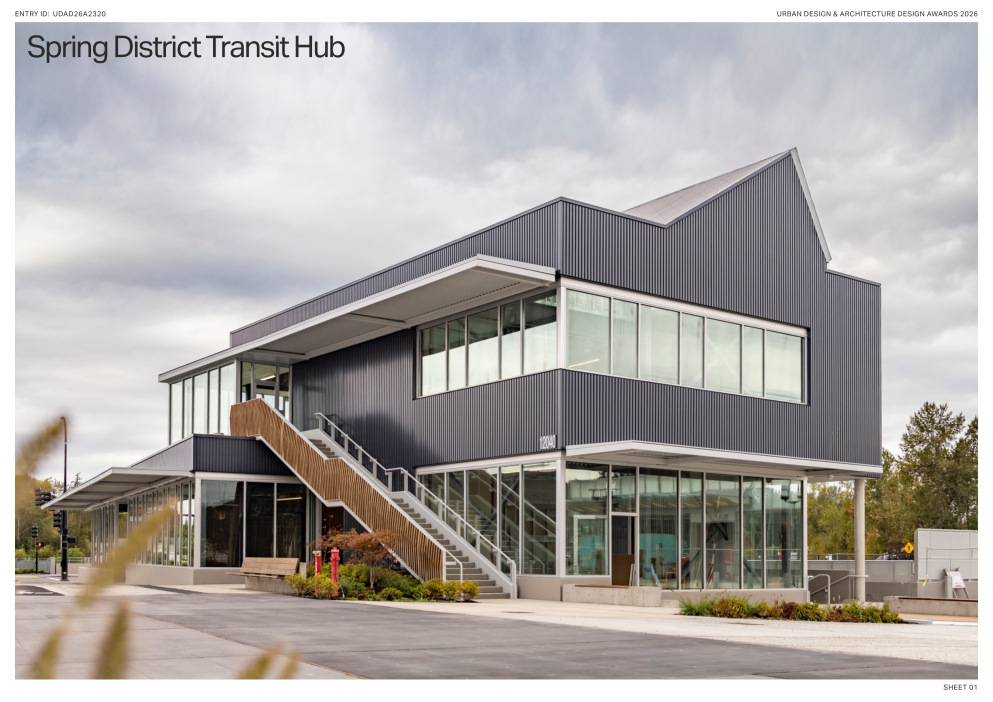
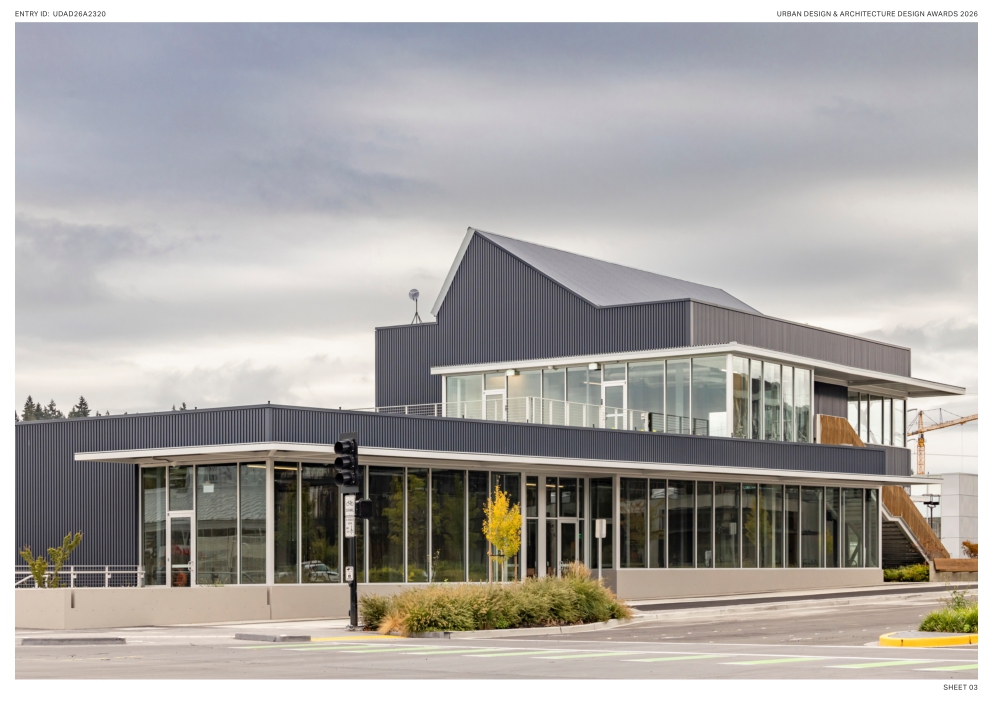
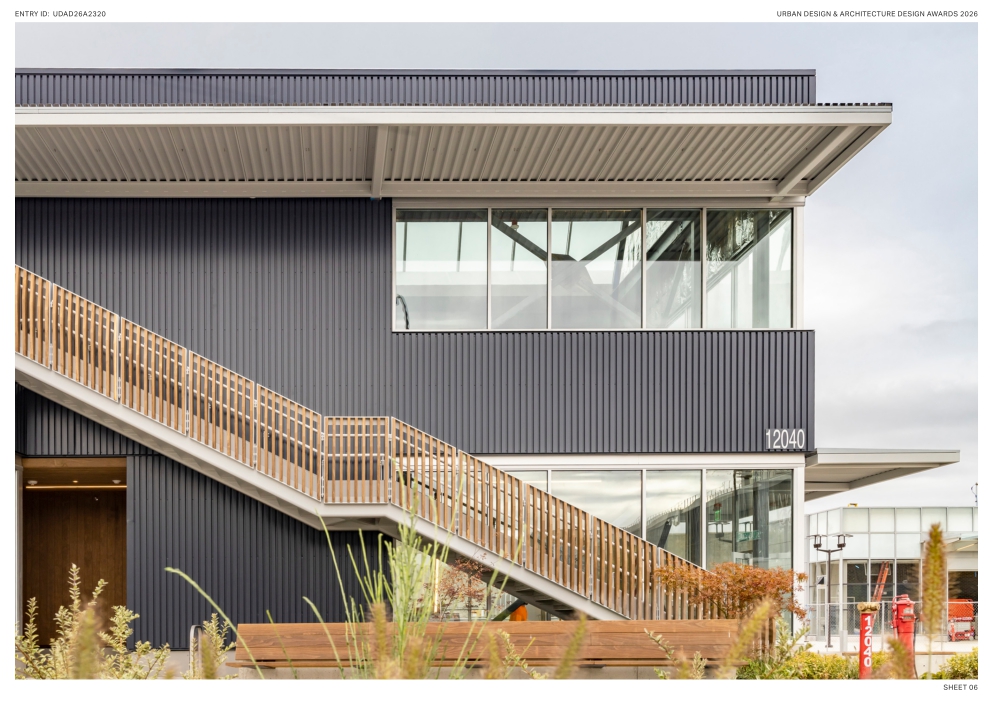
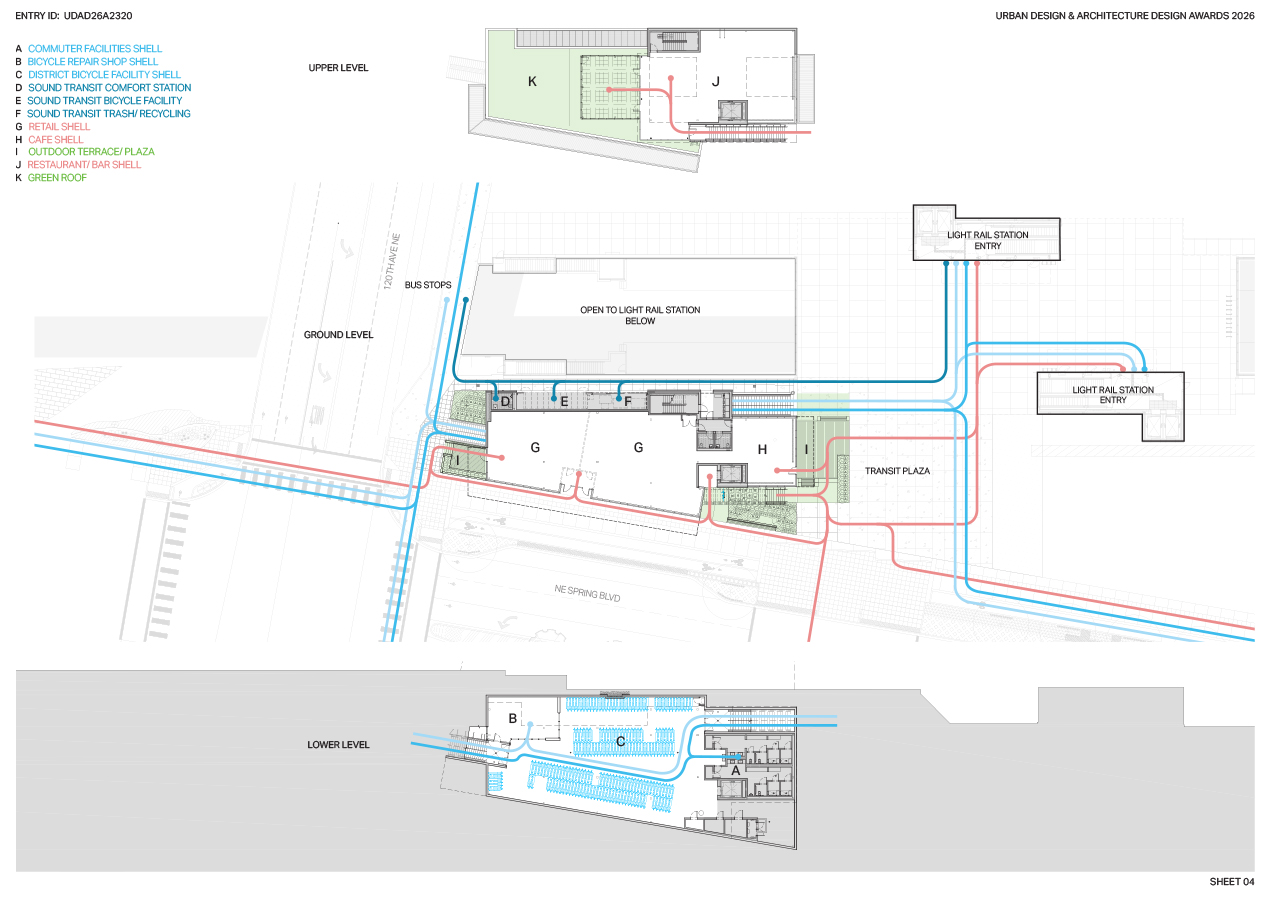
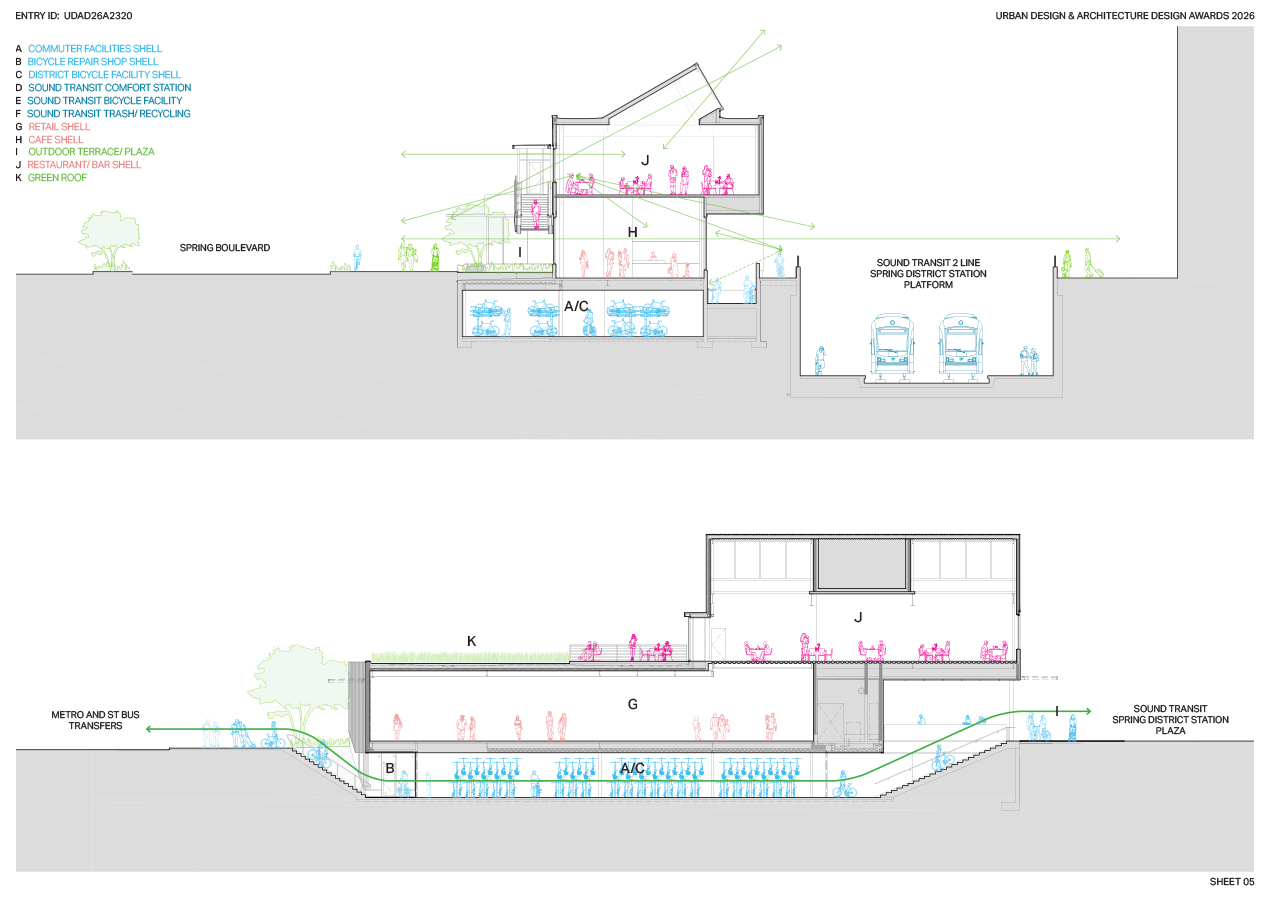
By the time the project entered its early design phases, the program brief was large. It needed to house secure long-term storage for over 450 bikes and e-bikes along with space for a bicycle repair shop; facilities for Sound Transit’s 2-Line light rail drivers, maintenance contractors, and system staff; refuse, compost, and recycling storage for the station itself; secure locker and shower facilities for commuters; and importantly, attractive and enticing spaces for transit-oriented retail, cafes, and restaurants.
And it needed to deliver these programs, 16,000 square feet “at grade,” together with 8,600 square feet of public landscapes—to resolve District-wide code requirements—on an 11,000 square foot site.
The project responded by creating a second ground plane, interwoven with public programs, connecting the new light rail station to critical bus transfers. It drew inspiration from the site’s history to create solutions that formed a cohesive identity. Elements of the former district’s warehouse typology were reprogrammed and incorporated to meet contemporary needs. Simple and durable materials, drawn from the district’s past, are combined with contemporary architectural vocabularies to enable performative requirements ranging from programmatic transparency.
The design of the Transit Hub will make bicycles easier to use, and this will have an outsized environmental impact. The project brings over three square miles of the Bel-Red corridor within easy reach, without the need for a car. And since each commuter that shifts from car to bike nets a reduction of 1.1 metric tons of CO2e per year, the project enables the removal of 495 metric tons of CO2e annually, serving the region beyond its district.
The design also makes bicycle facilities easier to find. From the adjacent light rail station and from the adjoining bus stops, the Spring District Transit Hub is an identifiable figure in the urban landscape, working to use a very small site to shape wayfinding for transit and an identity for a very large neighborhood.
But most importantly, the Transit Hub creates a framework for public life. The building’s design leverages fundamental elements of a sensible vernacular- from weathering cover to durable materials, and the brief’s transit-oriented program to enable outdoor public life more times of the day, more days of the week, and more seasons of the year. It is a framework that is designed to accept change as the Spring District continues to grow.