

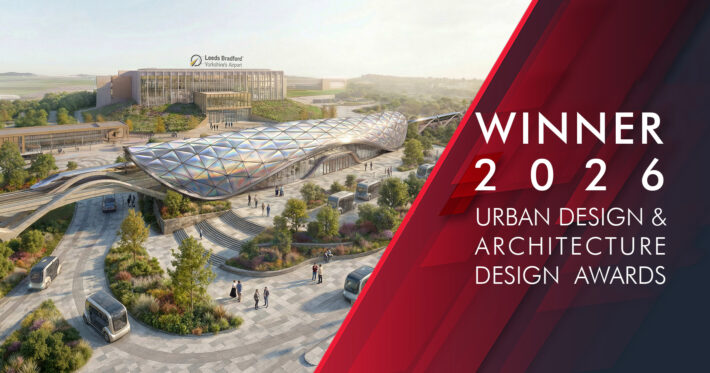
Britain needs a vision that can excite the country, regenerate the economy and restore confidence. Too often the debate has narrowed, with regions encouraged to compete for limited investment rather than collaborate. Architects once published manifestos. They were not always right, but they inspired, provoked and set out ideas they believed in. This project is intended as a return to that tradition.
Urban Design & Architecture Design Awards 2027: Entries Open!
Take your work to the next level. Register Now…

Gold 🏆 Winner
Urban Design & Architecture Design Awards 2026
The Loop. The Northern Powerhouse
Architecture & Design (Concept)
Firm
Chris Williamson Studio
Architect/Designer
Chris Williamson
Design Team
Ope Adeyileka, Neil Leach, Elliott Wood
Location
North of England
Country
United Kingdom
Photographer/Copyright
©Ope Adeyileka, Neil Leach, Chris Williamson
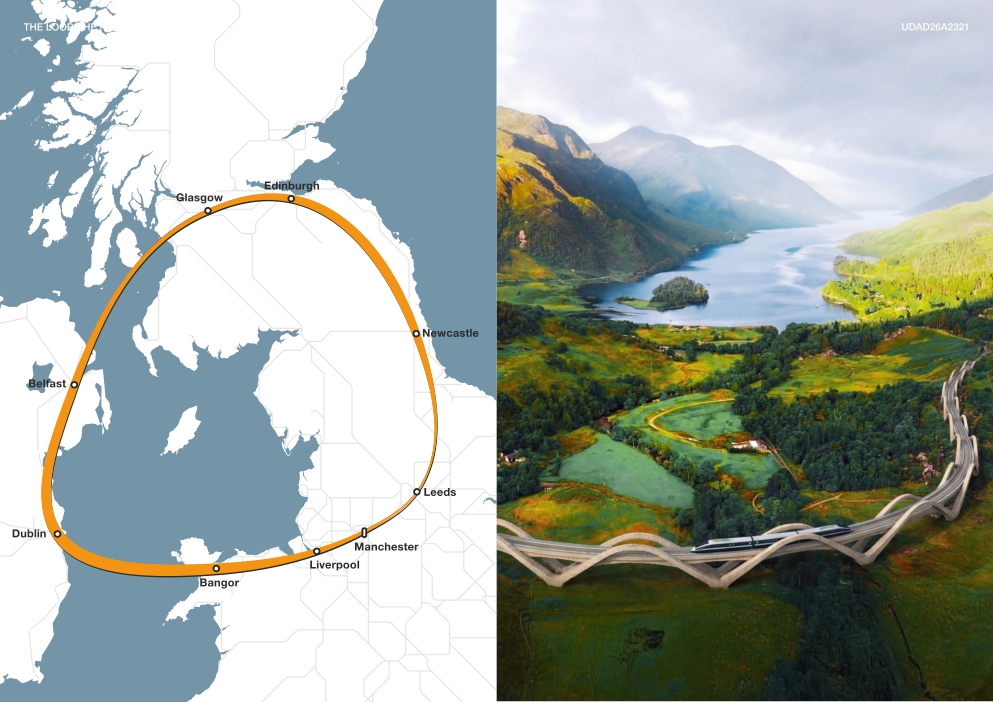
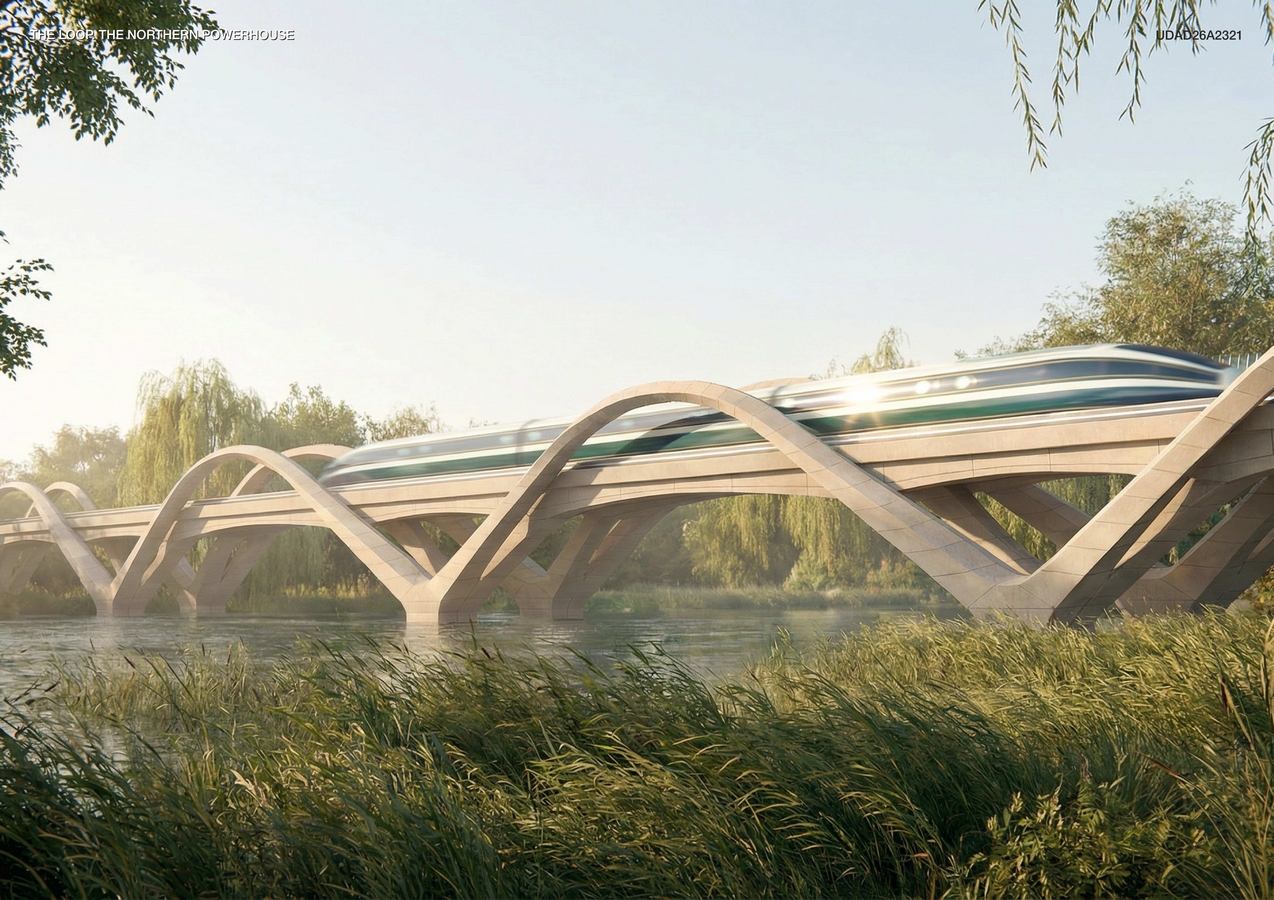
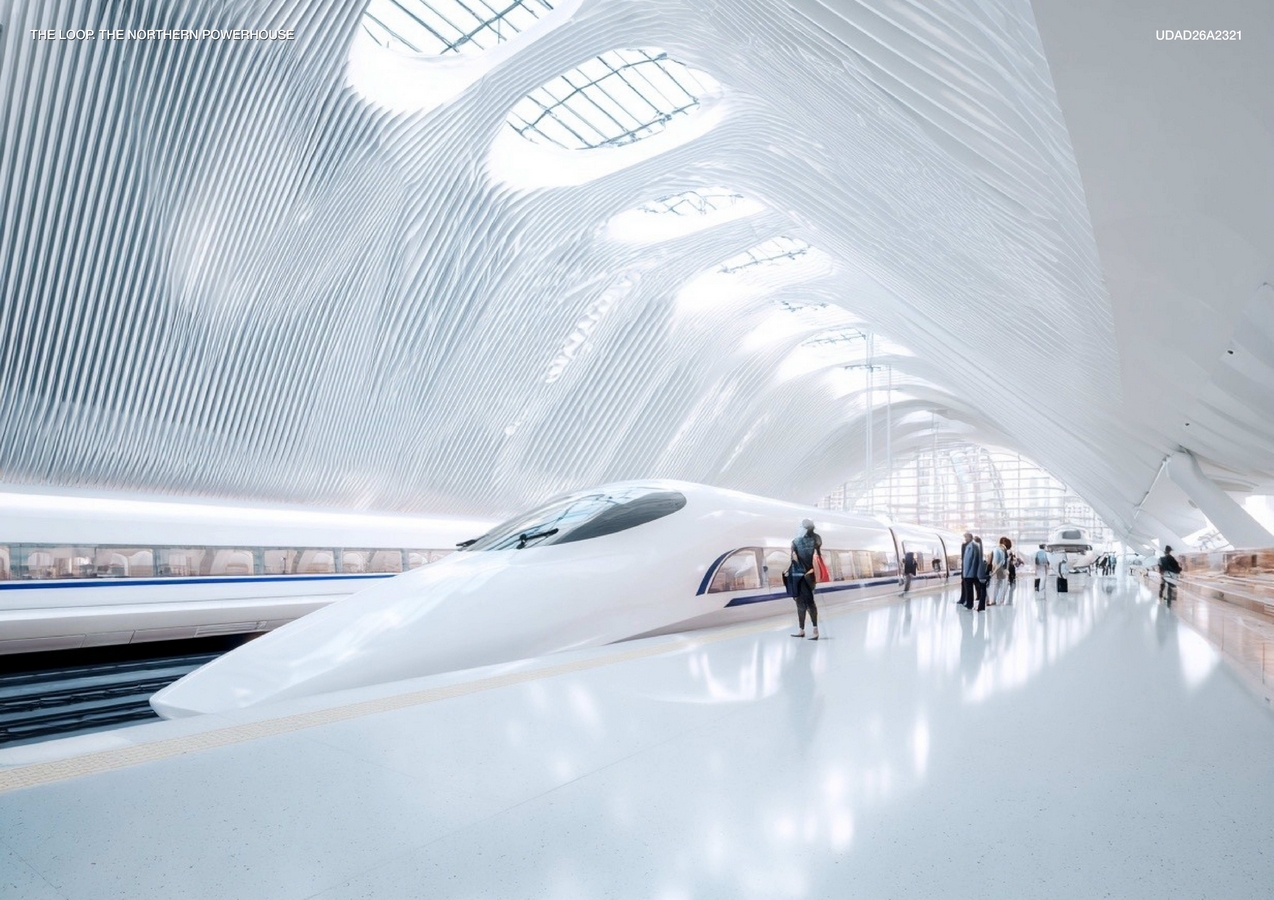
The ambition of The Loop is to create a single, connected northern city. A Northern Powerhouse comparable with other major global cities, bringing together a population of around ten million across nine centres of designated expertise, all within ninety minutes of each other. Eight international airports would be linked within the same time frame. Travel from Edinburgh to Manchester would take less time than crossing Los Angeles. It would allow people to live in Newcastle and work in Glasgow. A new global city, dispersed but connected.
Urban designer and RIBA President Chris Williamson says, “Maybe I have been too influenced by the scale, the vision and the ambition of NEOM The Line in Saudi Arabia, having worked on the high speed stations running alongside the one hundred and seventy kilometre long city for the last few years. But we in the British Isles should be equally ambitious about our future. At present the Government seems to expect each city to compete for the same investment funding, when we need to encourage connectivity and collaboration.”
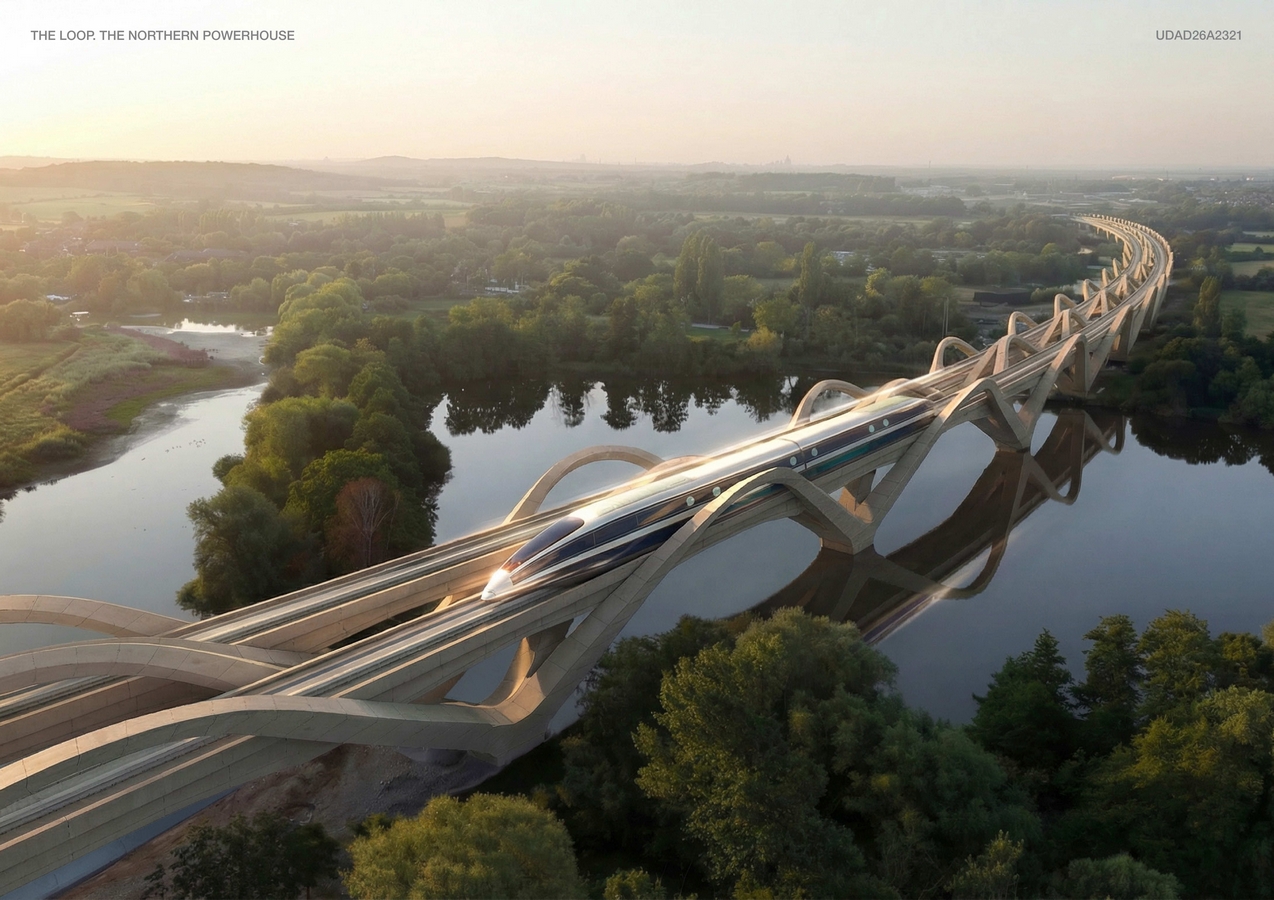
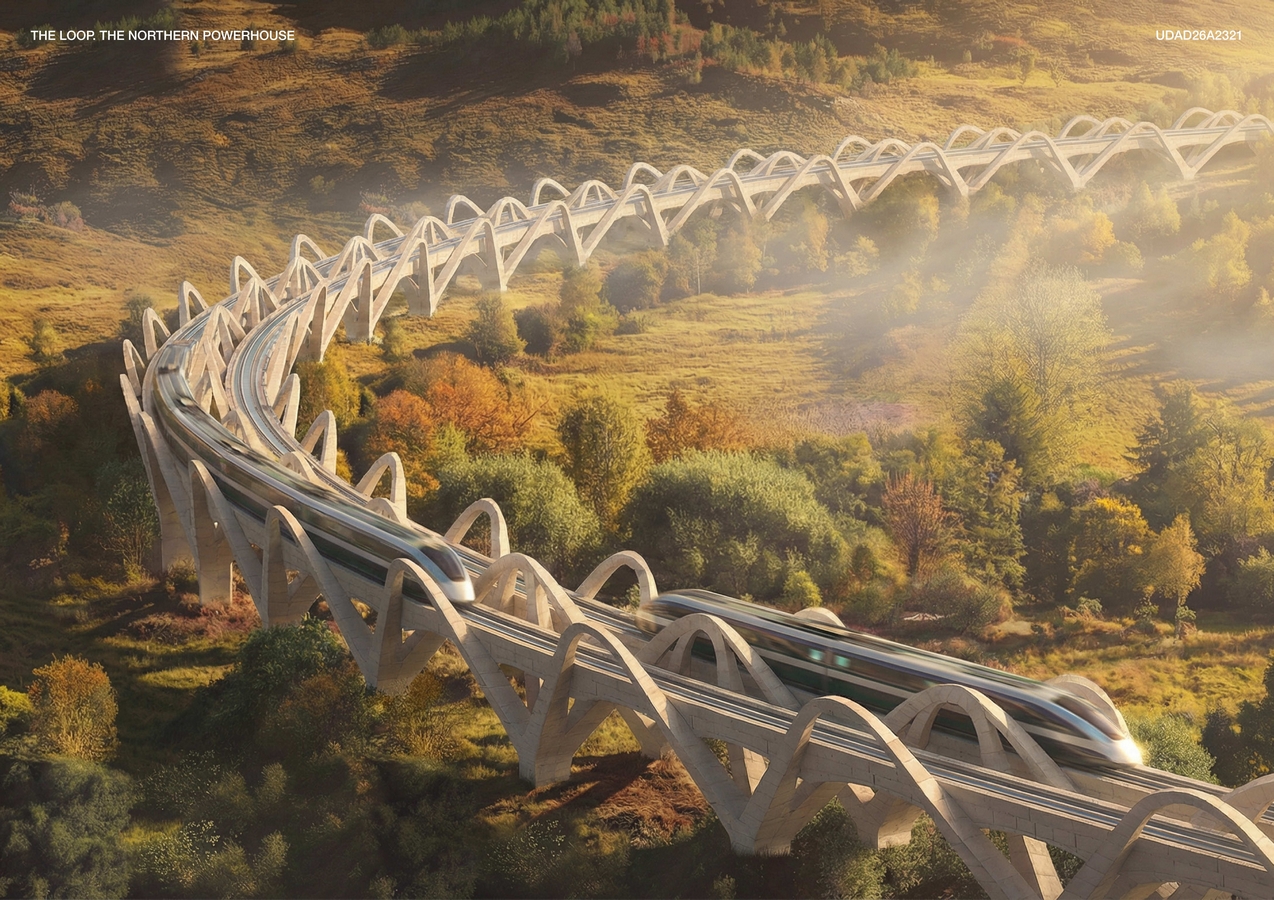
The Loop would link Liverpool, Manchester, Leeds, Newcastle, Edinburgh, Glasgow, Belfast, Dublin and Bangor in a continuous circuit, operating in both directions. Trains of approximately fifty metres in length would run every five minutes at speeds of up to three hundred miles per hour on an elevated viaduct, minimising disruption at ground level. Services would operate on a point to point basis, running directly from origin to destination without intermediate stops. A Liverpool to Glasgow service, for example, would not stop elsewhere, nor would a Belfast to Manchester service. Trains serving other destinations would pass through stations while passengers are boarding and alighting.
The engineering concept has been developed with input from Elliott Wood at an early stage. Resources are central to the approach, with stone arches used to elevate the tracks and pre tensioned stone beams supporting the rails. Stone would be locally sourced, creating a vernacular that sits comfortably within the landscape. The construction approach supports the development of local skills centres, providing opportunities for skilled and semi skilled employment. A strong focus on maintenance is intended to support long term resilience, creating sustained employment both for the railway itself and for associated development.
This is an ambitious scheme, but one that responds to a clear need as Britain seeks to re establish itself in the world. Sustainability and renewal are central to the proposal. While millions of people would want to experience it, the project is not a tourist attraction. It is intended as a catalyst for communities working together and for redefining collaboration between cities and regions.