

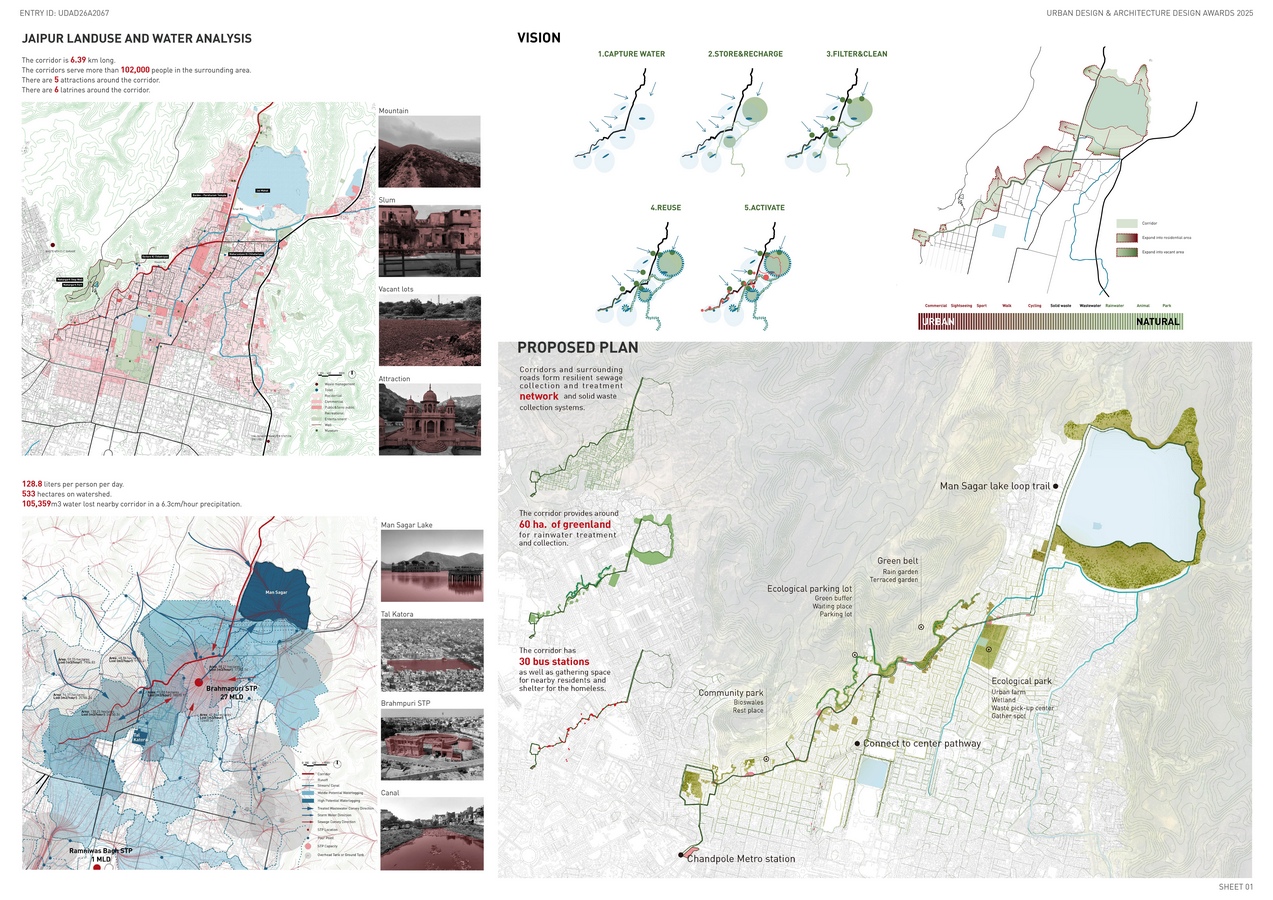
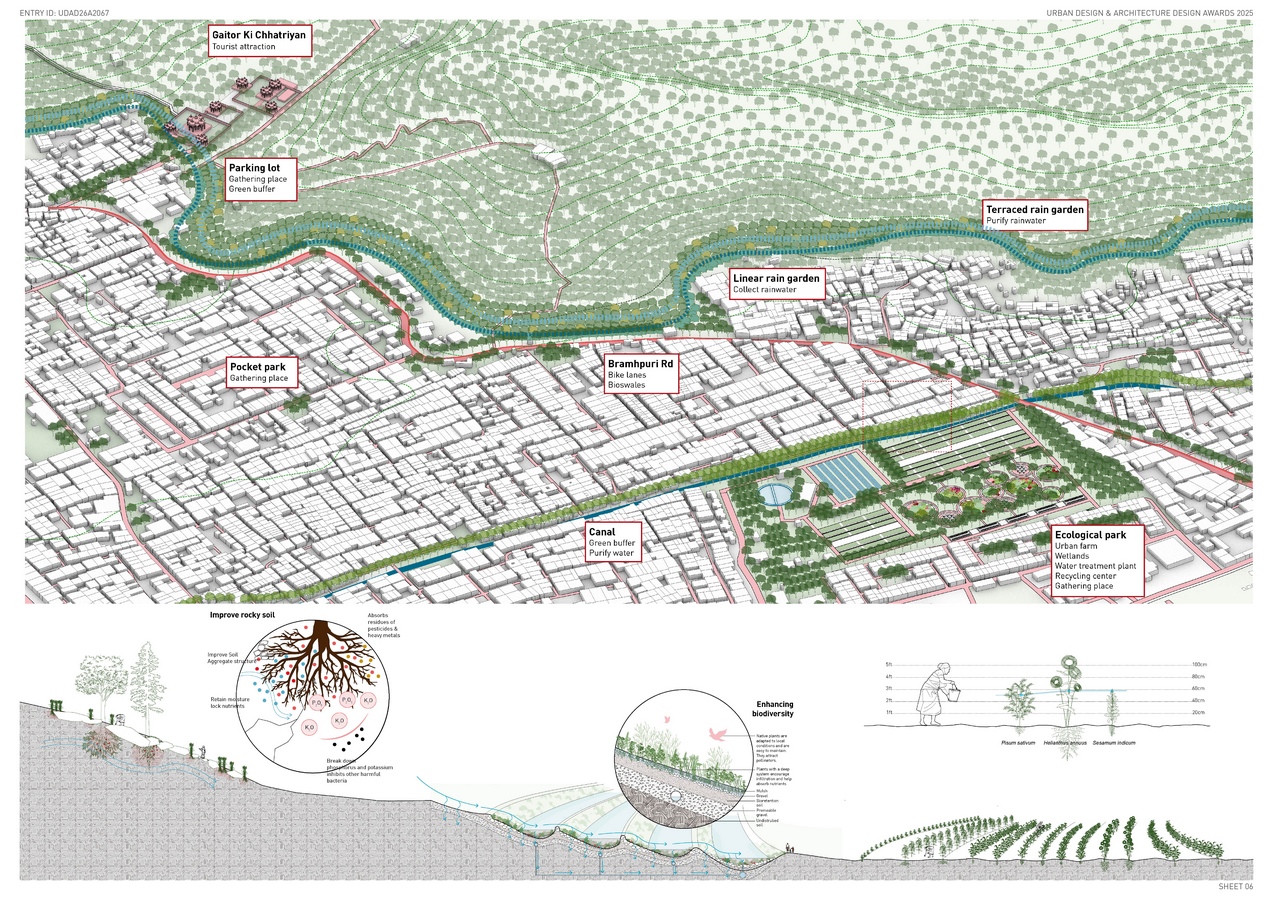
Jaipur’s rapid urbanization has intensified issues such as groundwater depletion, untreated sewage, and inefficient waste management. Groundwater, the city’s primary water source, is inadequately replenished, while sewage is often discharged into open areas and solid waste remains poorly collected. The project site lies along Mount Road—a 6.39 km corridor linking hills, slums, commercial districts, and tourist attractions—serving over 100,000 residents. The corridor receives both stormwater from surrounding hills and sewage from the urban core. Runoff analysis identified key pour points and waterlogging zones, revealing that lost water along this corridor could support 500,000 people daily.
Urban Design & Architecture Design Awards 2027: Entries Open!
Take your work to the next level. Register Now…

Gold 🏆 Winner
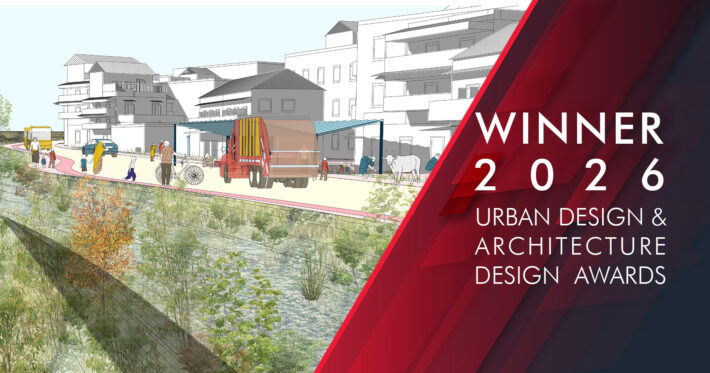
Urban Design & Architecture Design Awards 2026
Flowing City: Jaipur’s Green Corridor
Urban Design (Concept)
Individual
Chaoming Li
Architect/Designer
Chaoming Li
Design Team
Chaoming Li
Location
Jaipur, India
Country
United States
Photographer/Copyright
©Chaoming Li
Phasing and Design Framework
The proposal introduces a decentralized, community-driven infrastructure system built in five steps:
– Capture stormwater and wastewater from hills and neighborhoods.
– Store and recharge groundwater through open spaces.
– Reuse clean water for irrigation and domestic use.
– Activate vacant land with social and economic programs.
Through selective extensions into residential areas and conversion of existing open spaces into ecological parks, the corridor integrates water management, mobility, and recreation. New bike lanes, green sidewalks, and waste facilities (bins every 100m, public latrines every 200m) improve daily living conditions. Altogether, the system creates 60 hectares of new green space dedicated to stormwater collection, sewage treatment, and public life.
Ecological and Social Strategies
Unlike Jaipur’s centralized infrastructure, the corridor promotes decentralized water treatment and citizen participation, fostering social equity and environmental stewardship. Four design typologies respond to distinct site conditions:
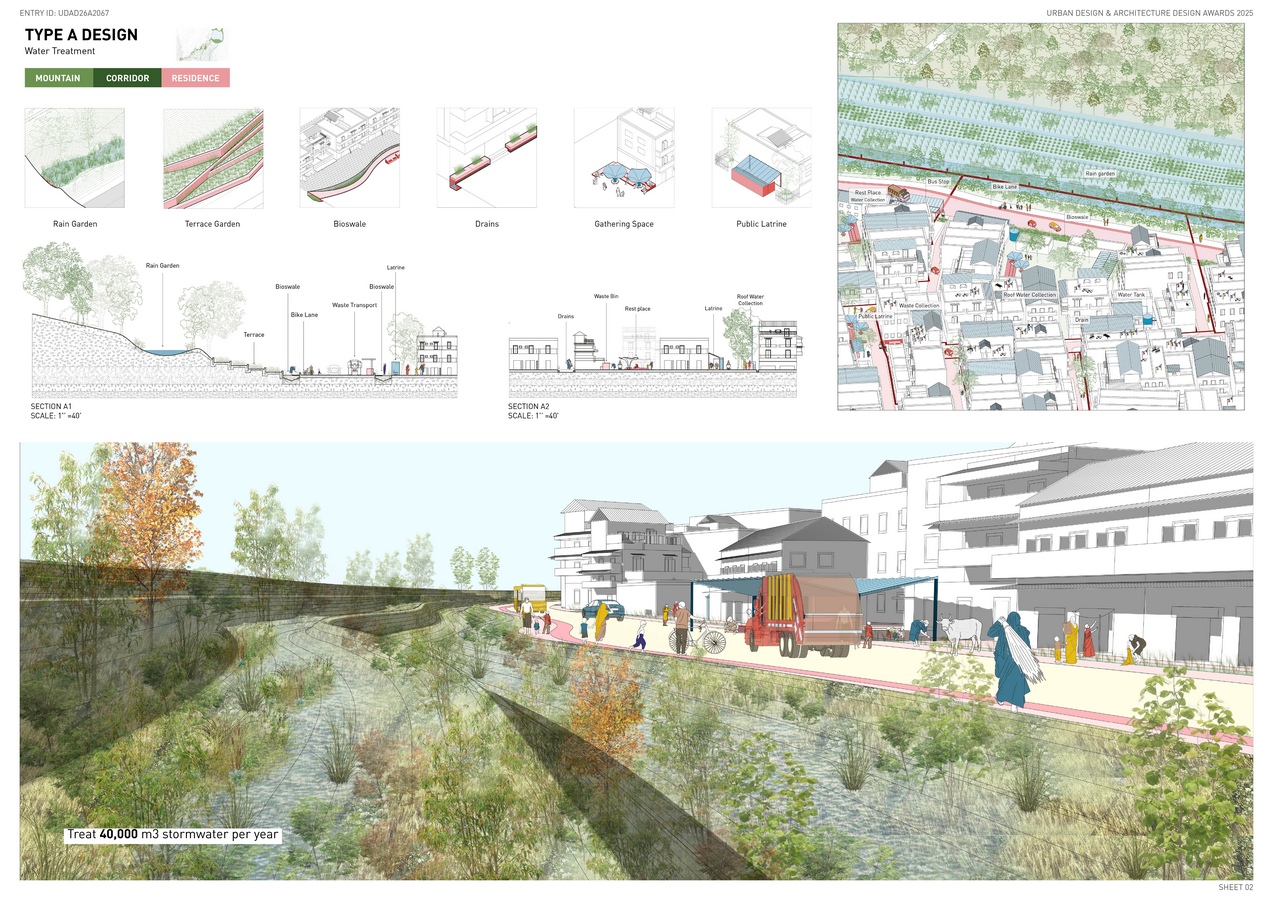
Type 1 – Hill to Residential Zone: Stormwater collection and greywater reuse through rain gardens, bioswales, and rooftop systems.
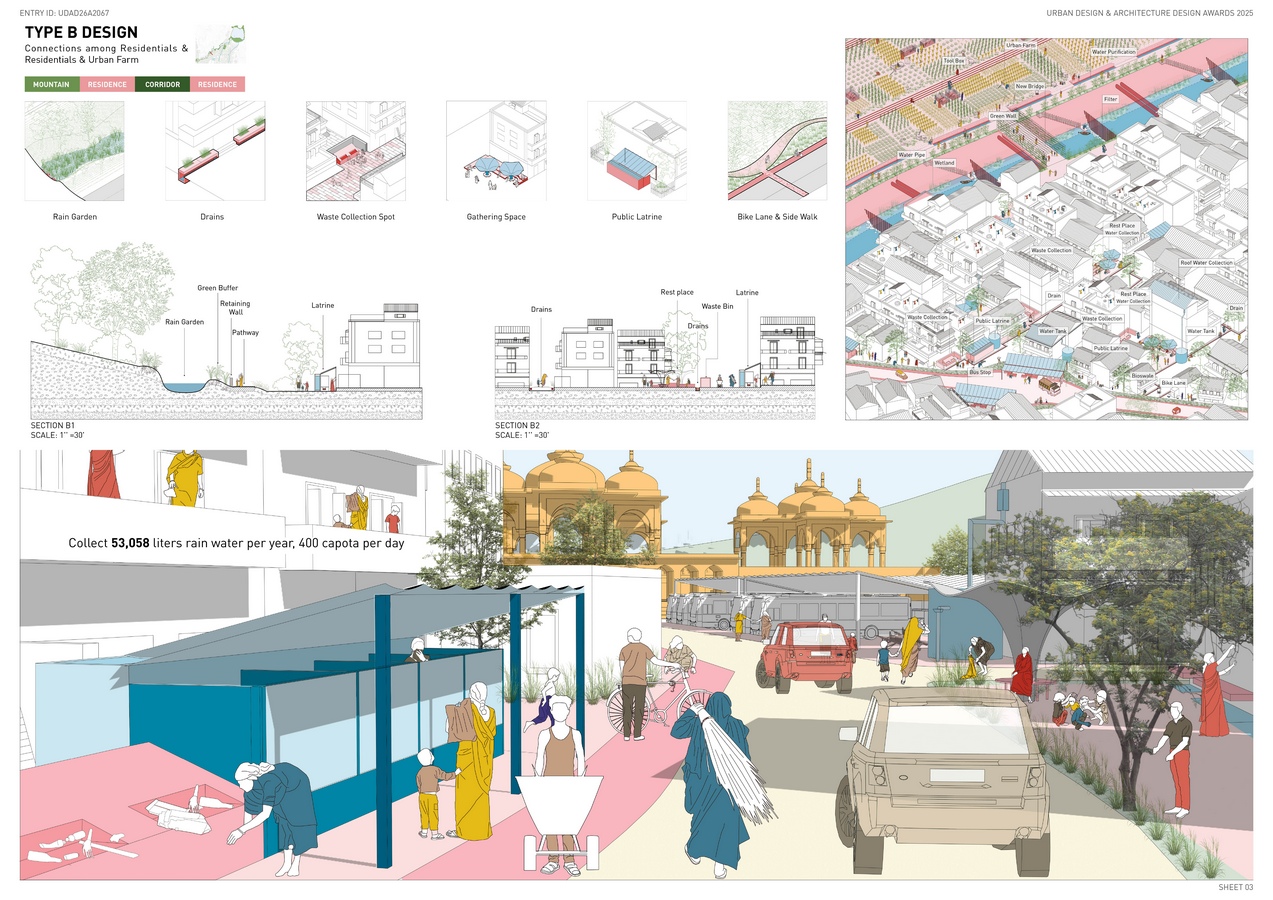
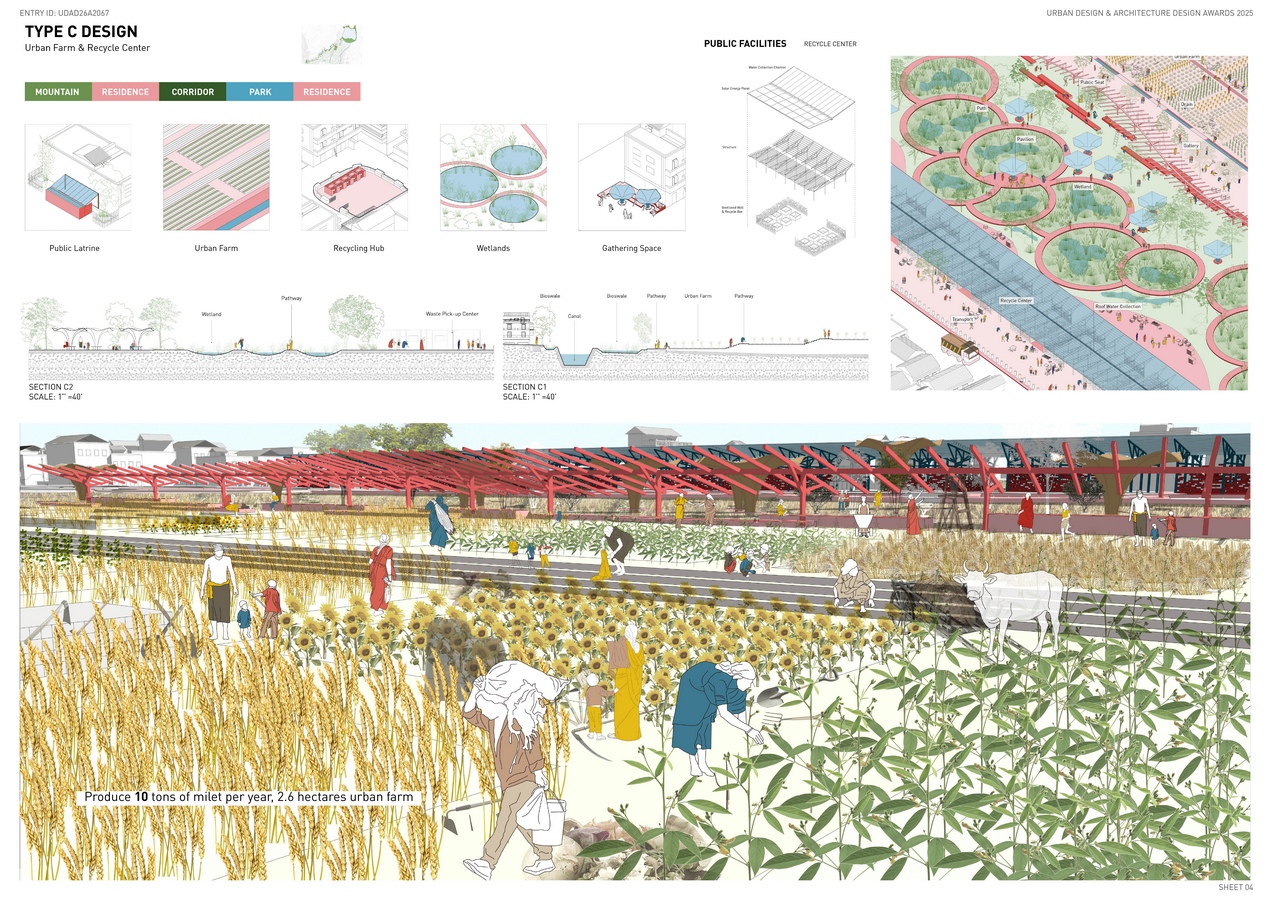
Type 2 – Residential to Urban Farm: Walkable infrastructure enhanced with sanitation, waste collection, and communal activity areas.
Type 3 – Canal and Open Space: A central ecological park combining wetlands, bioswales, and terraced urban farms that recycle wastewater for irrigation, manage solid waste through a community recycling center, and generate food and employment.
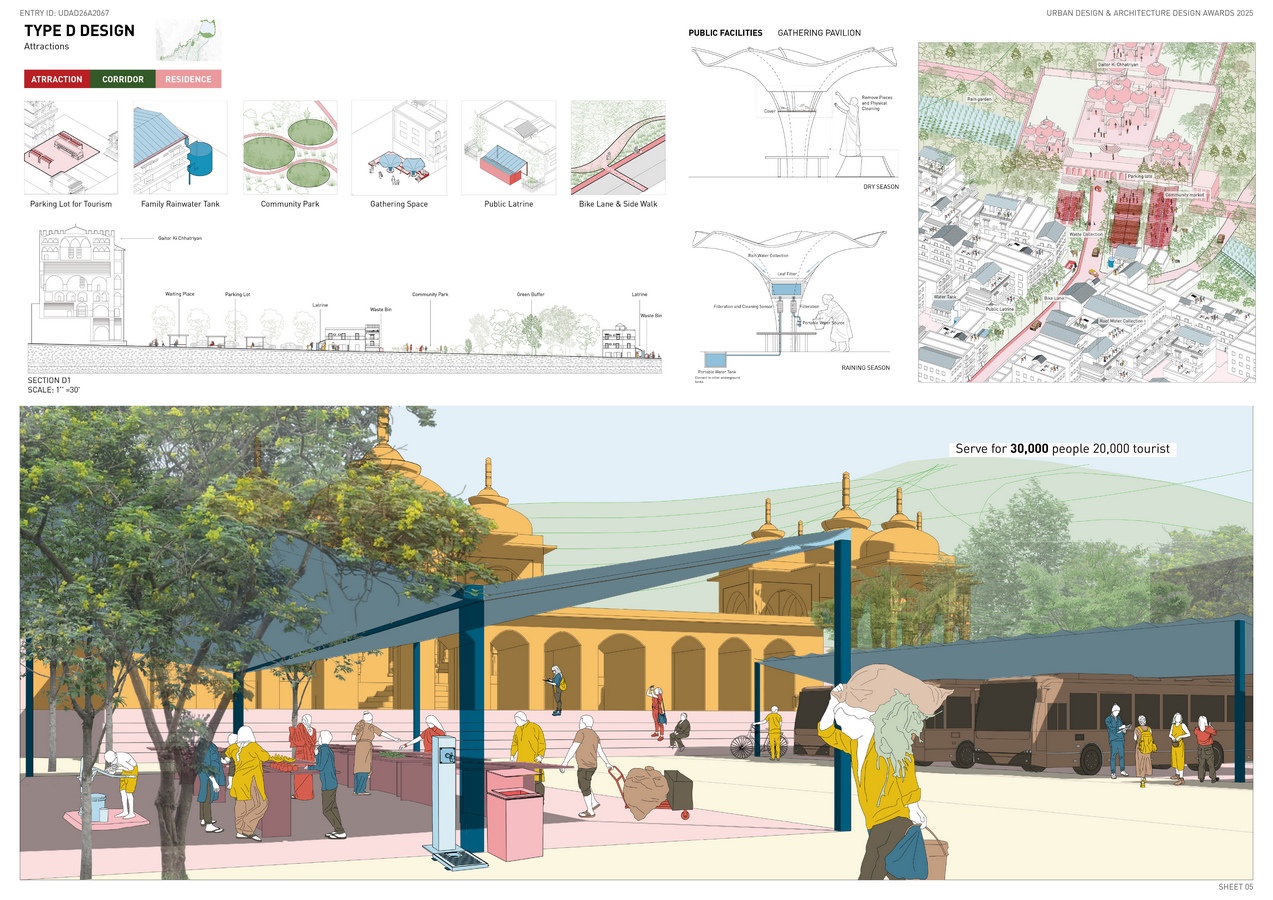
Type 4 – Near Tourist Attractions: Revitalized parking areas transformed into shaded markets and gathering spaces that connect tourism with local economies.
Planting and Ecology
Plant selection focuses on drought-tolerant crops and native species that enhance biodiversity and water retention. Rain gardens remove up to 80% of nutrients and sediments from runoff, while fast-growing pioneer species rehabilitate Jaipur’s rocky soils, creating the foundation for long-term ecological restoration.
Conclusion
The Jaipur Resilient Corridor envisions an adaptive urban system that links ecology, infrastructure, and community. Beyond connecting neighborhoods, it forms a living network that cycles water, waste, and resources locally—providing access to green spaces, food, shade, and public facilities. By merging environmental repair with social activation, the corridor establishes a sustainable framework for Jaipur’s future growth and resilience.