

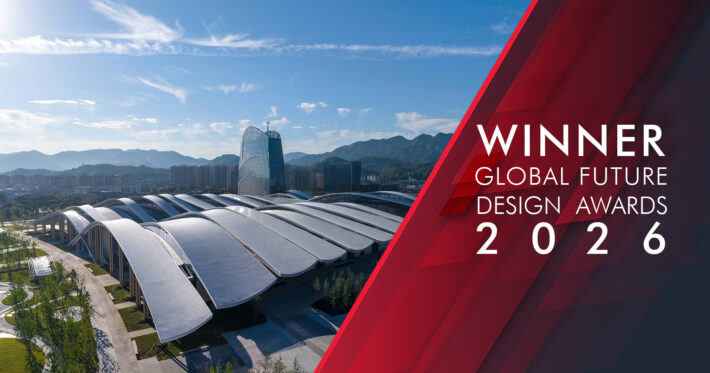
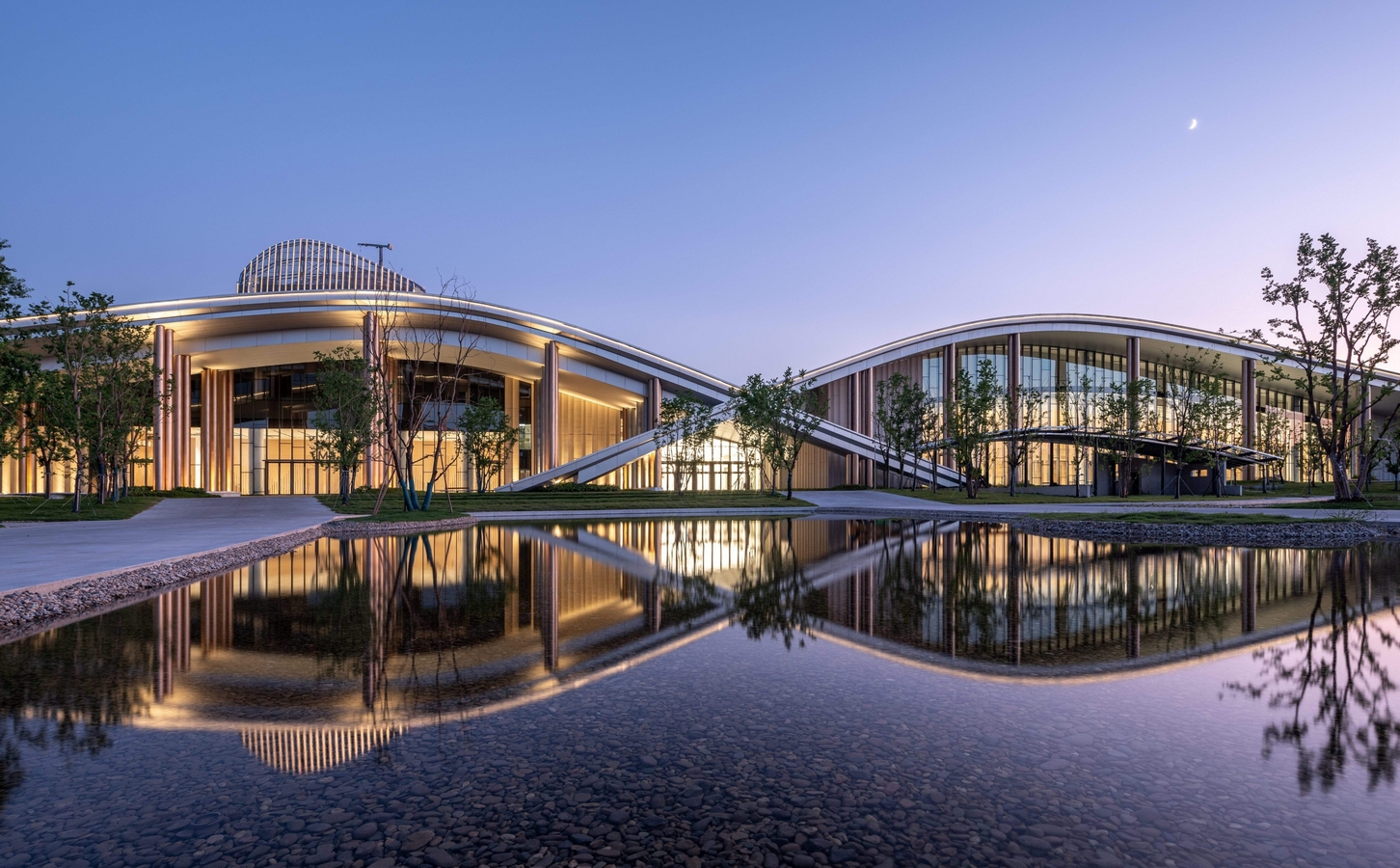
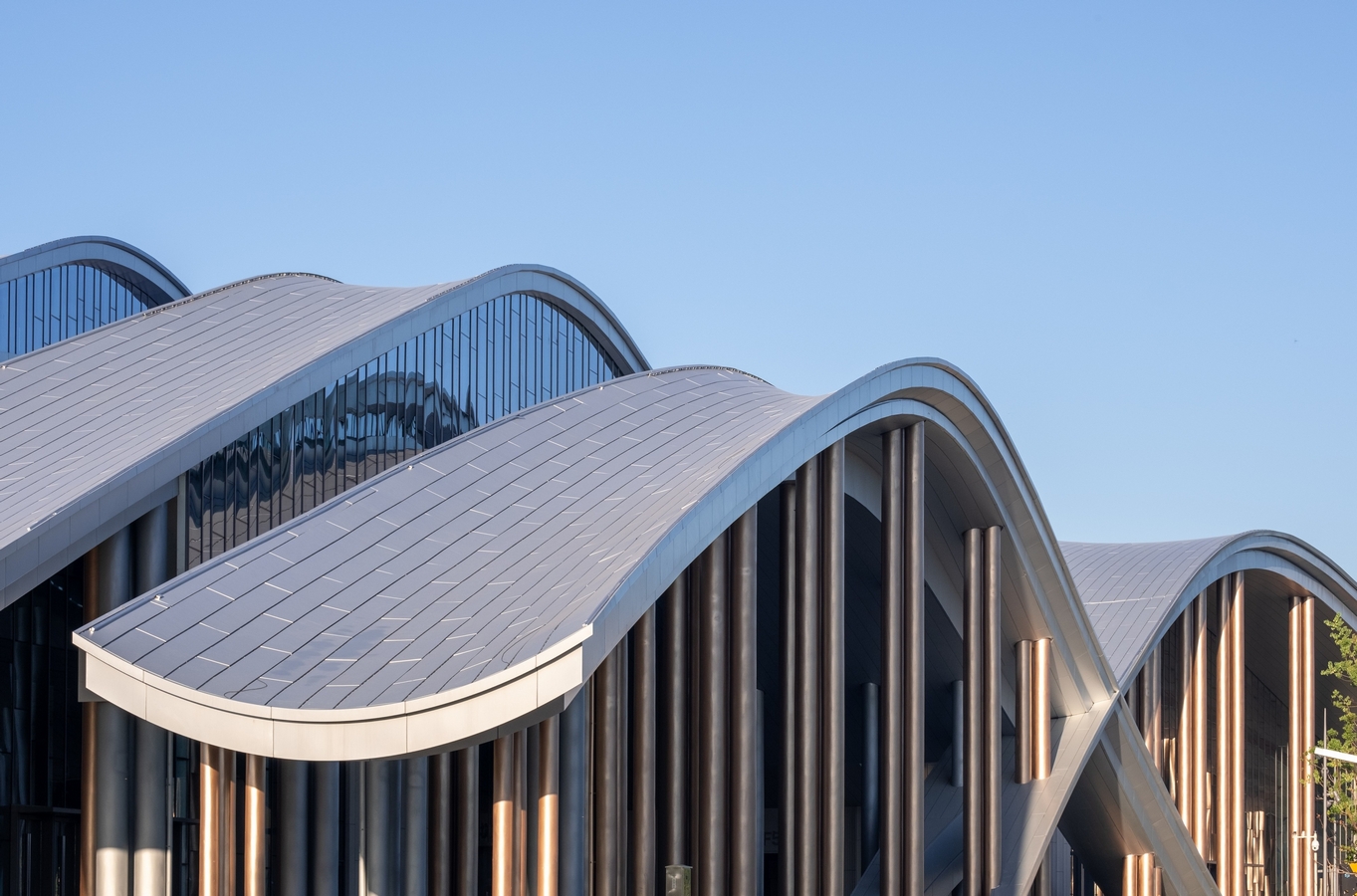
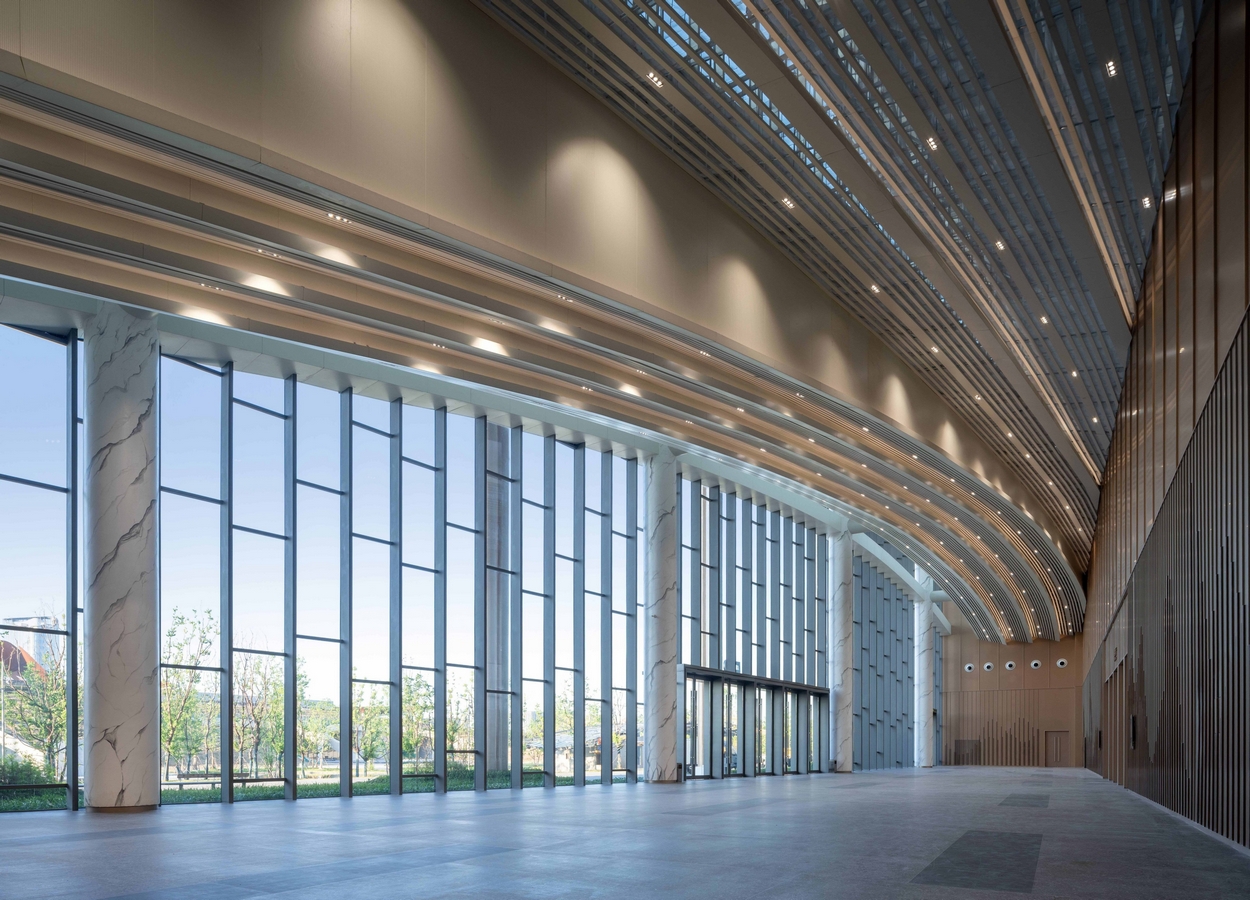
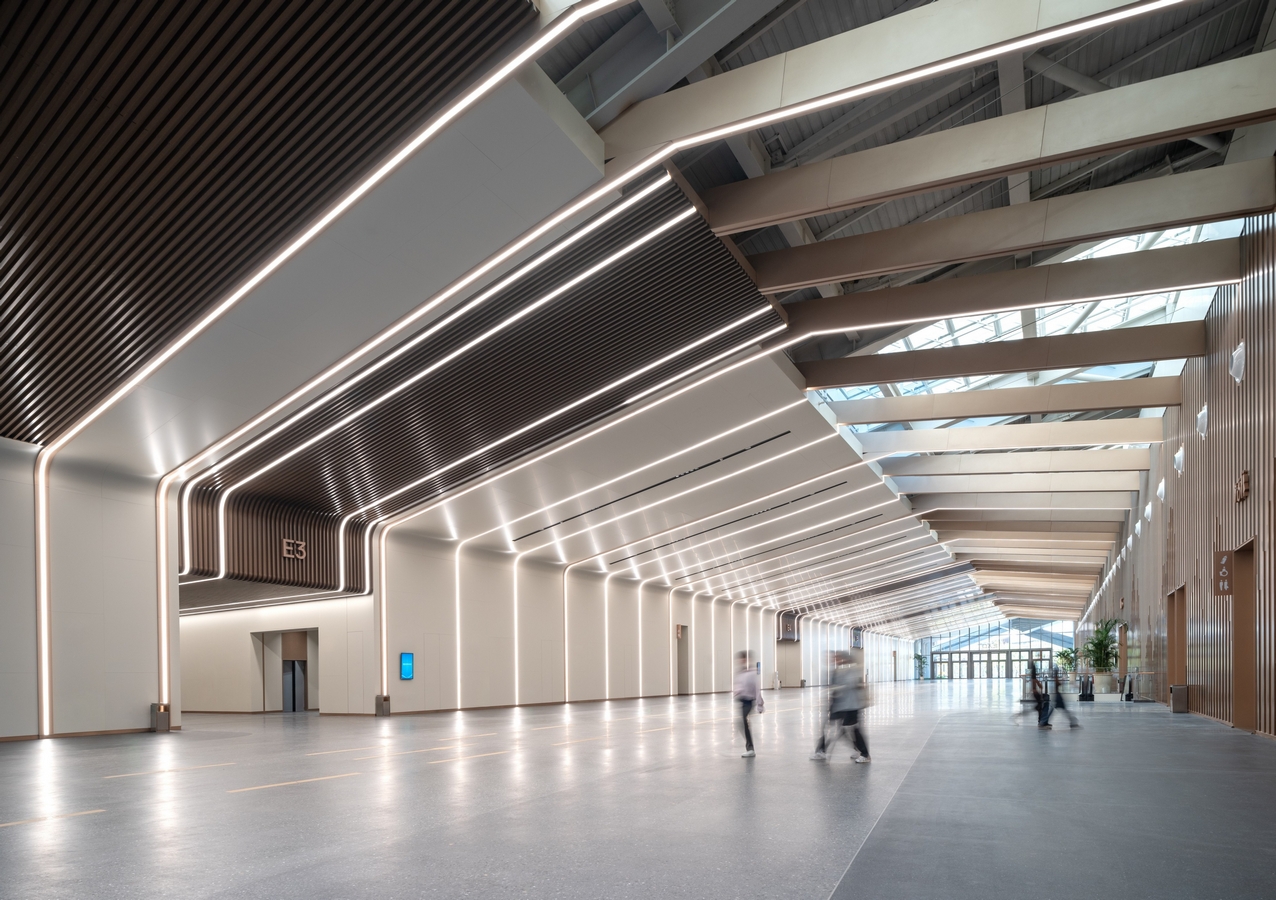
The project is located in the south Anji City, at the core area of Future Technology Zone. The naturally elegant silhouette of the surrounding mountains provided the primary inspiration for the architecture. The design concept, termed “Two Mountains Converging into a Valley”, manifests in a form where two architectural masses intersect and merge, reminiscent of two mountain ranges meeting to form a valley. The rooflines of the two flanking structures rise and fall in a rhythmic cadence, evoking the layered ridges of a continuous mountain range. A north‑south oriented “conference valley” corridor divides the space into a 10,000sqm main hall and a 5,000sqm multifunctional hall. Both halls are column‑free large‑span spaces, creating an unobstructed interior visual experience.
Global Future Design Awards 2027 — Entries Now Open!
Take your creativity to the global stage and showcase your innovative ideas to the world. Celebrate exceptional design, gain international recognition, and become part of a new generation shaping the future of design.
Submit Your Work Today & Take Your Design Journey to the Next Level!

Gold 🏆 Winner
Global Future Design Awards 2026
ANJI INTERNATIONAL CONVENTION CENTER
Commercial Architecture Built
Firm
INTERNATIONAL FREDERIC ROLLAND ARCHITECTURE
Architect/Designer
Frederic ROLLAND, Polly Lo ROLLAND
Design Team
Jia Jiong, Qi Leiming, Xu Fuqiang, Sybren BOOMSMA, Chen Jiawei, Li Zeyu, Hu Qifeng, Yang Yue, Li Min, Wessel de JONG
Location
Anji County, Huzhou City
Country
China
Photographer/Copyright
©3000 Images
Website/Social Media handles
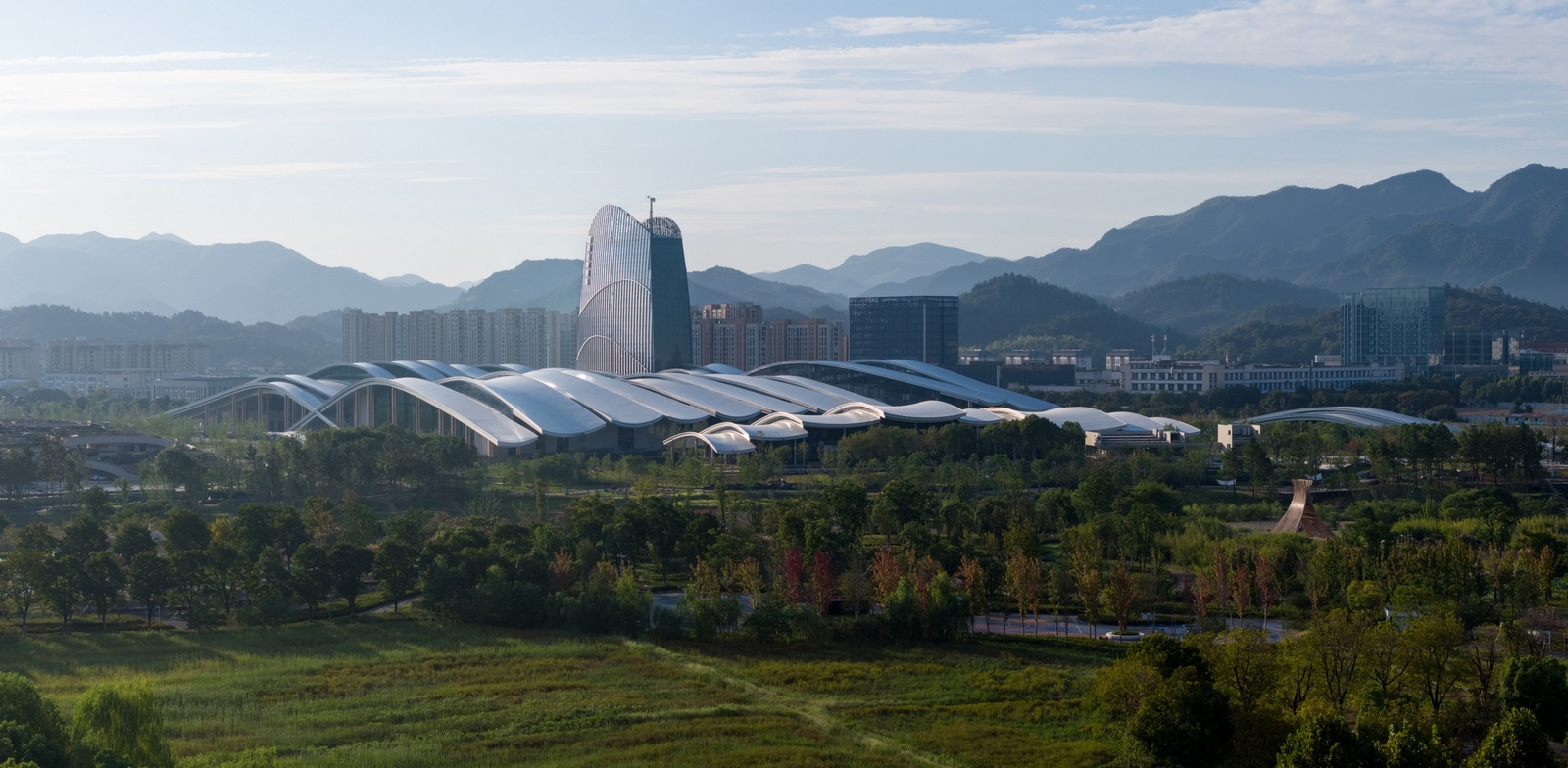
Anji is a city embraced by verdant mountains and meandering clear rivers. The urban plains where the site is located begin to taper, with the mountains on both sides drawing closer, flanking the central flowing Huxi River as it winds its way north to Lake Tai. The conference center is established on a former industrial zone, thereby demonstrating the government’s determination to remove outdated industrial structures that are incompatible with the natural environment.
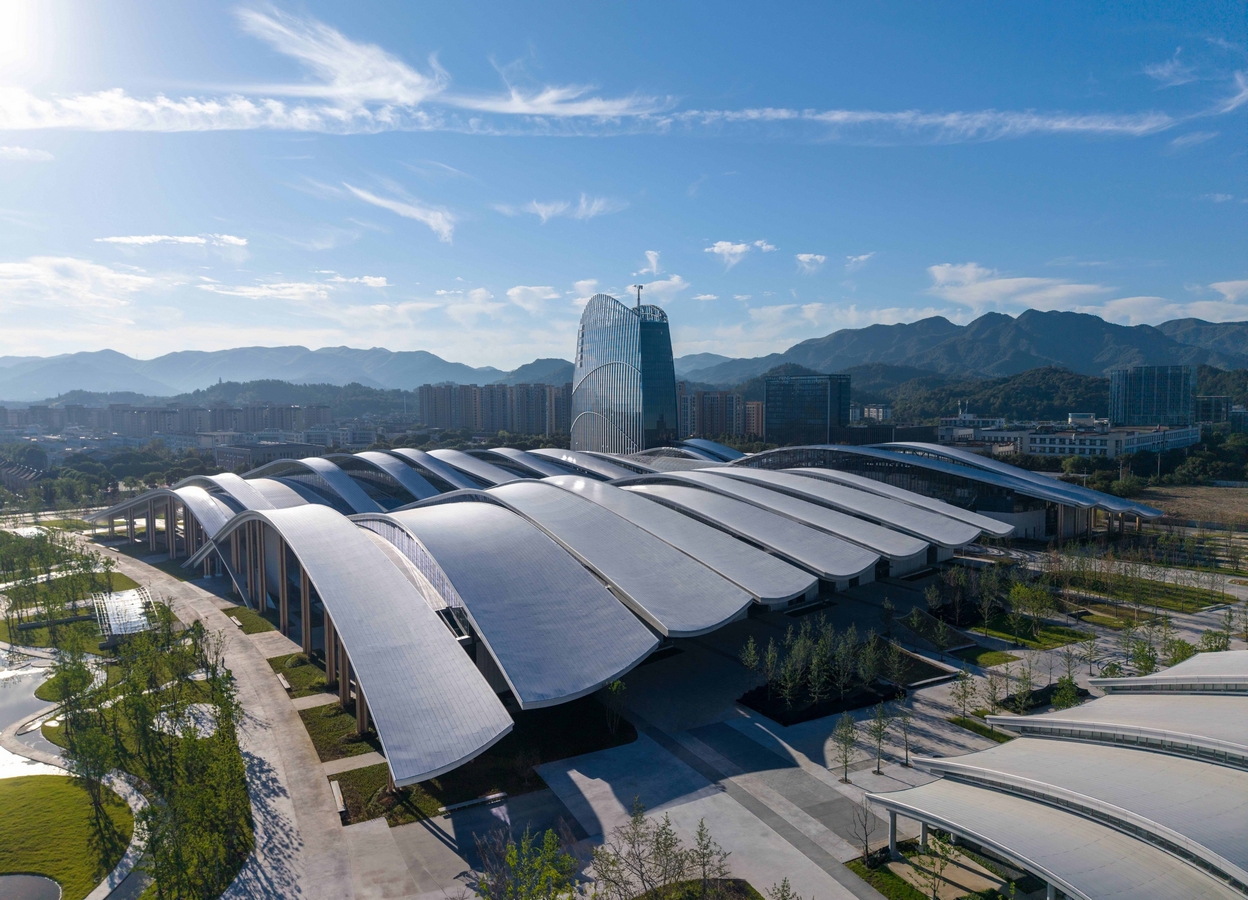
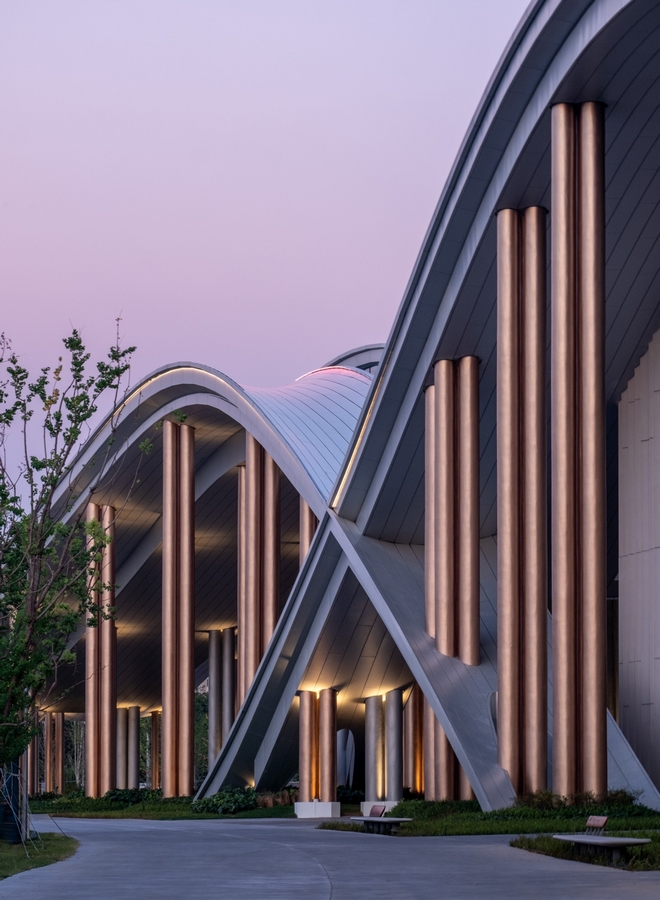
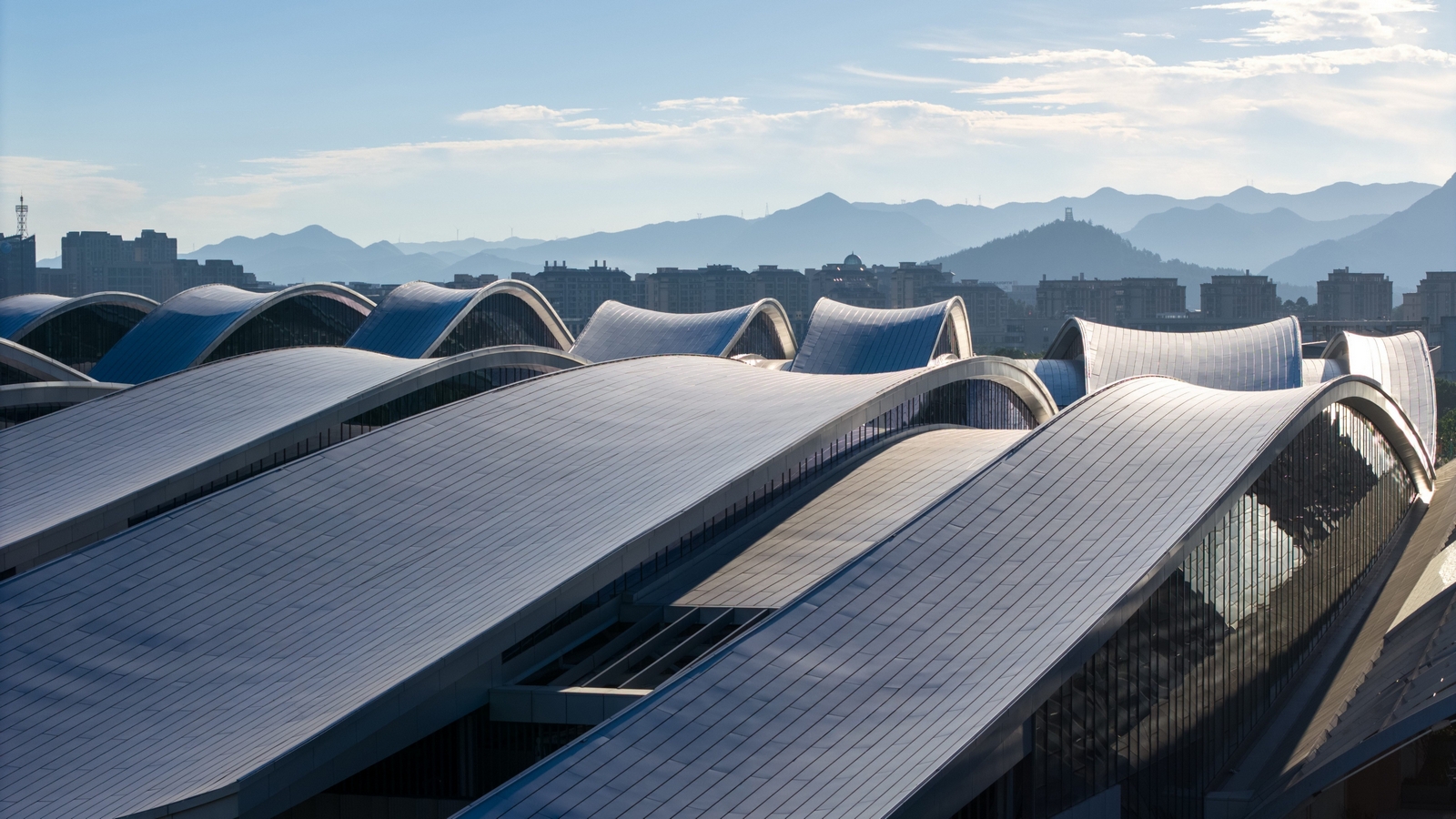
The new design places great emphasis on harmonizing with the natural environment. The array of steel structure trusses arch upwards along the roof, like continuous mountains rising layer upon layer, converging into a valley. The dynamic and lightweight posture alleviates the sense of oppression caused by large volumes.
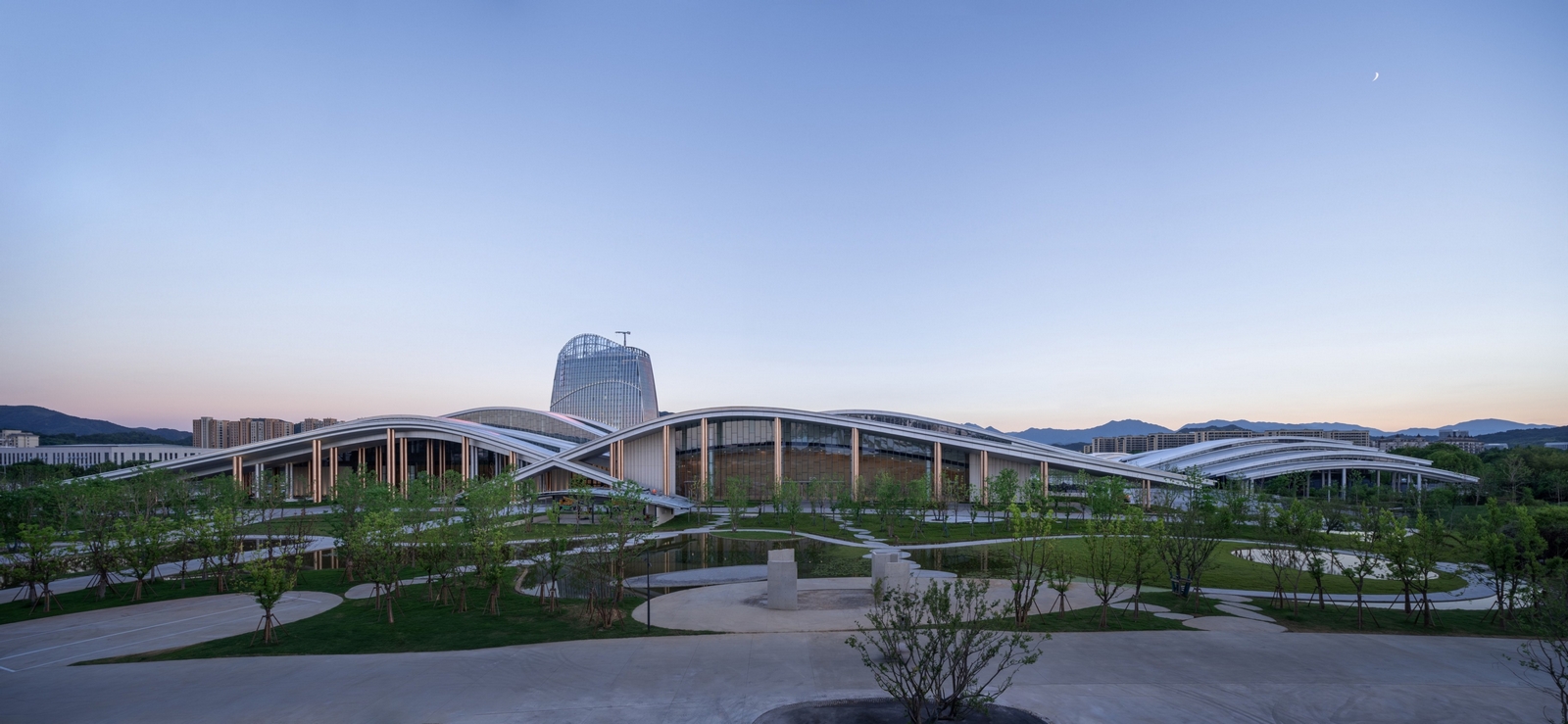
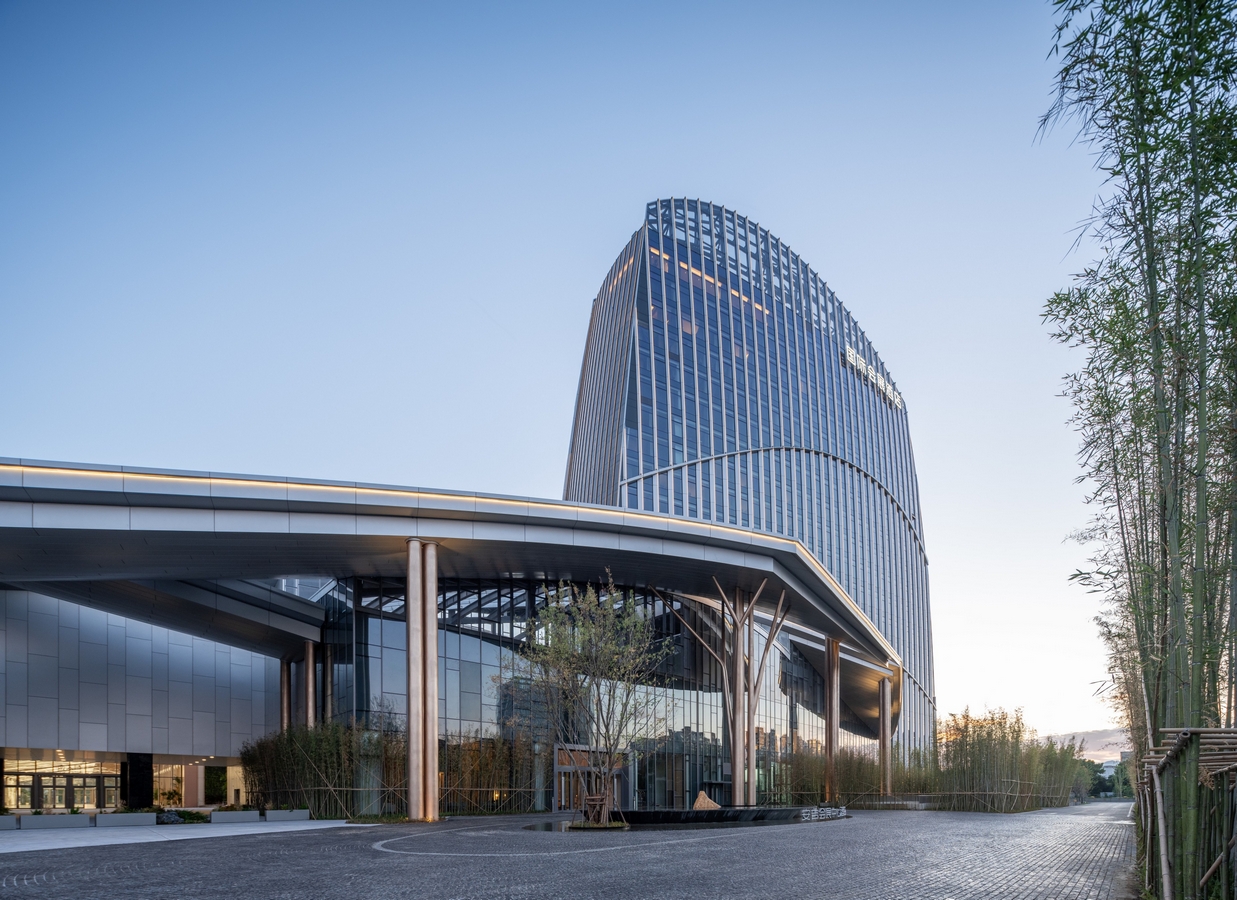
The project adopts a cross-shaped spatial organization for its functions: key public spaces are located within the inner section of the cross, while peripheral areas house auxiliary functions such as logistics and service support. The east-west gallery serves as the most crucial axial space, ensuring a transparent visual effect that preserves the iconic view of the mountains and water. The exhibition hall is situated north of the gallery, while the hotel functions are arranged to the south. The north-south axis, known as the “conference valley” , connects the cultural and art center in the north to the urban business district in the south. This expansive indoor corridor serves as a vibrant, all-weather marketplace during events.
Anji is renowned as the “Bamboo Hometown of China”. The most distinctive roof resembles split bamboo strips, woven together to form a panoramic landscape scroll. The soaring rooflines, achieved through a highly tensile curved structural form, mimic the resilience of bamboo—bending without breaking. The varying heights of the roof structure form clerestory windows, which also serve the practical need of providing ample natural daylight for the exhibition halls during daytime use. Other architectural details utilize materials such as aluminum panels and HUPC to create rich and dynamic plays of light and shadow, evoking the textured curvature of bent bamboo strips.
The entire architectural complex mirrors the essence of a mountain range—at times crouching low against the earth, at other moments soaring upward, and elsewhere stretching gracefully into the distance. Employing lines reminiscent of natural landscapes, it extends organically, creating a landmark along the green mountains and clear waters that seamlessly integrates with both the environment and the urban character.
Follow us on