

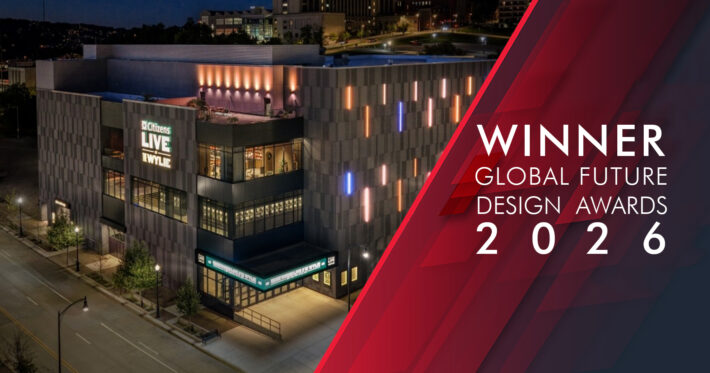
Citizens Live at The Wylie is a new 4,000-capacity live music venue in Pittsburgh’s Lower Hill District, conceived as a contemporary stage rooted in the neighborhood’s musical and cultural history. For decades, Wylie Avenue was the heart of the Lower Hill, an area known as the “Crossroads of the World,” where local performers shared the stage with some of jazz’s most influential names. That history was disrupted in the mid-20th century when the construction of Civic Arena displaced thousands of residents and cut off the Lower Hill from surrounding neighborhoods. The venue is part of a broader effort to reconnect the district with that legacy and bring live music back to the Hill.
Global Future Design Awards 2027 — Entries Now Open!
Take your creativity to the global stage and showcase your innovative ideas to the world. Celebrate exceptional design, gain international recognition, and become part of a new generation shaping the future of design.
Submit Your Work Today & Take Your Design Journey to the Next Level!

Gold 🏆 Winner
Global Future Design Awards 2026
Citizens Live at The Wylie
Cultural Architecture Built
Firm
Blueprint Studio
Architect/Designer
Ruthie Embry
Design Team
Mietra Beyer, Tali Hungria, Sara Silvestri
Location
Pittsburgh, PA
Country
United States
Photographer/Copyright
©Architectural Photos: Evan Joseph; all photos featuring concert goers: Alive Coverage
Website/Social Media handles
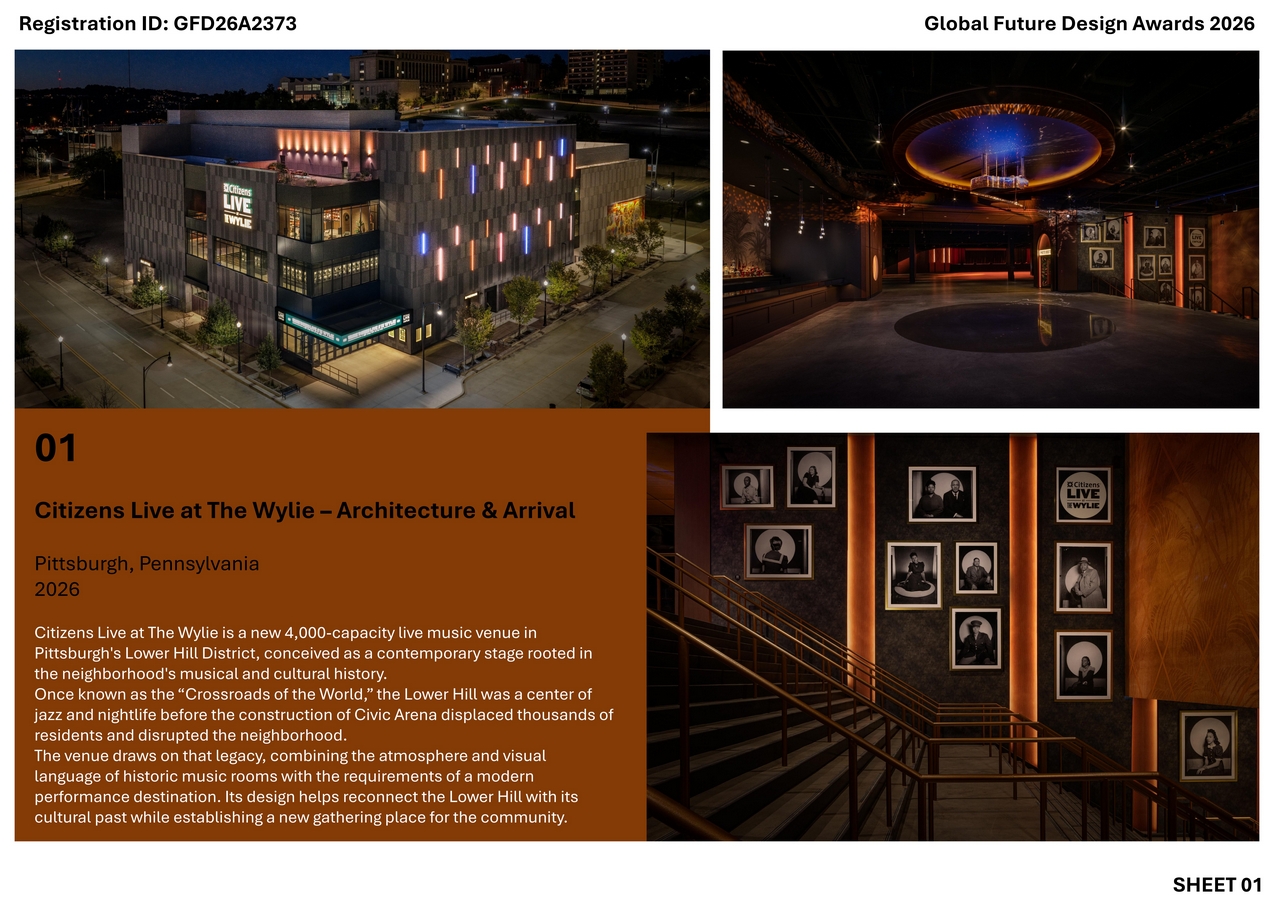
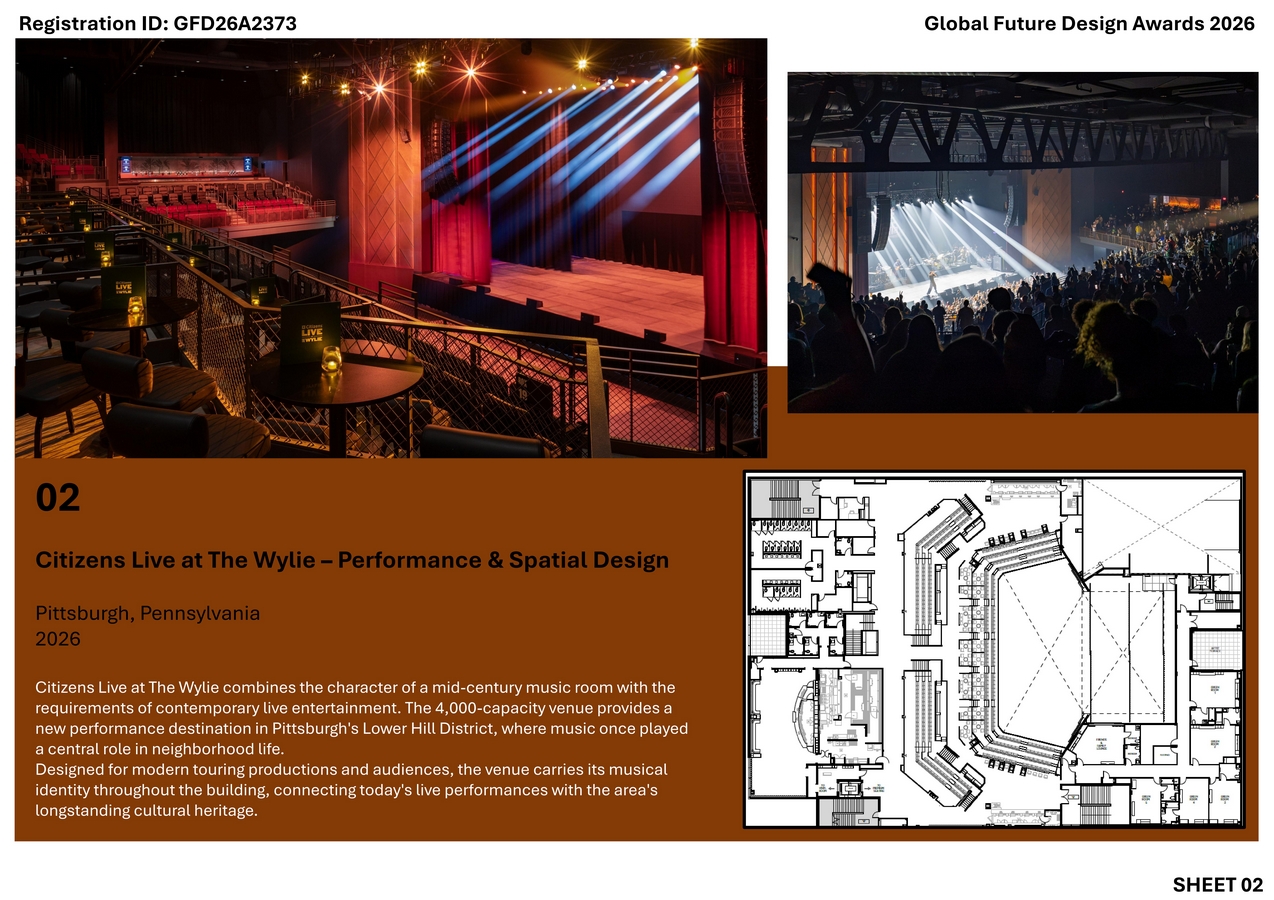
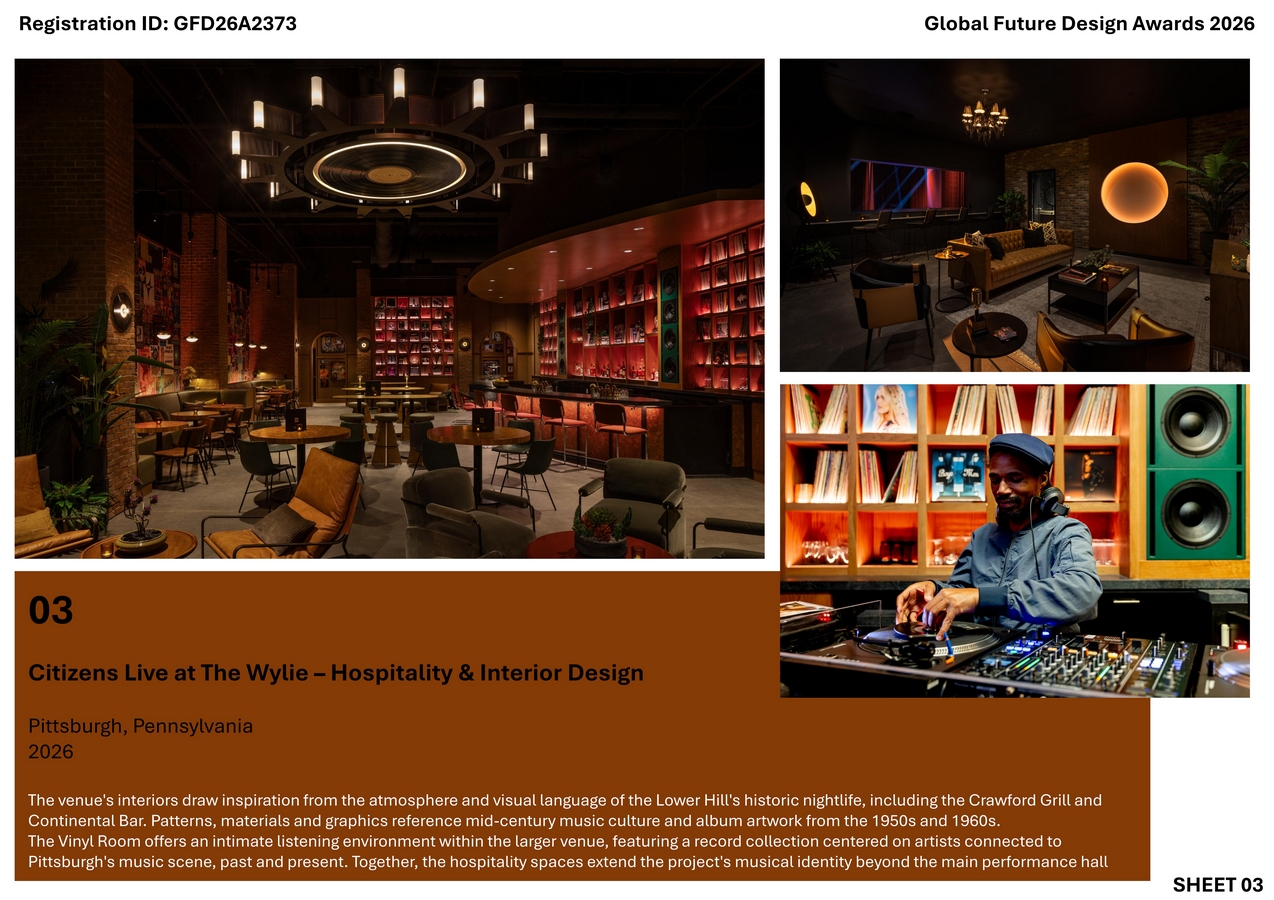
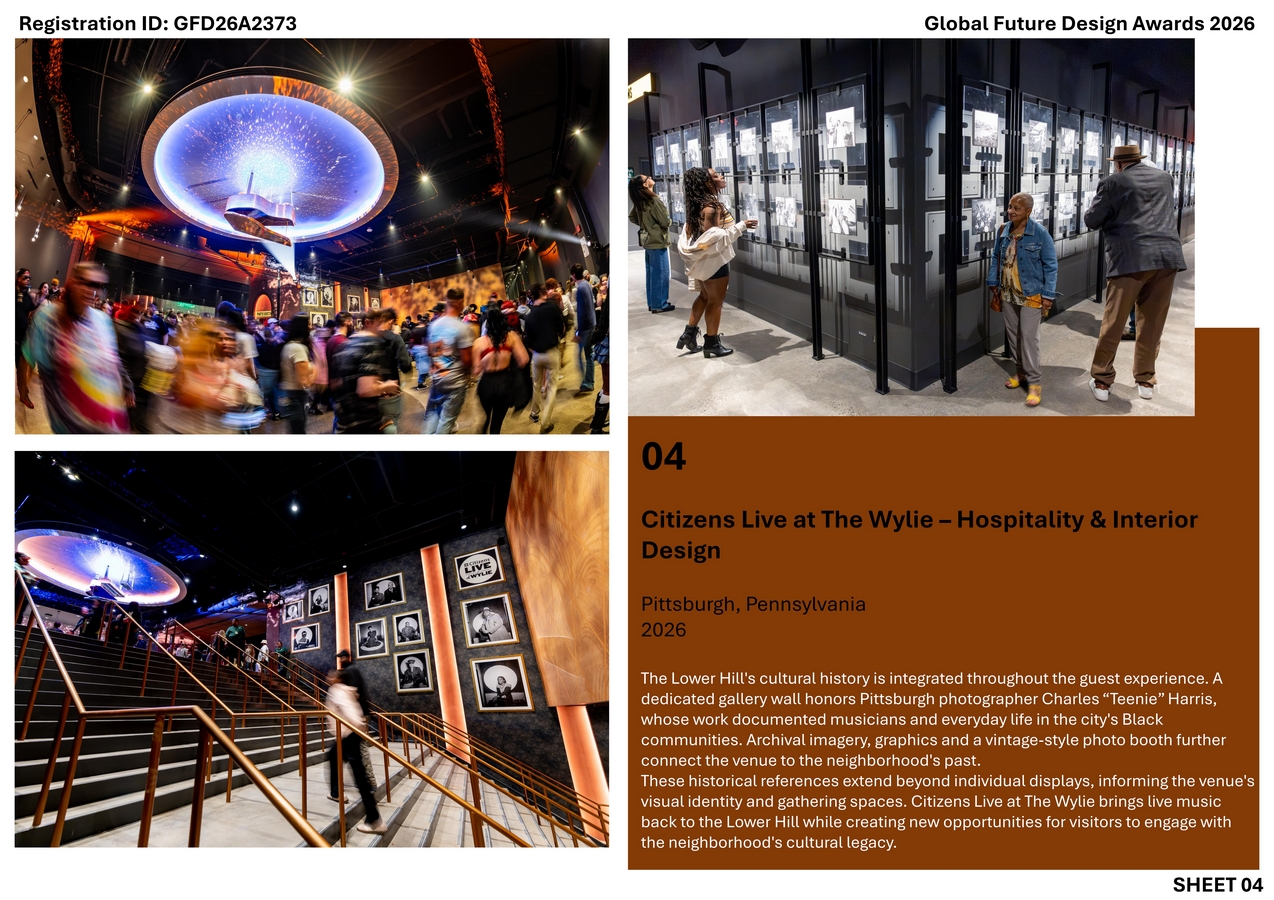
The design draws from the atmosphere, materials and visual language of the Lower Hill’s nightlife and music culture. References to neighborhood landmarks such as the Crawford Grill and Continental Bar inform the venue’s identity, while the overall approach pairs the character of a mid-century music room with the requirements of a modern performance venue.
That relationship between past and present carries through the building’s spaces and details. Patterns and graphics take cues from archival Crawford Grill interiors and 1950s and 1960s album artwork. A mirrored piano, modeled after one that served as a focal point of the Crawford Grill, anchors the lobby bar. A dedicated gallery wall honors Pittsburgh photographer Charles “Teenie” Harris, whose work documented everyday life, musicians and visitors in the city’s Black communities. A vintage-style photo booth extends that reference into the guest experience, giving visitors another way to engage with the visual history that shaped the project.
Music remains the organizing idea throughout Citizens Live at the Wylie. The venue’s Vinyl Room offers a smaller, more intimate listening environment within the larger performance setting, with a record collection centered primarily on artists connected to Pittsburgh’s music scene, past and present. Other details, including the “Giant Killer” artist trophy, draw from local music culture and create a link between the artists performing at the venue today and those who shaped the Lower Hill’s earlier musical life.
The venue’s identity is carried through its signage, graphics, materials and guest touchpoints, so the neighborhood’s history is present throughout the experience rather than confined to a single display. The venue is also intended as a community gathering place, restoring a live-music presence to a part of Pittsburgh where performance once played a central role in daily life. The result is a building designed for contemporary touring and audiences while remaining closely tied to its location. Citizens Live at The Wylie is both a live music destination and a new gathering place for the Lower Hill. By placing a modern performance venue within the context of the neighborhood’s own stories, spaces and visual culture, the project gives that history a visible role in the next chapter of the district.
Follow us on