

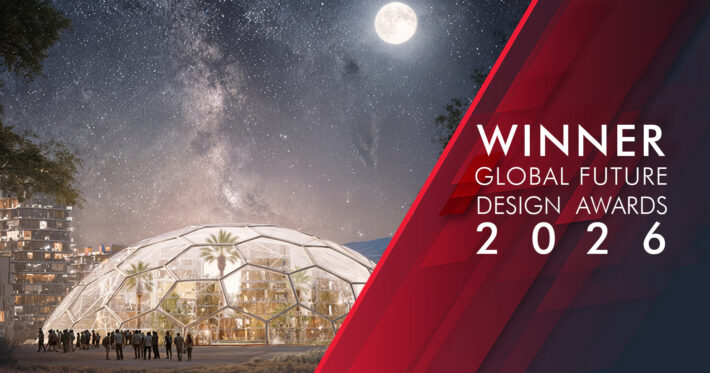
Hunnu City is a new regenerative city planned south of Ulaanbaatar, near the new Chinggis Khaan international airport, for the client City of Hunnu. The masterplan extends over 31,503 hectares and follows a vision extending to 2045. It is part of Mongolia’s “Vision 2050” strategy, built on economic sovereignty, climate resilience and cultural identity. Completion is estimated for 2030, and the budget remains confidential.
Global Future Design Awards 2027 — Entries Now Open! Take your creativity to the global stage and showcase your innovative ideas to the world. Celebrate exceptional design, gain international recognition, and become part of a new generation shaping the future of design. Submit Your Work Today & Take Your Design Journey to the Next Level!

Gold 🏆 Winner
Global Future Design Awards 2026
Hunnu City
Urban Design Concept
Firm
Bechu & Associés
Architect/Designer
Anthony Bechu
Design Team
Bechu & Associés (France) — Lead architect & urban design • IQP Italdesign (Mongolia)— architecture • SOA Architecture (Italy) — Architecture • MIC-Hub (Italy) — Mobility & flows • Parc Nouveau (Italy) — Landscape • Atelier Ten (UK) — Environmental engineering • Robert Bird Group — Structural engineering • Embix (France) — Smart grid & energy systems • The Climate Company (France) — Climate modeling & adaptation • Future Food Institute (Italy) — Food transitiono
Location
Mongolia
Country
France
Photographer/Copyright
©Nicolas Grosmond
Website/Social Media Handles
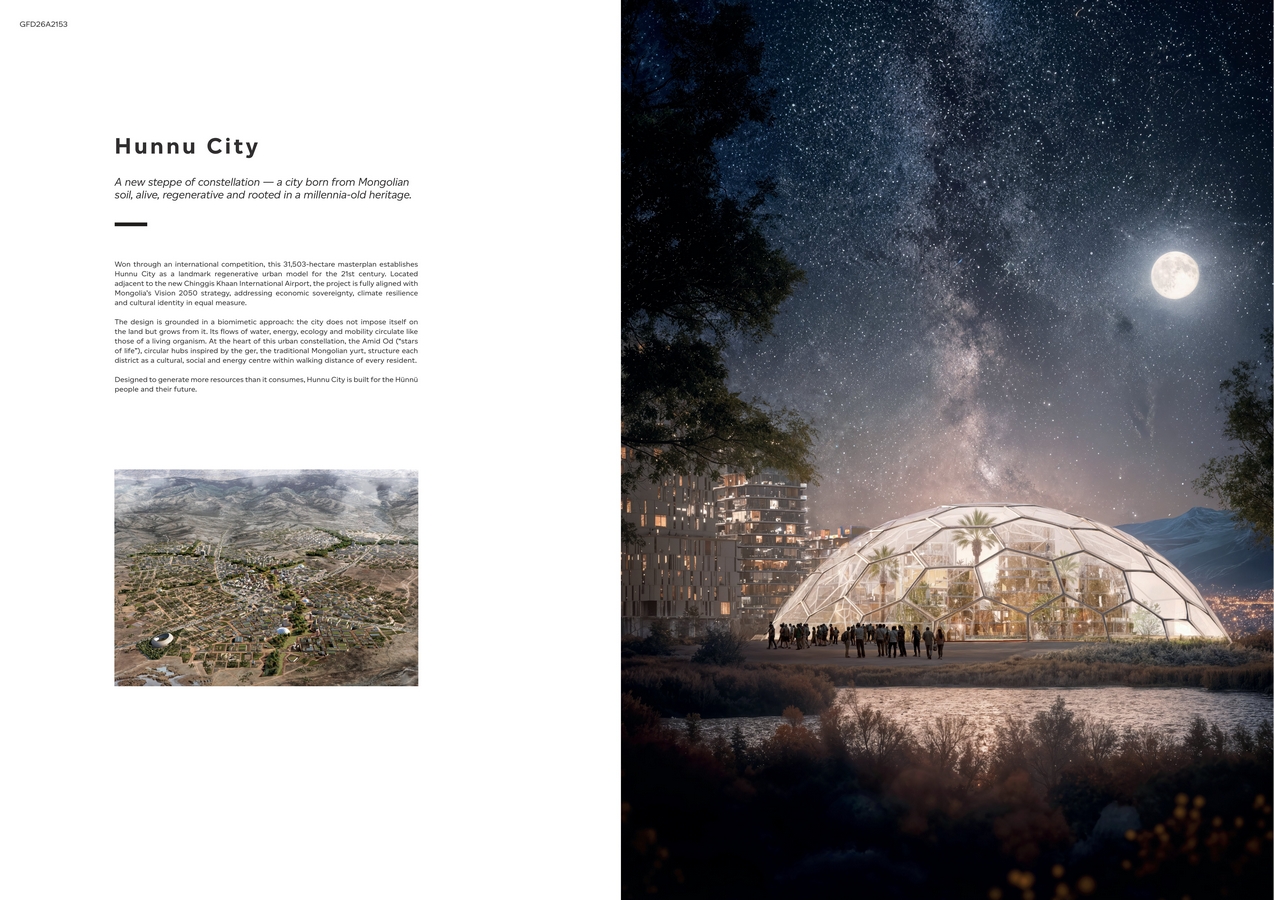
In November 2025, the international team led by Bechu & Associés won first prize in the competition for the masterplan, which brought together 43 teams from 21 countries, with an anonymous final of 24 candidates. The jury also awarded further prizes and honorable mentions. The team brings together partners in architecture, landscape, mobility, environmental engineering, infrastructure, food systems, smart grids and climate modelling. Luca Bertacchi, partner, directs architecture and urban planning for the agency.
The program combines residential neighborhoods, economic hubs, campuses and public facilities, including housing, education and research buildings and towers. It is conceived as a smart, green and resilient city, adapted to the demanding conditions of the Mongolian climate.
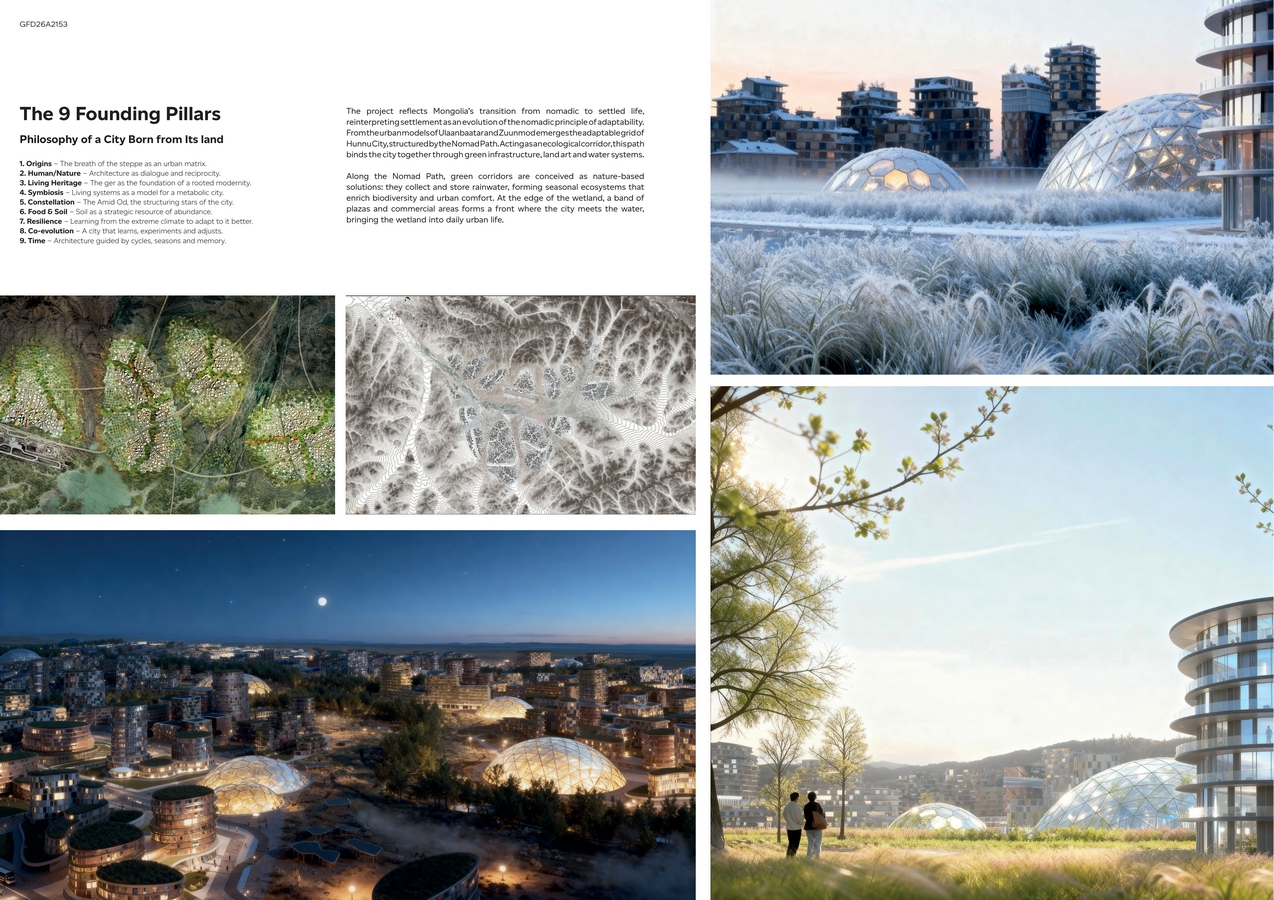
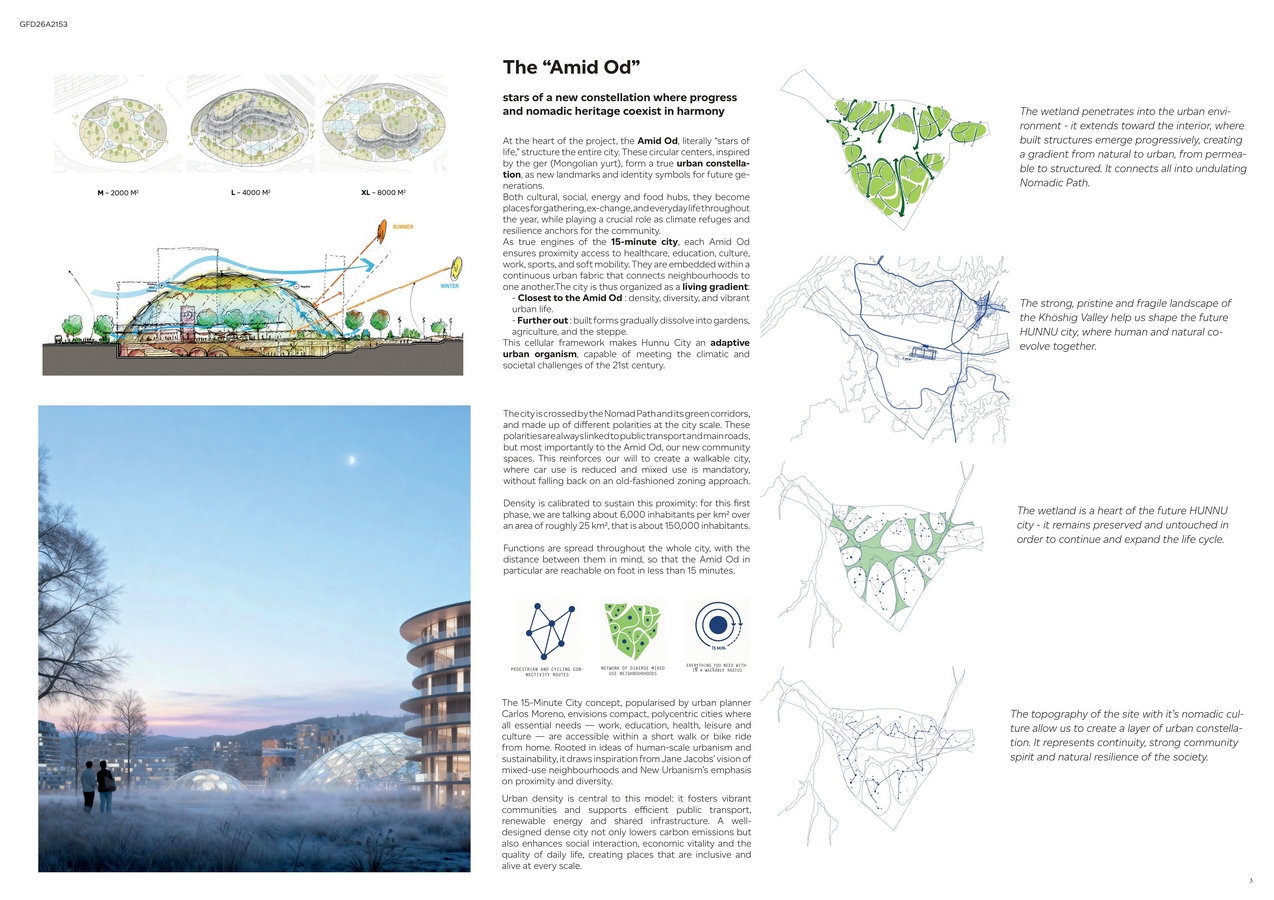
The proposal follows a biomimetic and cultural approach, summed up as “a new steppe of constellation”. It is inspired by the Hünnü people, by the sacred number nine and by natural elements, and the city does not impose its form: it is meant to emerge from its environment like a living organism. Its structure is a constellation of circular hubs called Amid Od, “stars of life”, inspired by the ger, the traditional Mongolian yurt. Each hub is designed as a neighborhood that brings daily needs within a short distance, and integrates the natural flows of wind, water, energy and biodiversity.
Water is captured, slowed and reused, energy comes from solar, thermal and plant sources, and ecology relies on biodiversity, soils and natural corridors. Soft mobility, seasonal movements and cultural spaces shape everyday life, so that the city stays connected to the rhythms of its territory.
Density is concentrated in the hubs and fades gradually toward farming gardens and then the wild steppe, in a symbiotic dialogue with the environment. The project addresses circular economy, biodiversity, biomimicry and climate resilience, and aims to regenerate its resources rather than consume them.
Follow us on