

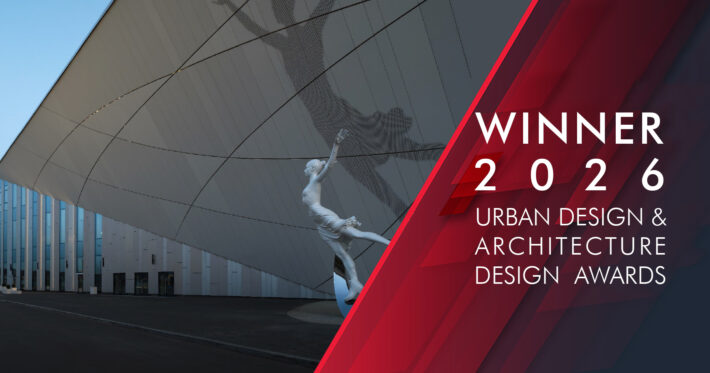
The Ice Palace, designed by UNK, is a key facility of one of the largest sports clusters in Moscow and the country, which is developing in Nizhny Mnevniki. The sports facility is harmoniously integrated into the modern development of the Mnevnikovskaya floodplain.
Urban Design & Architecture Design Awards 2027: Entries Open!
Take your work to the next level. Register Now…

Gold 🏆 Winner
Urban Design & Architecture Design Awards 2026
Navka Arena Ice Palace
Sports Architecture (Built)
Firm
UNK
Architect/Designer
Yuliy Borisov
Design Team
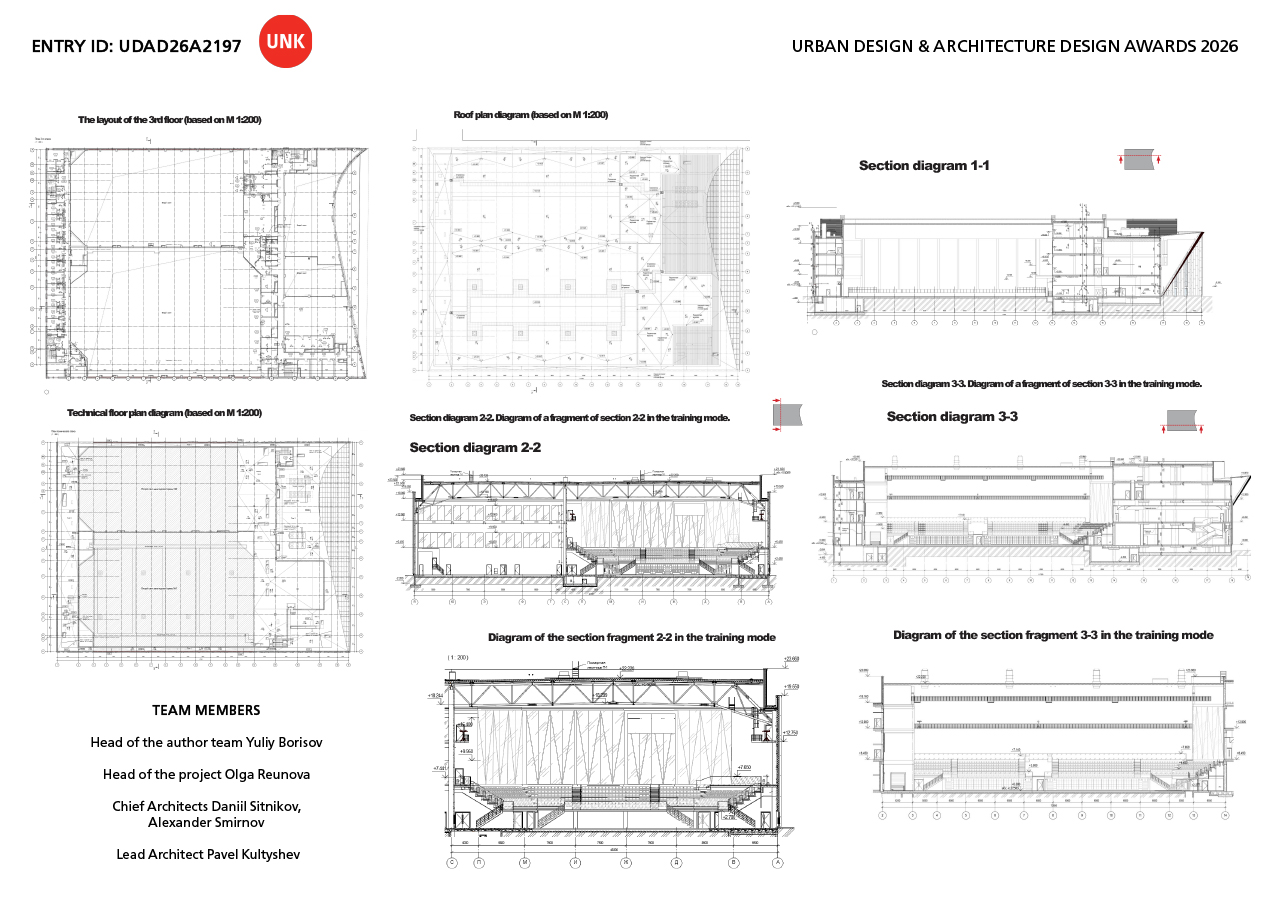
Head of the author team, Yuliy Borisov; head of the project, Olga Reunova; Chief Architects Daniil Sitnikov, Alexander Smirnov, Lead Architect Pavel Kultyshev
Location
Moscow. Russia
Country
Russia
Photographer/Copyright
©Photographer Dmitry Chebanenko
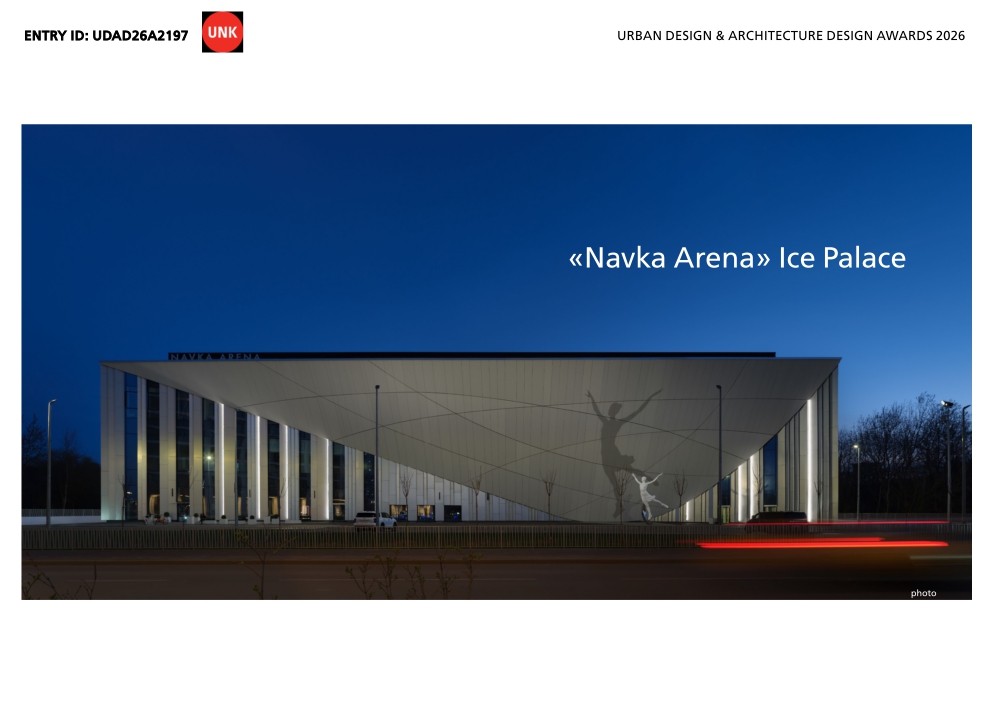
UNK became the winner of an architectural competition organized by Moskomarchitektura, which set an ambitious goal – to create a unique sports complex combining several important functions under one roof: the placement of two modern ice arenas, a fitness hotel and catering areas. “We tried to achieve the perfect balance between utilitarianism and aesthetics, so that every detail of this structure would serve its purpose, while creating an impressive visual image,” says Yuliy Borisov, head of UNK.
The concept is based on the desire to convey the essence of an object through images that emphasize its main function — ice. “For example, the facade of the building, made of stainless polished steel plates that form dynamic shapes, seems to reflect the play of light on the smooth surface of a frozen lake. This shiny material enhances the feeling of cold, creating the illusion of the presence of real ice,” adds Borisov.
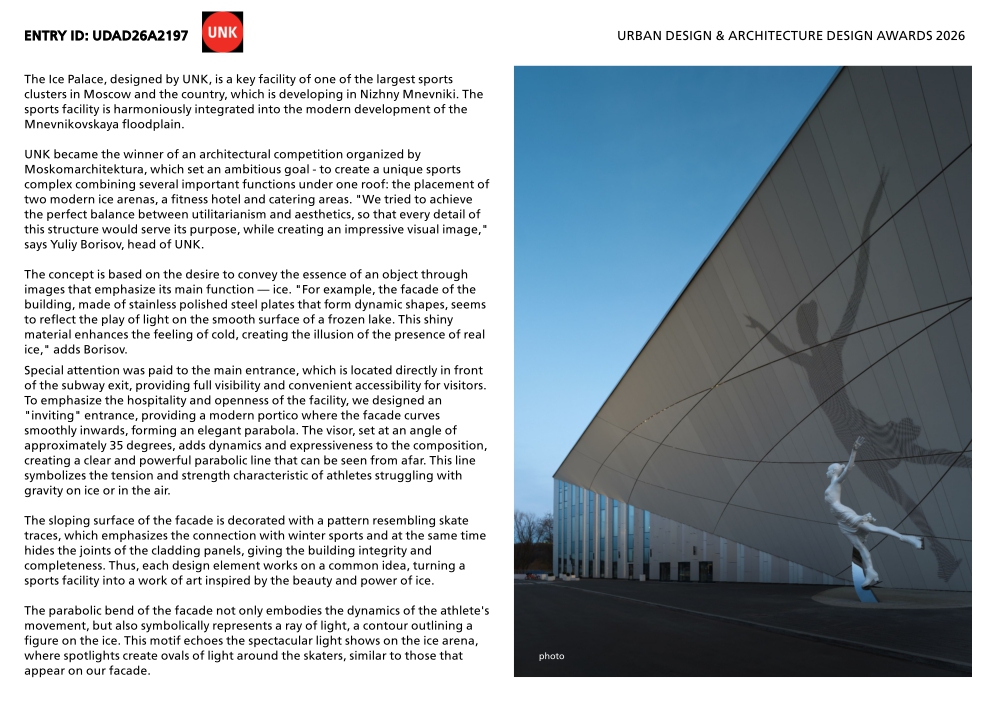
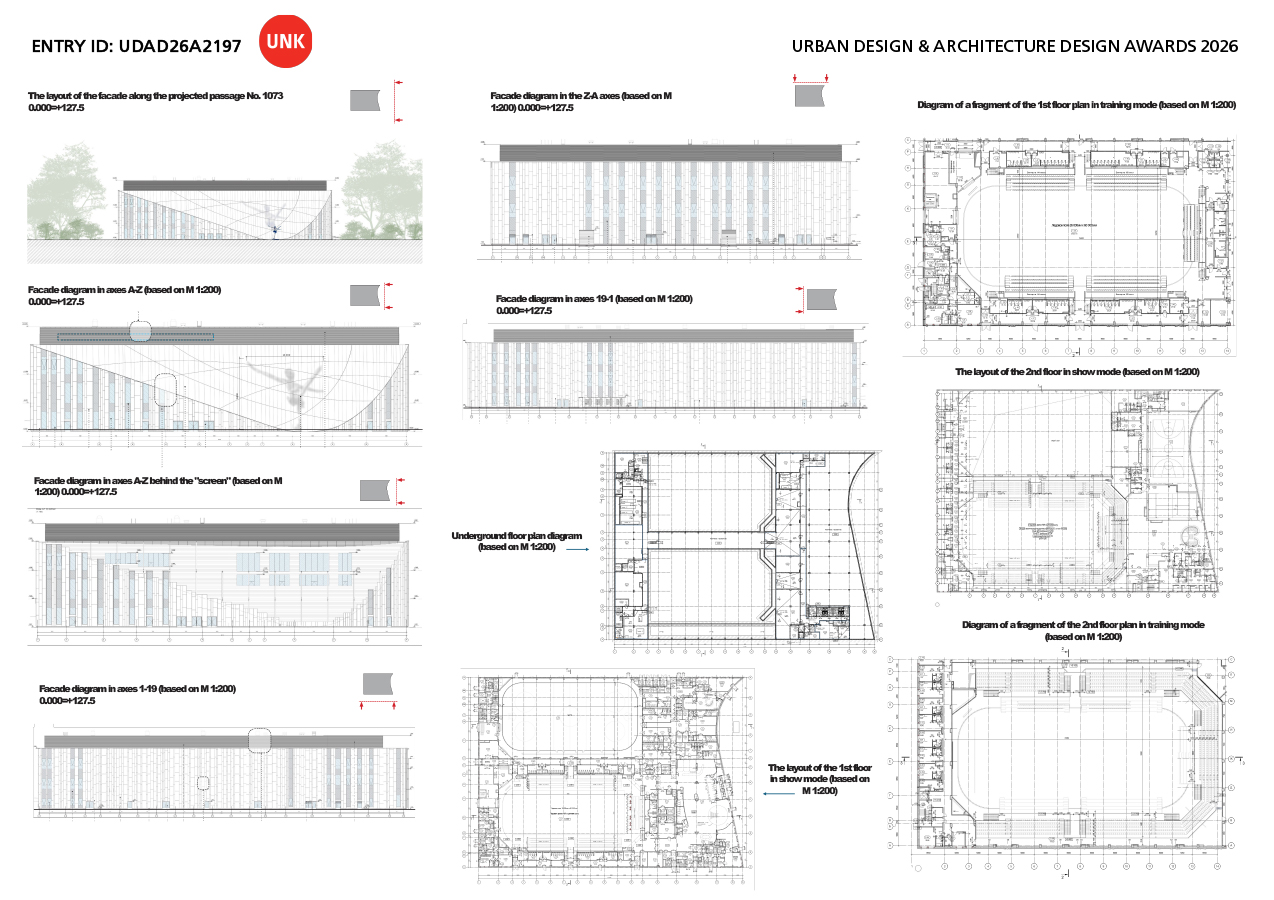
Special attention was paid to the main entrance, which is located directly in front of the subway exit, providing full visibility and convenient accessibility for visitors. To emphasize the hospitality and openness of the facility, we designed an “inviting” entrance, providing a modern portico where the facade curves smoothly inwards, forming an elegant parabola. The visor, set at an angle of approximately 35 degrees, adds dynamics and expressiveness to the composition, creating a clear and powerful parabolic line that can be seen from afar. This line symbolizes the tension and strength characteristic of athletes struggling with gravity on ice or in the air.
The sloping surface of the facade is decorated with a pattern resembling skate traces, which emphasizes the connection with winter sports and at the same time hides the joints of the cladding panels, giving the building integrity and completeness. Thus, each design element works on a common idea, turning a sports facility into a work of art inspired by the beauty and power of ice.
The parabolic bend of the facade not only embodies the dynamics of the athlete’s movement, but also symbolically represents a ray of light, a contour outlining a figure on the ice. This motif echoes the spectacular light shows on the ice arena, where spotlights create ovals of light around the skaters, similar to those that appear on our facade.
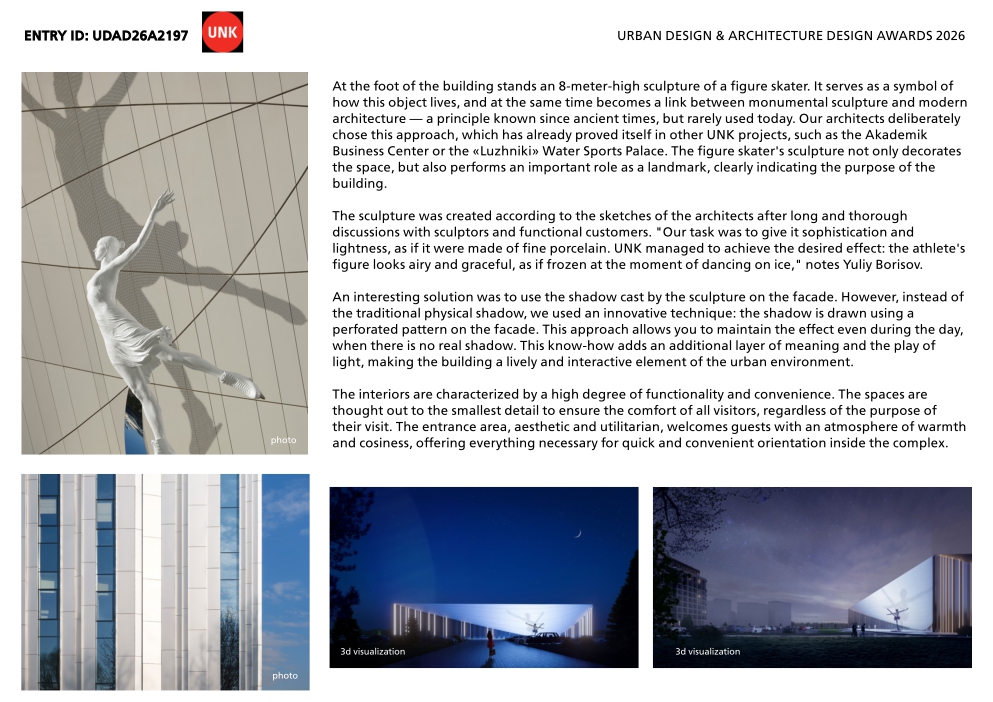
At the foot of the building stands an 8-meter-high sculpture of a figure skater. It serves as a symbol of how this object lives, and at the same time becomes a link between monumental sculpture and modern architecture — a principle known since ancient times, but rarely used today. Our architects deliberately chose this approach, which has already proved itself in other UNK projects, such as the Akademik Business Center or the «Luzhniki» Water Sports Palace. The figure skater’s sculpture not only decorates the space, but also performs an important role as a landmark, clearly indicating the purpose of the building.
The sculpture was created according to the sketches of the architects after long and thorough discussions with sculptors and functional customers. “Our task was to give it sophistication and lightness, as if it were made of fine porcelain. UNK managed to achieve the desired effect: the athlete’s figure looks airy and graceful, as if frozen at the moment of dancing on ice,” notes Yuliy Borisov.
An interesting solution was to use the shadow cast by the sculpture on the facade. However, instead of the traditional physical shadow, we used an innovative technique: the shadow is drawn using a perforated pattern on the facade. This approach allows you to maintain the effect even during the day, when there is no real shadow. This know-how adds an additional layer of meaning and the play of light, making the building a lively and interactive element of the urban environment.
The interiors are characterized by a high degree of functionality and convenience. The spaces are thought out to the smallest detail to ensure the comfort of all visitors, regardless of the purpose of their visit. The entrance area, aesthetic and utilitarian, welcomes guests with an atmosphere of warmth and cosiness, offering everything necessary for quick and convenient orientation inside the complex.