

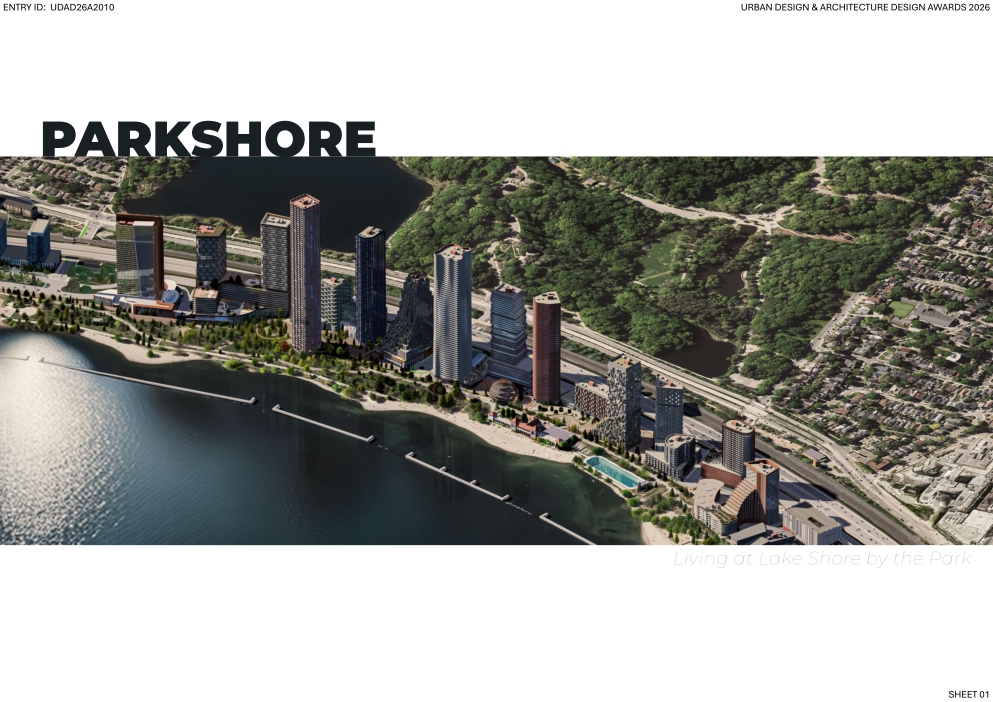
Parkshore is a bold reimagining of Toronto’s western waterfront, transforming an underutilized stretch of the city into a thriving urban district where public life, sustainability, and connectivity take center stage. More than just a new development, it is a reclamation of space—restructuring roads and infrastructure to create a truly people-first environment. By rationalizing Lakeshore Boulevard West and shifting roadways to better align with existing infrastructure, Parkshore unlocks significant new areas for parks, plazas, and public gathering spaces while seamlessly integrating new homes, shops, and community amenities. This is not a development that encroaches on greenspace—it is one that creates it.
Urban Design & Architecture Design Awards 2027: Entries Open!
Take your work to the next level. Register Now…

Gold 🏆 Winner
Urban Design & Architecture Design Awards 2026
Parkshore
Urban Planning (Concept)
Firm
Brent Haynes Design Consultancy
Architect/Designer
Brent Haynes
Design Team
Brent Haynes
Location
2001 Lake Shore Blvd W, Toronto, ON
Country
Canada
Photographer/Copyright
©Brent Haynes
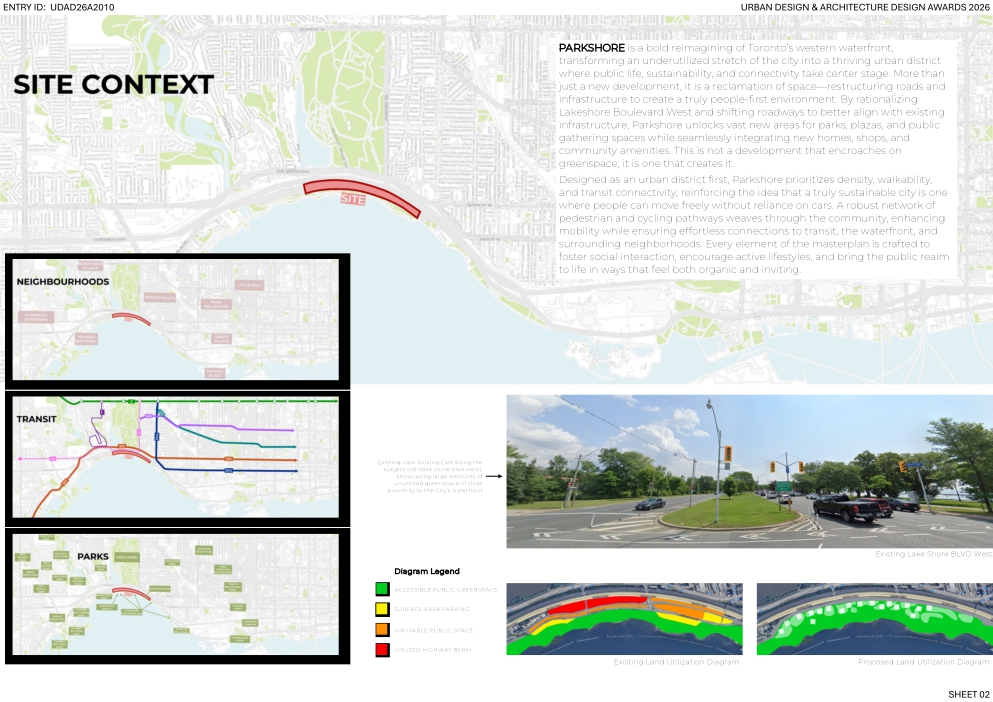
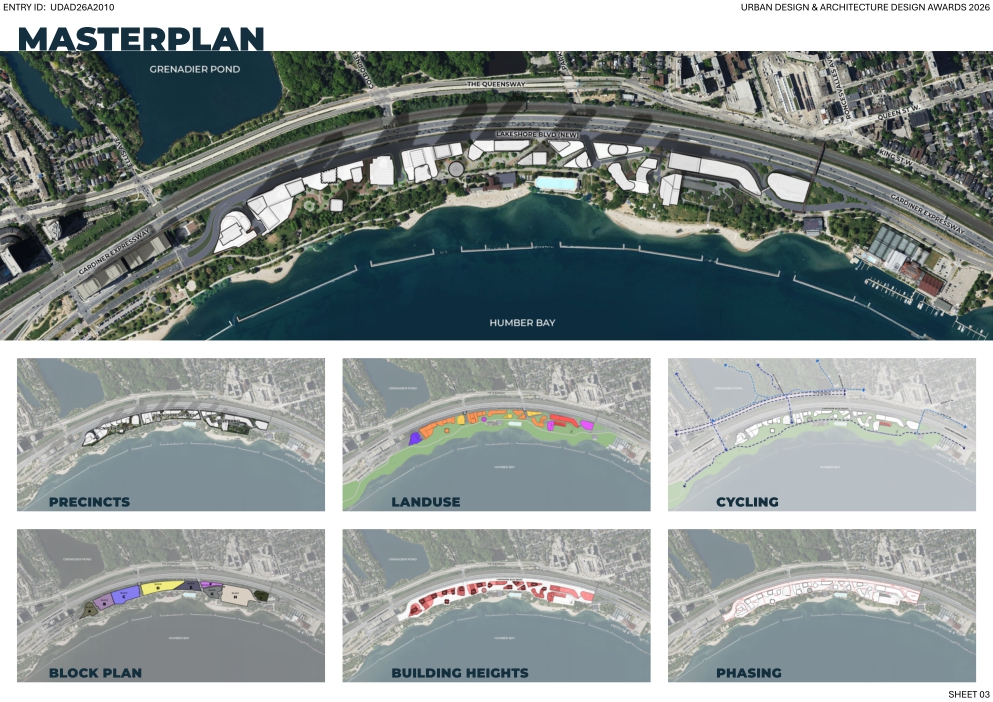
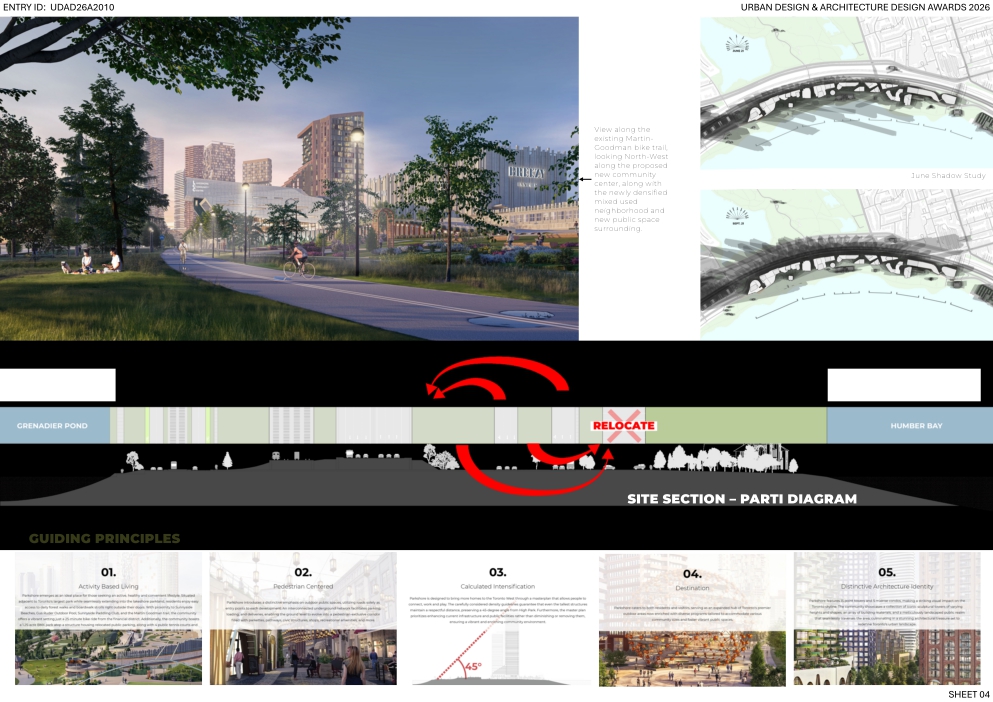
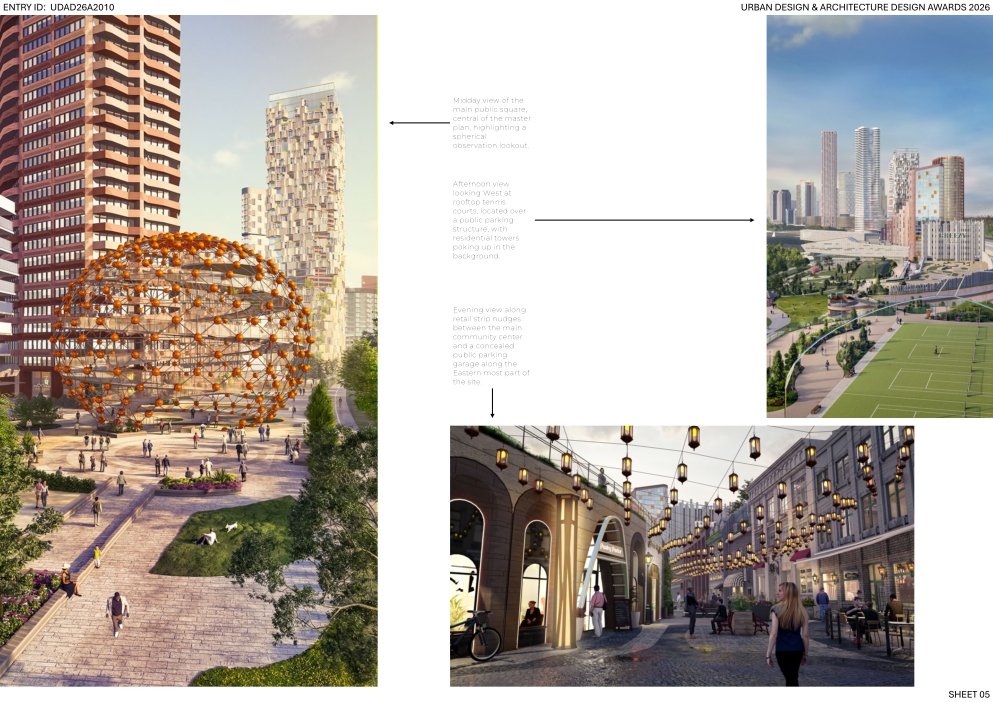
Designed as an urban district first, Parkshore prioritizes density, walkability, and transit connectivity, reinforcing the idea that a sustainable city is one where people can move freely without reliance on cars. A robust network of pedestrian and cycling pathways weaves through the community, enhancing mobility while ensuring direct access to transit, the waterfront, and surrounding neighborhoods. Every element of the masterplan is crafted to encourage active lifestyles, spontaneous social interaction, and a daily rhythm defined by access to nature, movement, and shared public space. This is a place where everyday activity happens in the open—on foot, on wheels, and in connection with others.
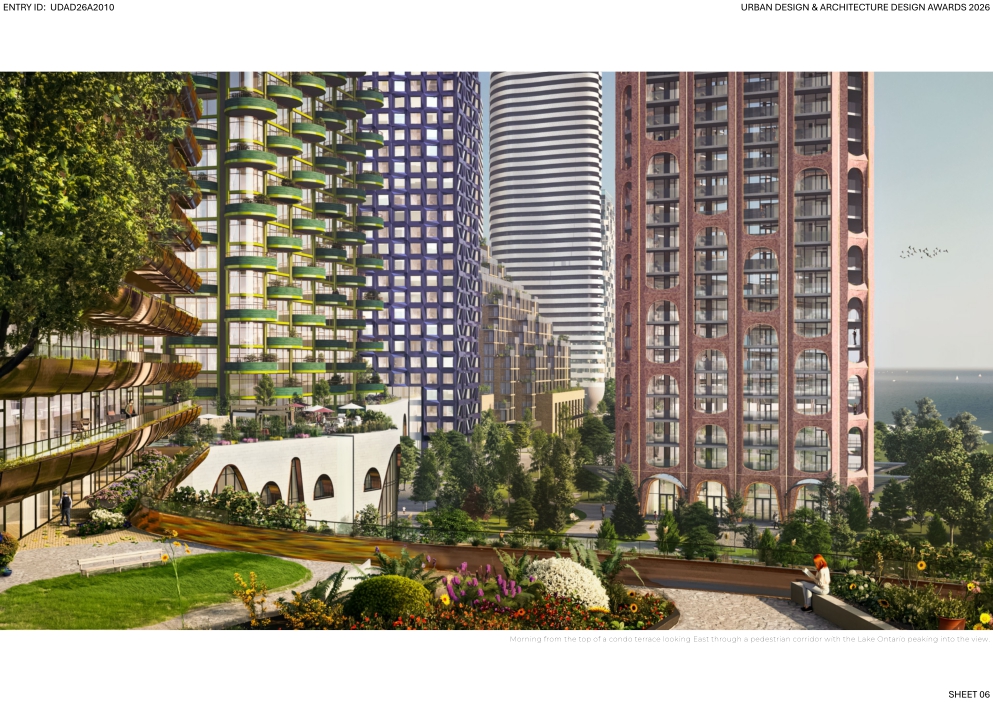
Sustainability is embedded in the very structure of Parkshore. By consolidating and streamlining vehicle infrastructure, the plan frees up land for generous green space while enabling a continuous pedestrian-first corridor that forms the backbone of the site. What exists today as a broad, car-dominated channel becomes a linear landscape of trees, planting, and movement—a green spine that acts as the lungs of the district. It offers shade and comfort, improves air quality, and helps regulate temperature, all while creating a distinct, immersive public experience. This green corridor not only serves as a space of passage, but as a place to pause, gather, and experience the city in a new way—shaped by texture, shade, and rhythm.
A transit-first strategy supports this transformation by minimizing car dependency and reinforcing a low-carbon lifestyle. The development is aligned with the Toronto Green Standard and TransformTO, promoting sustainable modes of transportation and healthier urban living. Tree canopy expansion and integrated planting across the site not only soften the built environment but also reduce the urban heat island effect and contribute to enhanced biodiversity. These ecological interventions are not treated as add-ons, but as defining components of how the district is experienced and sustained over time.
Parkshore also creates a strong framework for public art. The central square houses a sculptural lookout point that serves as both landmark and gathering space—an example of how design and art can merge into a single, civic gesture. Elsewhere, key intersections, plazas, and seating areas throughout the district offer natural opportunities for artistic interventions. Whether sculptural, digital, or light-based, these installations will help define Parkshore’s identity and bring richness, expression, and texture to the everyday experience of this new waterfront community.