

Located in Colonia Roma, Mexico City, between Durango and Salamanca streets, Pendry Mexico City is respectfully situated within a sector of the metropolis with historical, heritage, pedestrian, and gastronomic value. The strength of this context defines the project’s morphology and scale, also seeking to enhance the public space.
Urban Design & Architecture Design Awards 2027: Entries Open!
Take your work to the next level. Register Now…

Gold 🏆 Winner
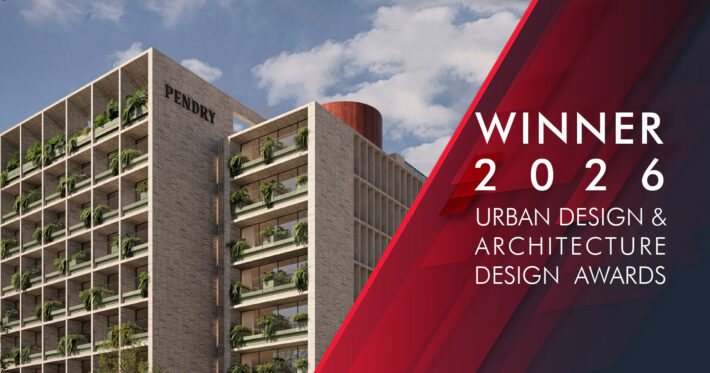
Urban Design & Architecture Design Awards 2026
Pendry
Hospitality Architecture (Under Construction)
Firm
Central de Arquitectura
Architect/Designer
José Sánchez
Design Team
José Sánchez, Moisés Ison
Location
Mexico City
Country
Mexico
Photographer/Copyright
©Interiorism: Avro | KO Design, Structure: Stärken Group, Installations: DIIN INGENIERÍA, Landscape: PAAR- TALLER, Lighting: LUA Luz en la Arquitectura
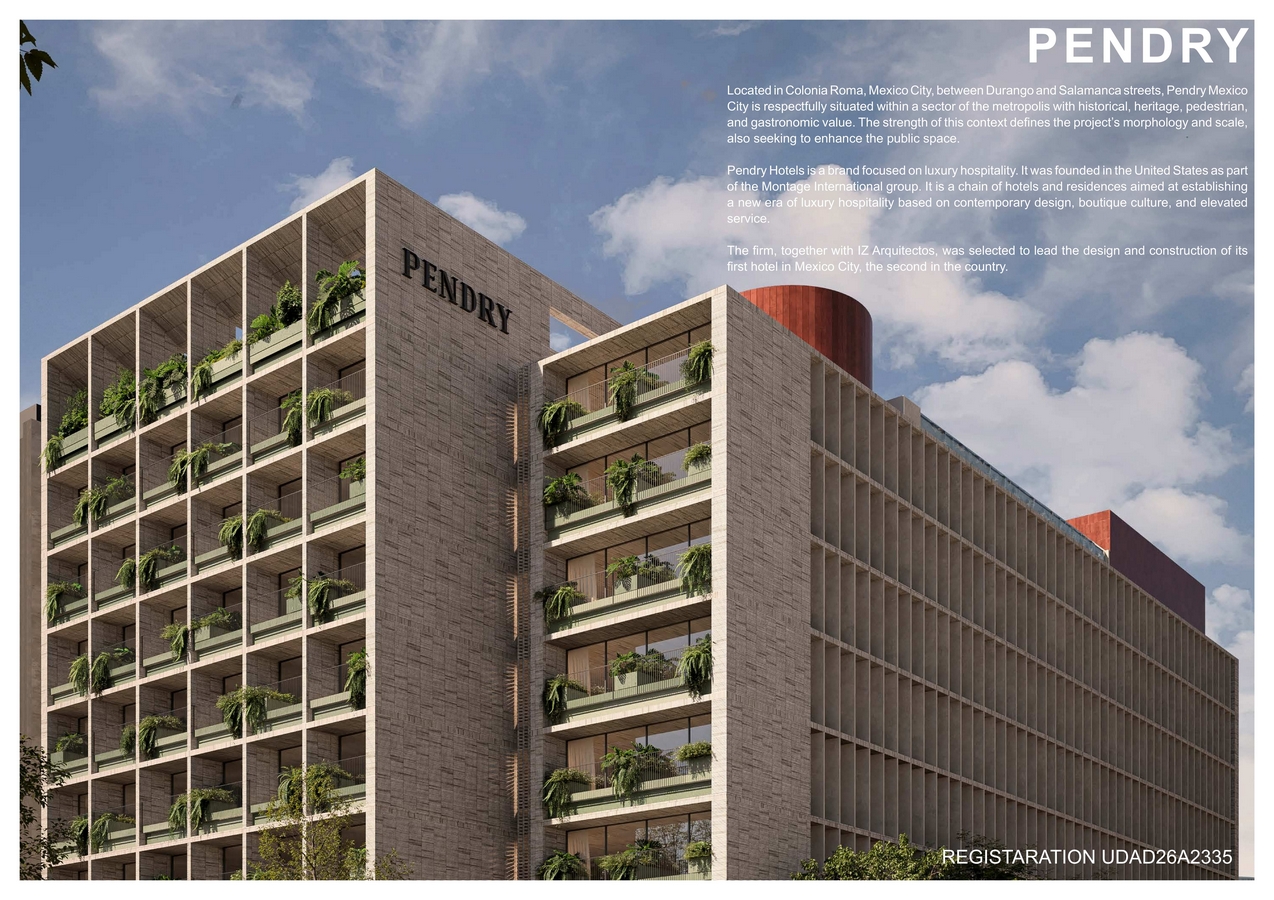
Pendry Hotels is a luxury hospitality brand founded in the United States as part of the Montage International group. It is a chain of hotels and residences aimed at establishing a new era of luxury hospitality based on contemporary design, boutique culture, and elevated service. The firm, together with IZ Arquitectos, was selected to lead the design and construction of its first hotel in Mexico City, the second in the country.
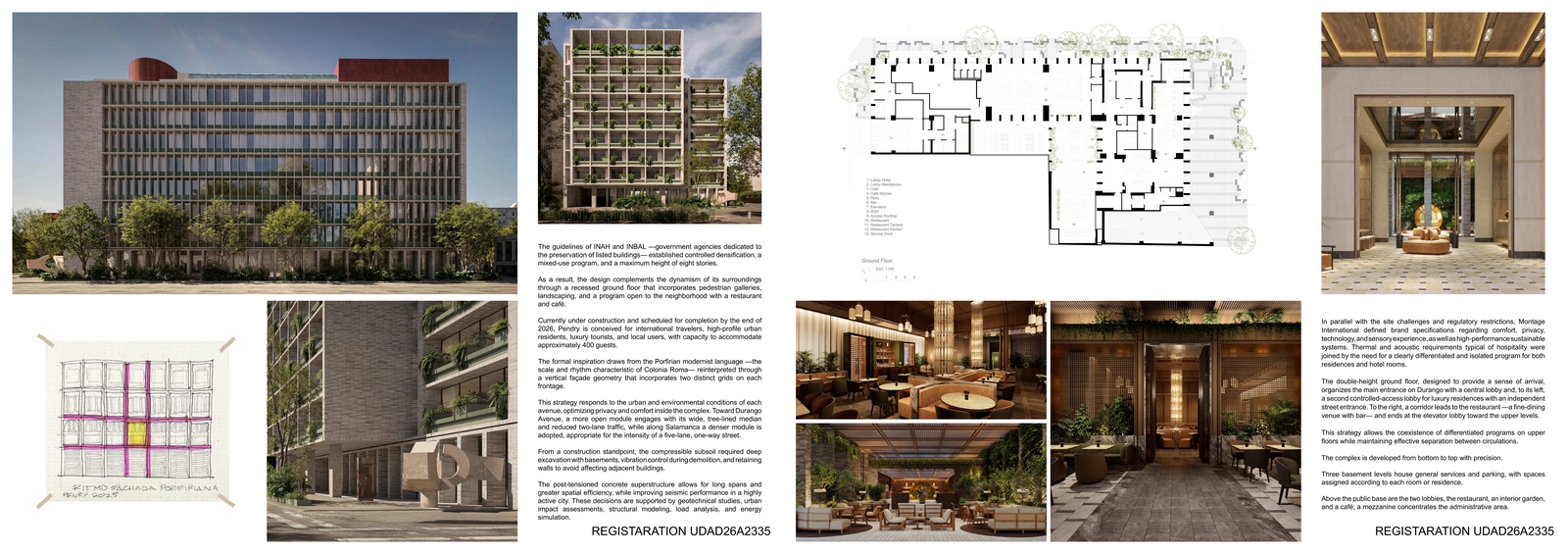
INAH and INBAL guidelines established controlled densification, a mixed-use program, and a maximum height of eight stories. As a result, the design complements the dynamism of its surroundings through a recessed ground floor incorporating pedestrian galleries, landscaping, and a neighborhood-oriented program with a restaurant and café.
Currently under construction and scheduled for completion by the end of 2026, Pendry is conceived for international travelers, high-profile urban residents, luxury tourists, and local users, with capacity for approximately 400 guests.
Formal inspiration draws from Porfirian modernist language —the scale and rhythm of Colonia Roma— reinterpreted through a vertical façade geometry with two distinct grids on each frontage. This responds to the urban and environmental conditions of each avenue, optimizing privacy and comfort. Toward Durango, a more open module engages with its wide, tree-lined median and reduced two-lane traffic; along Salamanca, a denser module addresses the intensity of a five-lane, one-way street.
Compressible subsoil required deep excavation with basements, vibration control during demolition, and retaining walls to avoid affecting adjacent buildings. A post-tensioned concrete superstructure enables long spans and spatial efficiency while improving seismic performance, supported by geotechnical studies, urban impact assessments, structural modeling, load analysis, and energy simulation.
Montage International defined brand specifications regarding comfort, privacy, technology, sensory experience, and high-performance sustainable systems. Thermal and acoustic requirements were joined by the need for a clearly differentiated and isolated program for residences and hotel rooms.
A double-height ground floor organizes the main entrance on Durango with a central lobby; to the left, a controlled-access lobby for luxury residences with an independent street entrance. To the right, a corridor leads to the restaurant and ends at the elevator lobby, enabling differentiated programs while maintaining separation between circulations.
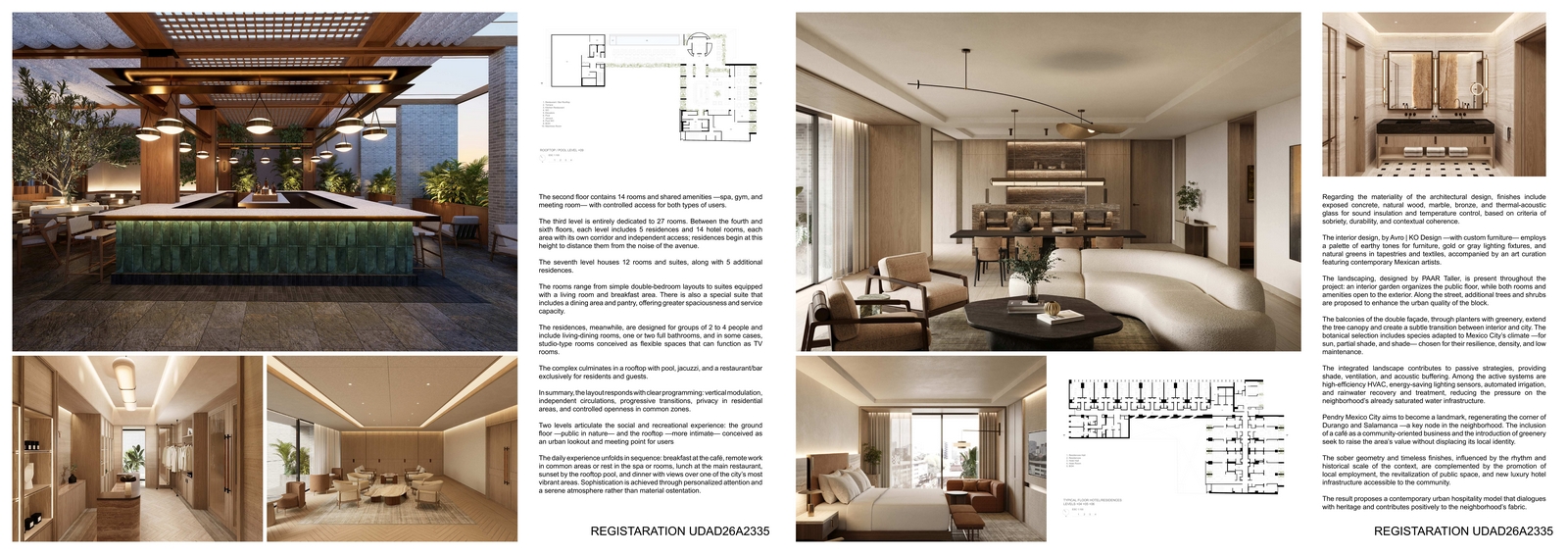
Three basements house services and parking. Above are the lobbies, restaurant, interior garden, café, and a mezzanine with administration. The second floor includes 14 rooms and amenities; the third has 27 rooms. Floors four to six include 5 residences and 14 rooms per level; the seventh contains 12 rooms and suites plus 5 residences. Rooms range from doubles to suites; one special suite includes dining and pantry. Residences for 2 to 4 people include living-dining areas, one or two bathrooms, and optional flexible studios. The rooftop includes pool, jacuzzi, and a residents-and-guests-only restaurant/bar.
Finishes include exposed concrete, natural wood, marble, bronze, and thermal-acoustic glass. Interior design by Avro | KO Design uses earthy tones, gold or gray fixtures, natural greens, and contemporary Mexican art.
Landscaping by PAAR Taller integrates an interior garden, street greenery, and balcony planters, supporting passive strategies and active systems including high-efficiency HVAC, lighting sensors, automated irrigation, and rainwater recovery.
Pendry aims to regenerate the corner of Durango and Salamanca through sober geometry, local employment, public space revitalization, and a contemporary hospitality model aligned with heritage.