

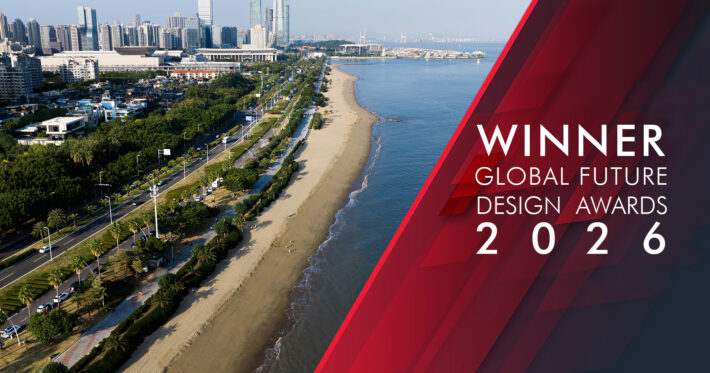
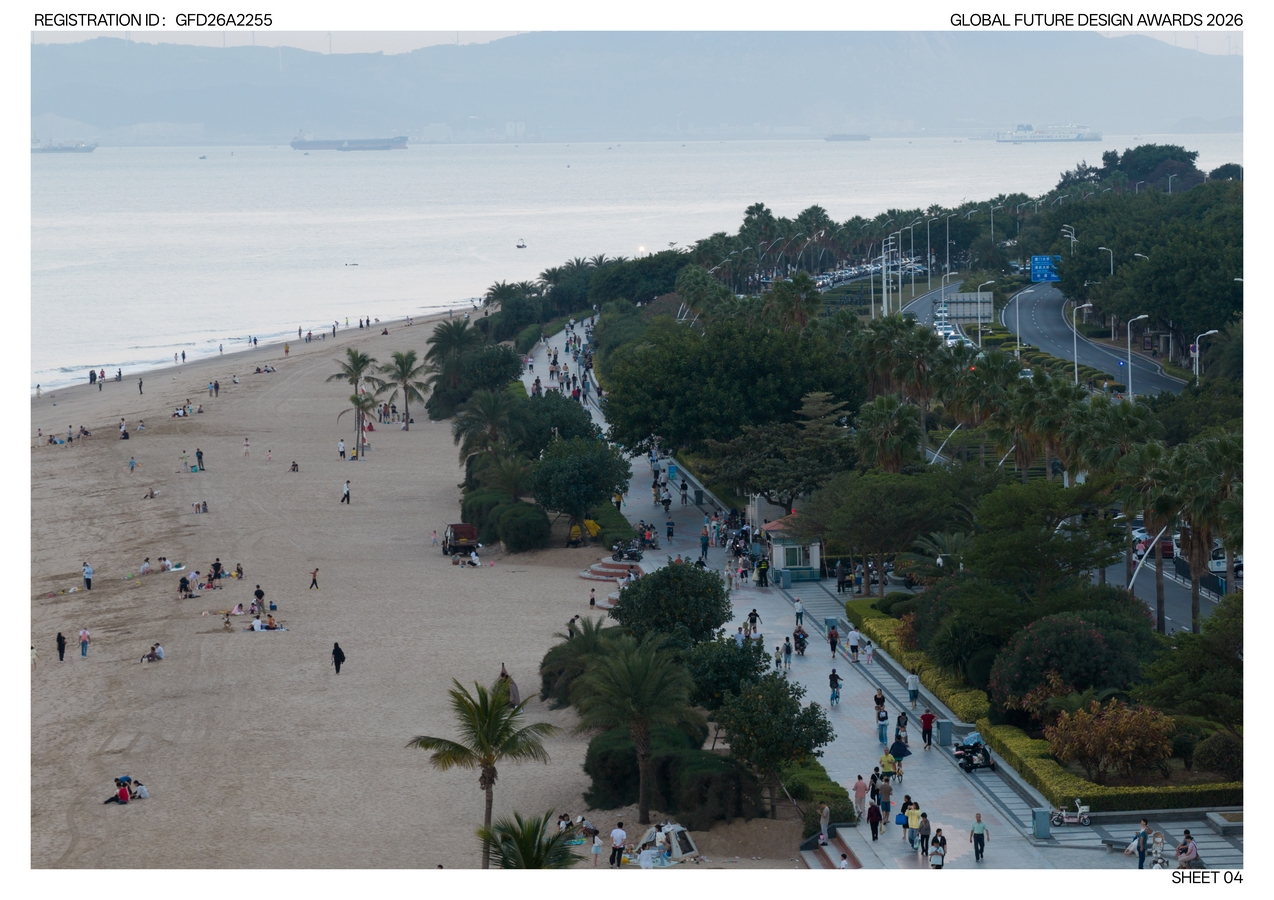
The Xiamen Convention Center Beach Ecological Restoration Project is located along the Ring Road corridor, Xiamen’s premier coastal tourism spine, where the shoreline once bore the ecological scars of late 20th-century land reclamation. The original hardened vertical seawall fronted a rubble-strewn muddy low-tide terrace, offering “hard” coastal protection, degraded water quality, no public waterfront access, and low capacity to mitigate destructive extreme weather events.
Global Future Design Awards 2027 — Entries Now Open!
Take your creativity to the global stage and showcase your innovative ideas to the world. Celebrate exceptional design, gain international recognition, and become part of a new generation shaping the future of design.
Submit Your Work Today & Take Your Design Journey to the Next Level!

Gold 🏆 Winner
Global Future Design Awards 2026
Xiamen International Conference & Exhibition Center Beach Restoration Project
Urban Design Built
Firm
THIRD INSTITUTE OF OCEANOGRAPHY, MINISTRY OF NATURAL RESOURCES; Xiamen Road & Bridge Landscape Art Co., LTD.
Architect/Designer
CAI Feng
Design Team
CAI Feng, LEI Gang, WANG Yu, QI Hongshuai, LIU Jianhui, ZHENG Jixiang, CAO Huimei, CHEN Xingjun, WU Shanyi, ZHANG Dinan, CHEN Yuanqing, XU Xijuan, WU Chengcheng
Location
Xiamen City, Fujian Province, China
Country
China
Photographer/Copyright
©Chill Shine
Website/Social Media handles
Site Context and Design Challenges
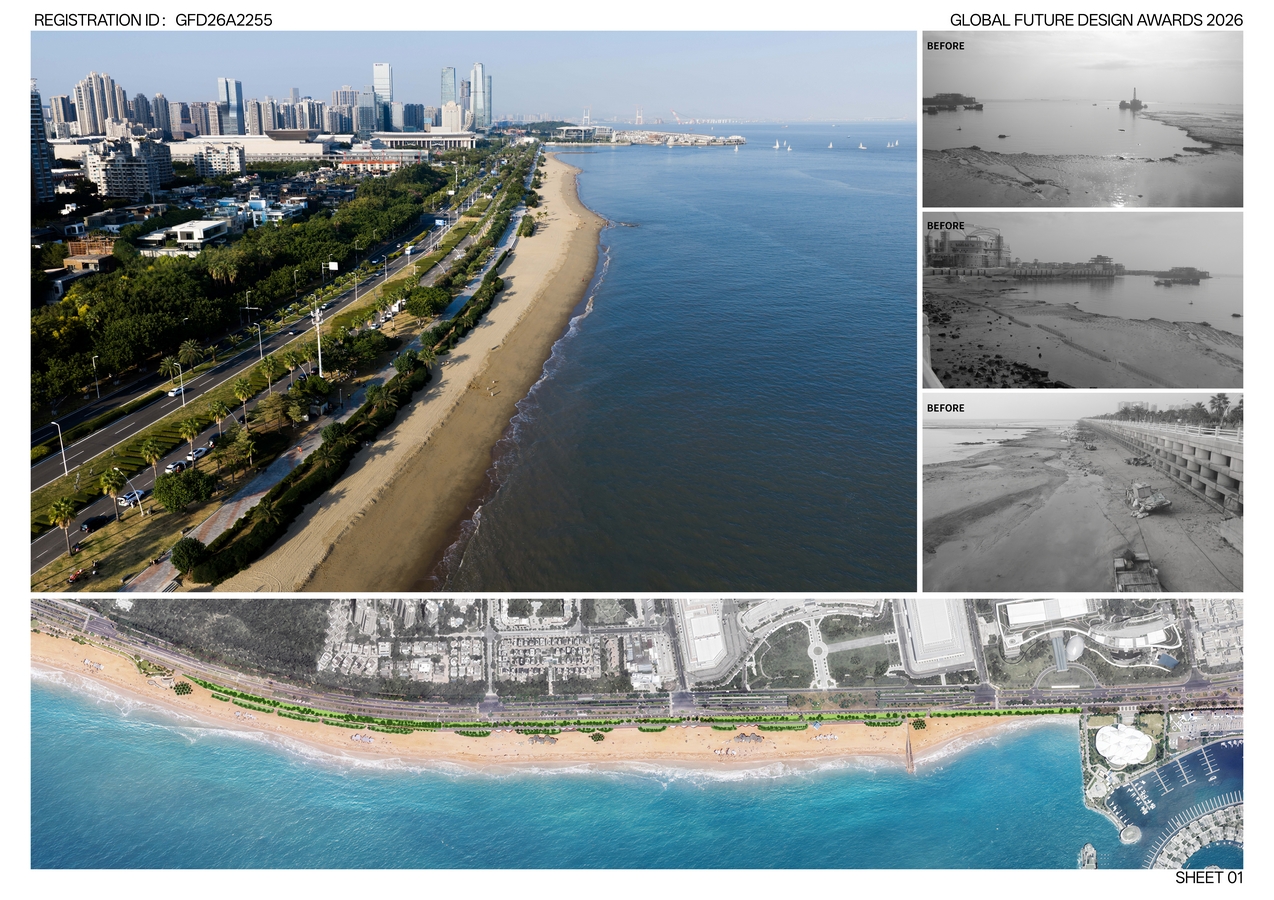
The project site occupies a critical node along the Ring Road, with the urban CBD immediately landward and Xiamen Bay to the seaward side. Prior to restoration, the approximately 2-kilometer stretch comprised a continuous vertical hardened revetment fronted by a rubble-laden, mud-dominated low-tide terrace without dry beach. Multiple stormwater outfall culverts discharged directly along the shoreline, exacerbating outlet erosion and degrading nearshore water quality. The site functioned as a barrier between city and sea, with no ecological function, storm protection capacity, or public waterfront amenity.
Coastal erosion and ecological degradation have accelerated under compounding pressures of climate change and urbanization. The loss of natural beach systems has weakened the coastal ecological buffer, reduced biodiversity, and heightened vulnerability to extreme weather. Typhoon Dan 9914 alone inflicted an estimated ¥4 billion in economic losses, underscoring the urgency of restoration.
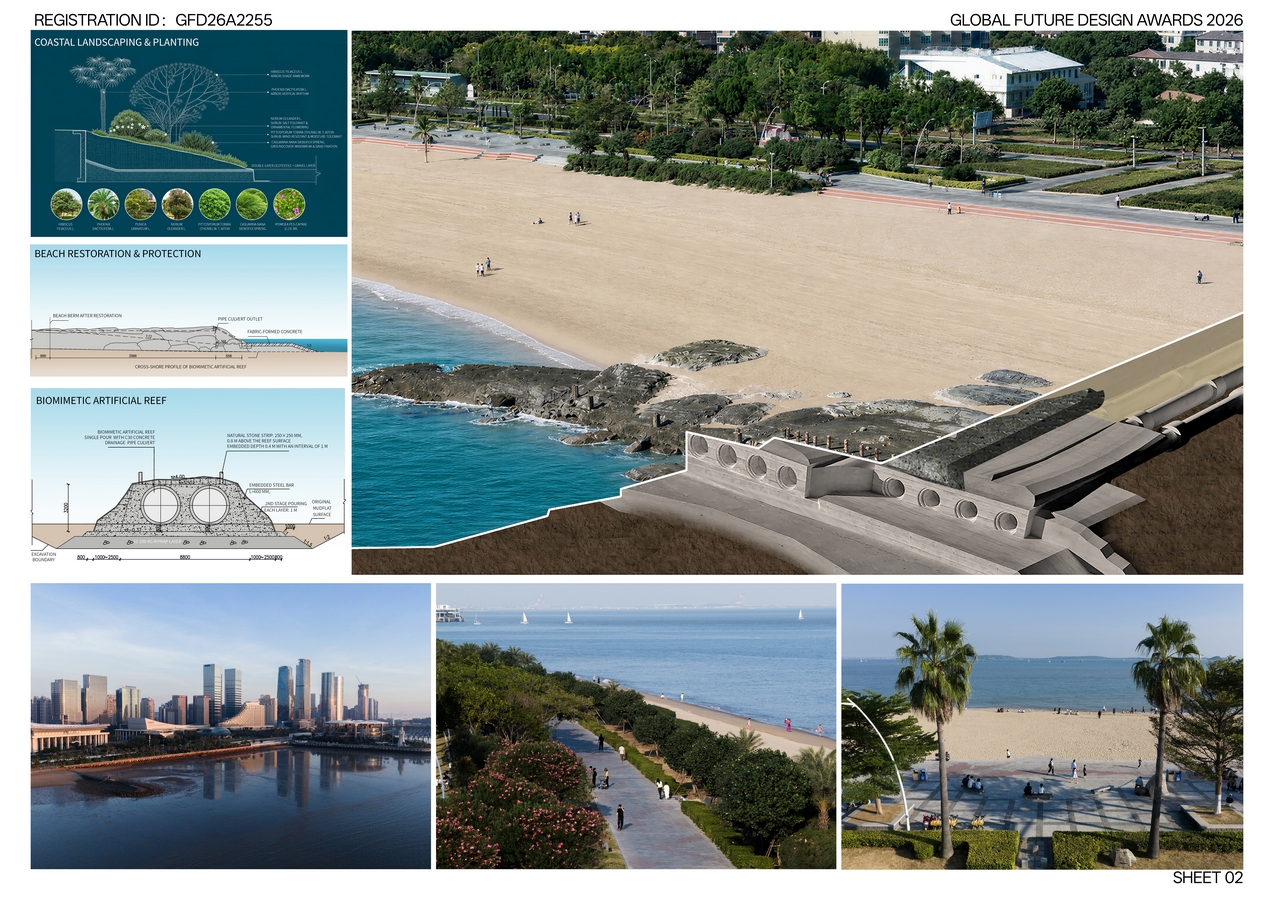
Key design challenges included rehabilitating a hardened shoreline into an ecologically stable beach system, integrating storm surge protection with active public waterfront programming, resolving drainage outlet erosion without compromising landscape coherence, and achieving all of this within a dense urban context serving civic, tourism, and international event functions.
Resilience Strategies and Design Approach
Guided by the concept of “Living Toward the Sea, Weaving Blue and Green,” the design team implemented a comprehensive shoreline restoration through beach nourishment, shoreline softening, and drainage optimization. Fourteen longitudinal planting belts in the backshore zone establish a layered native windbreak and sand-stabilization buffer. Open-access terraced steps and marine organism landforms connect the promenade to the beach face, providing spaces for coastal viewing, rest, and recreation.
Social Significance
Through systematic ecological restoration and landscape enhancement, this project transformed a rubble-strewn muddy low-tide terrace into a vibrant human-ecological waterfront, extending Xiamen’s Ring Road golden coast while substantially strengthening coastal disaster mitigation capacity.
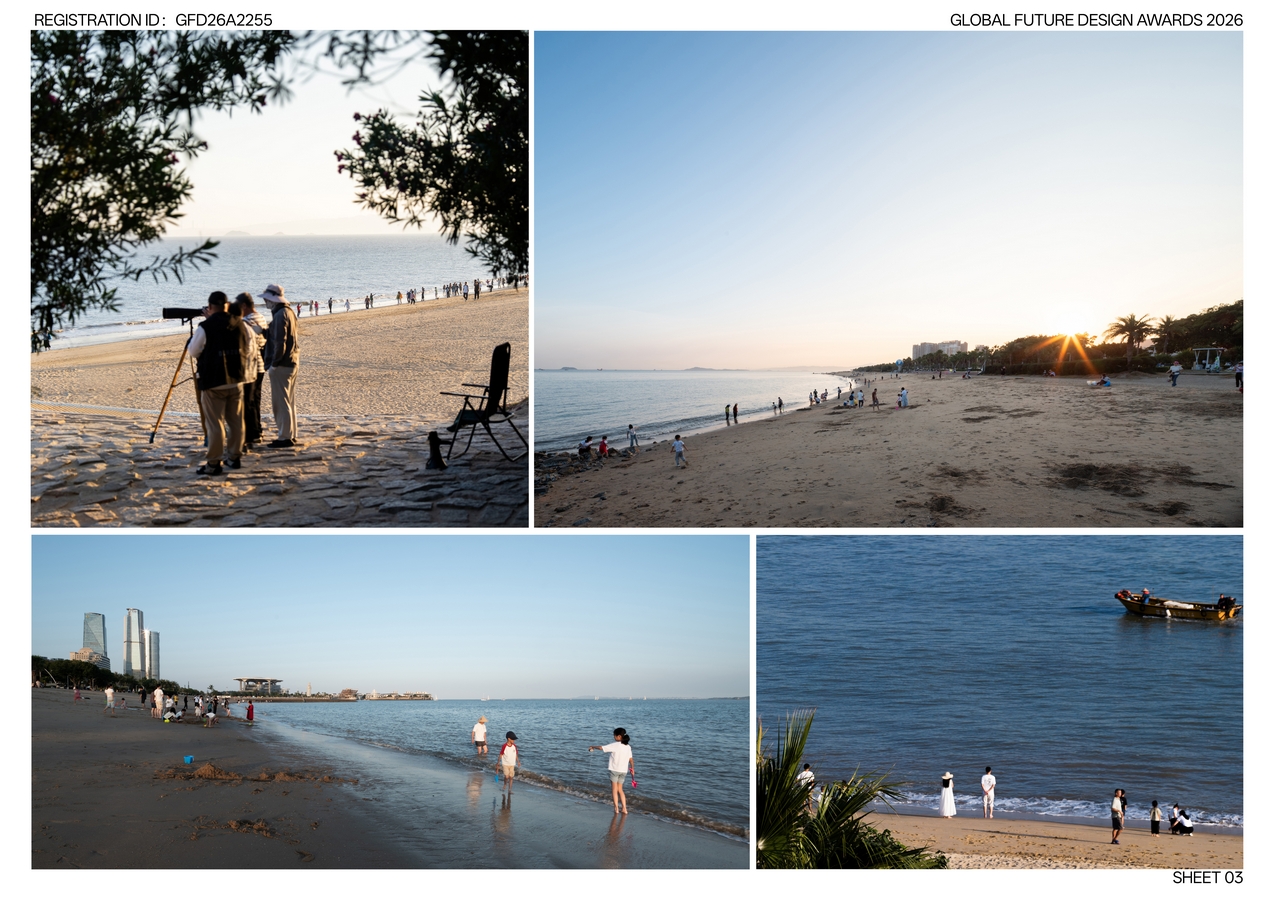
The restored beach has become a popular recreational hotspot in Xiamen, attracts large volumes of visitors annually, supports everyday civic activities, and serves as the outdoor venue for major international events including the BRICS Summit, World Ocean Week, and the Xiamen International Film Festival, generating significant economic benefit and elevating the city’s international profile.
This project offers a replicable paradigm for coastal cities pursuing ecological restoration, climate adaptation, and sustainable development, demonstrating how ecological landscape engineering can simultaneously advance safety resilience, economic vitality, and community wellbeing.
Follow us on